

Partition’s Legacy and the Erosion of Karachi’s Identity
Karachi’s recent floods reveal a city unmoored from its past, where waves of migration and ethnic upheaval have stripped away a sense of shared ownership. Once a modest fishing village known as Kolachi, the city grew under British rule into a bustling port, drawing diverse communities like Sindhi Hindus, Parsis, and Jews who built its early infrastructure. By the early 20th century, leaders like Jamshed Nusserwanjee Mehta, a Parsi mayor from 1933 to 1934, shaped Karachi with drainage systems, parks, and roads that reflected a commitment to the land. Mehta’s work, including relief during floods, stemmed from a deep bond with Sindh, as he helped form groups like the Servants of Sindh Society. This era fostered a cultural mosaic, with communities coexisting for centuries, as seen in the negligible violence during the 1947 partition compared to Punjab and Bengal.
But partition shattered this harmony. In 1948, Sindhi Hindus, the majority, faced expulsion despite historic coexistence, triggering a population boom from Indian migrants. This influx, detailed in Britannica’s account of Karachi’s transformation, diluted local ties, turning the city into a transient hub for economic gain rather than a cherished home. Parsis and Jews, key to heritage sites like libraries and hospitals, dwindled amid rising religiosity. Today, exhibits at the Dawood Foundation’s TDF Ghar highlight these lost contributions, from civil engineering to cultural landmarks. Unlike Lahore, where a sense of continuity endured post-partition—thanks to figures like Sir Ganga Ram, who designed its canals and buildings—Karachi lacks this rooted pride. Lahore receives more rain annually but manages flooding better due to this ownership; its residents view it as an ancient Punjabi capital, investing in upgrades over decades.
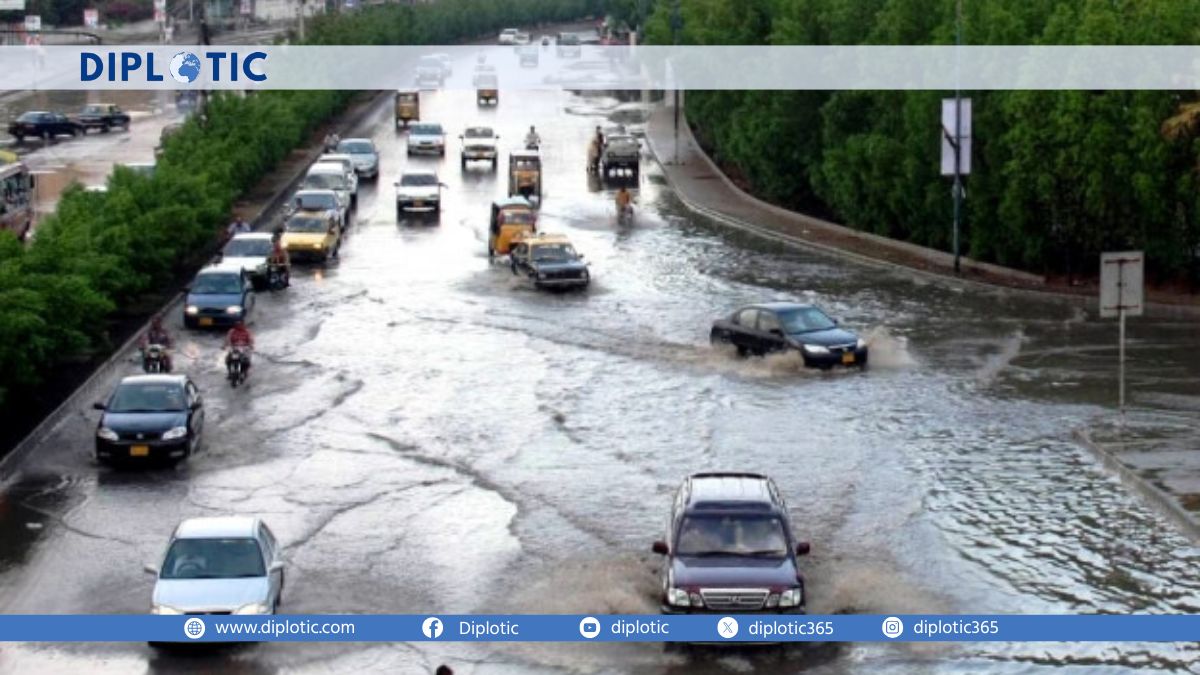
Current floods, hitting on August 19-20, 2025, underscore this disconnect. Torrential rains, reaching 178 mm in northeast areas, killed at least 10 people through electrocutions and collapses, flooding homes and closing schools. This mirrors 2022’s devastation, where over 1,700 died nationwide, but Karachi’s chaos stems from neglected drains clogged by unchecked growth. Migrants, often blamed as “outsiders,” continue the cycle started in 1948, with irony as descendants of immigrants decry newcomers. Social media echoes this: X posts criticize governance, with one user noting, “Flooding in Karachi is due to mismanagement,” amid comparisons to Punjab’s river swells.
This identity void breeds apathy. Politicians lament encroachments but approve them for gain, choking natural rivers like Lyari and Malir. As climate change intensifies monsoons—Pakistan ranks high on risk indices—these lapses amplify disasters. Without reclaiming history, Karachi risks fading, submerged not just by water but by indifference. Future waves could displace millions, echoing 2022’s 33 million affected, unless a collective memory revives responsibility.
Crumbling Infrastructure: Governance Failures and the Triple Threat Exposed
Karachi’s floods lay bare a system where profit trumps planning, turning natural waterways into choked hazards. The city’s two main seasonal rivers, Lyari and Malir, once drained monsoon rains efficiently, but urban sprawl has destroyed them. Projects like the Malir Expressway and housing societies encroach on these paths, blocking flow and worsening inundation. Smaller nallahs, such as Orangi and Gujjar, suffer similarly, filled with waste and buildings. In contrast, cities like Los Angeles engineered the LA River as a flood channel, adapting nature to urban needs. Karachi could have done the same, but corruption prevails: encroachments, often approved, reflect looting for personal gain, as politicians feign helplessness.
This ties into the triple threat of economic exploitation, identity loss, and climate peril. As Pakistan’s economic engine, generating wealth shipped elsewhere, Karachi is treated as a “cash cow,” per Zain Haq’s analysis. Ownership matters: renters neglect what owners cherish. Punjab invests in Lahore’s drainage, improved over a decade, because of historic ties. Karachi’s post-partition boom brought transients focused on extraction, not upkeep. Recent rains on August 20, 2025, paralyzed the city, with 163.5 mm near the airport—highest since 1979—causing power outages and traffic chaos. Authorities declared emergencies, but ill-preparedness caught them flat-footed, echoing 2020 and 2022 floods.
Geopolitically, this mirrors vulnerabilities in other delta cities like Dhaka, where poor planning amplifies monsoons. Economically, floods cost billions: 2022’s damaged 4 million hectares of farmland, displacing 10 million in Sindh alone. Karachi’s fragile setup, with drains for only 40 mm rain, fails under heavier downpours. X discussions highlight blame games, with users decrying “incompetence” while comparing to Punjab’s river floods, ignoring Karachi’s urban specifics.
Climate change locks in worse outcomes. Past emissions ensure rising temperatures and erratic rains for decades, per experts. Pakistan, emitting little globally, suffers disproportionately—top on 2022’s Climate Risk Index. Urban heat islands in Karachi raise temperatures 5-8°C, intensifying storms. Without reforms, future floods could submerge coastal areas by 2050, as sea levels rise. Yet, hope lies in models like urban forests or zero-emission transit, as in Karachi’s 2018 Bus Rapid Transit, cutting CO2 by 78,000 tons yearly. But these need ownership to succeed.
Climate Collision: Rising Waters and a City on the Brink
Karachi’s floods are no mere monsoon mishap; they signal climate change’s grip, colliding with human neglect to threaten extinction. The city faces rising seas, heatwaves, and erratic rains, as outlined in Britannica’s examination of climate impacts on coastal regions. Thawing glaciers and intensified monsoons, linked to global warming, swell rivers and overwhelm drains. In 2025, nationwide floods killed over 700 since June, with Karachi’s August deluge part of this pattern—flash floods in northwest killed 385, while southern cities brace for more.
Poor infrastructure amplifies risks: deforestation in catchments like the Kirther Range speeds runoff, while urban expansion blocks absorption. Studies show 75% more intense rainstorms due to climate, per 2022 analyses. Karachi’s “heat island effect” traps warmth, fueling storms; migrants from flood-hit areas swell its 20 million population, straining resources. Displaced farmers like those from Sindh-Balochistan borders flee droughts, only to face urban floods.
Socially, this breeds division. X posts mock comparisons: “Punjab drowning now, but Karachi’s gutter flooding is different,” highlighting empathy gaps. Punjab’s plains flood from rivers like Chenab releasing 900,000 cusecs, unlike Karachi’s urban deluge from 150 mm rain. Yet, both stem from poor prep—Pakistan’s silos in climate ministries hinder holistic plans.
Economically, losses mount: 2022’s $40 billion damage hit agriculture hard, with skin infections and diseases surging post-flood. Karachi’s submersion in 30 years, per Haq, could erase it like Atlantis if unchecked. Future scenarios worsen: by 2030, more frequent extremes displace millions, per World Bank. Calls for global aid grow—Pakistan seeks funds despite low emissions.
Solutions demand embrace: honor lost minorities’ legacies, cultivate belonging, and invest in drains, early warnings, and green spaces. Models like Peshawar’s flood resilience assessments show mapping and restoring waterways works. Without this, Karachi fades—milked dry, then abandoned to the sea.
Echoes of Division: Public Reactions and Political Hypocrisies
Floods expose Pakistan’s fractured discourse, where empathy yields to partisanship, masking systemic failures. In Karachi’s wake, X erupts with blame: PPP supporters counter Punjab mockery from past rains, saying, “Now Punjab feels it,” ignoring contexts. Sialkot’s 400 mm rain plus Kashmir floods differs from Karachi’s infrastructure collapse, yet comparisons justify inaction. This hypocrisy—PML-N praising Punjab while deriding Sindh—mirrors national divides, as users note “zero empathy all round.”
Politically, it’s a miscalculation: governments tout competence but falter. Karachi’s mayor ordered emergencies, but unpreparedness echoes 2017’s submerged roads. Nationwide, NDMA warns of more rain till August 28, yet no evacuations or plans. This silos approach, per experts, ignores climate’s holistic hit.
Socially, generational trauma builds: families like those in 2022 lose homes, fostering fear. X shares solutions—retention tanks, injection wells—but governance lags.
Future risks escalate: without unity, 2028 midterms could politicize disasters further, delaying reforms. Embracing shared vulnerability could foster resilience, turning floods from division to catalyst for change.
Pathways to Survival: Reclaiming Ownership Amid Looming Perils
To endure, Karachi must reclaim its roots, weaving history into action against climate threats. Cultivate belonging: honor Mehta and Ram’s legacies through education, fostering pride like Lahore’s. Politically, demand accountability—end encroachments, restore rivers.
Climate adaptation is key: urban forests, better transit cut emissions; early warnings save lives. Globally, push for funds at COPs—Pakistan’s plight demands it.
Economically, invest in resilient infrastructure: $ billions lost yearly could rebuild drains for 200 mm rain. By 2050, sea rise threatens submersion, displacing 20 million.
Yet, missteps loom: partisanship delays, inviting worse floods. Unity, embracing diversity, offers hope—turning Karachi from cash cow to cherished home.




