

From Private Beginnings to a Public Milestone
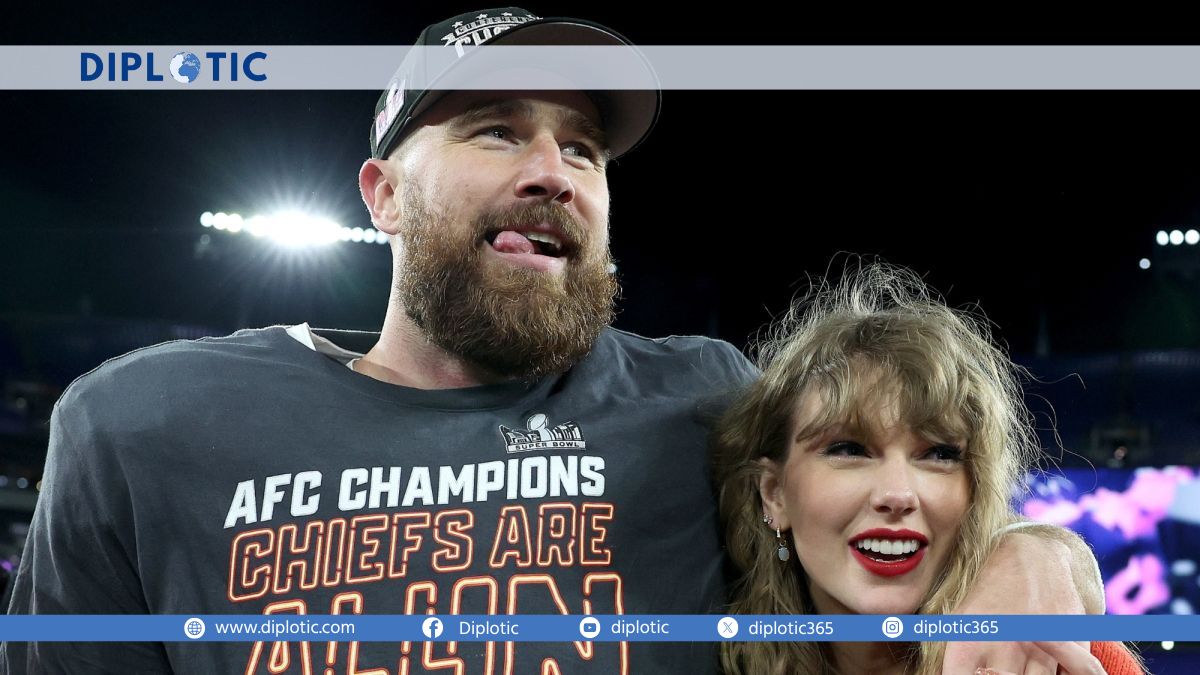
When Taylor Swift and NFL star Travis Kelce announced their engagement in August 2025, it marked the culmination of a romance that had already captivated the American imagination for two years. Their union is not merely a celebrity milestone; it is emblematic of how modern fame operates at the nexus of entertainment, sport, and media spectacle. Unlike Swift’s previous relationships, which were often subject to intense speculation and at times weaponized by tabloid culture, her partnership with Kelce evolved against a backdrop of carefully managed exposure. The pop icon herself acknowledged that before their relationship went public, they had months together away from prying eyes, a strategic decision that insulated them from the volatility that had plagued earlier romances.
To understand the resonance of this engagement, one must consider Swift’s trajectory. Her earlier partnerships with Joe Jonas, John Mayer, Jake Gyllenhaal, and Harry Styles became cultural talking points, spawning not only gossip columns but also some of the most enduring entries in her discography. The emotional transparency of her songwriting blurred the lines between private intimacy and public narrative, making her relationships inseparable from her artistic identity. By contrast, Kelce represents a departure. Their relationship was not immediately defined by heartbreak or secrecy but by a gradual integration of personal authenticity with public acknowledgment. Kelce’s very public courtship, initiated on his podcast, became part of the folklore of their romance and symbolized a new form of controlled vulnerability—an approach that balances relatability with celebrity mystique.
What makes this engagement particularly striking is its contrast with the historical arc of celebrity culture itself. While earlier generations of entertainers often relied on Hollywood studios or media handlers to manage their public image, today’s figures like Swift exercise an unprecedented level of control over their narratives, leveraging social media platforms that give them direct access to audiences. This ability to mediate her personal milestones without the filter of tabloid intermediaries recalls earlier discussions of the evolution of fame traced in cultural history texts such as Britannica’s exploration of celebrity culture (https://www.britannica.com/topic/celebrity-culture). Her announcement, delivered on her own terms via Instagram, exemplifies this shift: intimate yet global, private yet unavoidably public.
The Economics and Politics of a Modern Celebrity Union
While the announcement of an engagement between a pop star and an athlete might once have remained the domain of entertainment news, Swift and Kelce’s partnership demands a broader analysis because of its economic and cultural implications. Swift is not only one of the world’s most successful musicians; she is a global industry in herself. The Eras Tour, which became a record-breaking economic phenomenon, demonstrated her ability to influence local economies, boost tourism, and even affect consumer spending patterns. Kelce, meanwhile, occupies a parallel position in the world of sports. As a Super Bowl-winning tight end for the Kansas City Chiefs, he has become a household name whose presence extends beyond the football field into endorsements, branding, and now, association with Swift’s cultural empire.
Their engagement represents a convergence of two industries—entertainment and sport—that increasingly overlap in their cultural power and economic weight. In previous eras, the marriages of celebrities often symbolized cultural aspiration or tabloid intrigue. But the Swift-Kelce engagement arrives in a moment where such unions are not just personal milestones but market-moving events. Analysts already speculate on the potential branding implications: joint endorsements, shared philanthropic initiatives, and even the possibility of political resonance given Swift’s increasing visibility in American civic discourse. A relationship of this magnitude inevitably becomes a mirror for broader social dynamics, reflecting a public increasingly hungry for narratives that combine romance, relatability, and spectacle.
Yet the story is not without contradictions. Swift’s previous long-term relationship with Joe Alwyn was characterized by privacy and withdrawal from public scrutiny, raising questions about whether a higher-profile partnership with Kelce can sustain the same degree of intimacy. Moreover, the spectacle surrounding their engagement demonstrates the double-edged nature of modern fame: the very platforms that allow Swift to control her narrative also intensify the scrutiny of her personal life. This tension recalls earlier warnings about the commodification of private identity in mass media, an evolution well documented in cultural analyses such as History’s survey of American entertainment’s transformation in the 20th century (https://www.history.com/topics/20th-century/entertainment-in-america).
What sets Swift and Kelce apart, however, is the possibility that they may be rewriting the rules of how celebrity couples function in the 21st century. Unlike the tumultuous pairings of earlier Hollywood or pop music history, their engagement suggests a model where personal milestones can be both authentically celebrated and strategically managed. If Swift’s past relationships provided the emotional raw material for her art, her future with Kelce may come to symbolize the stabilization of a public identity—one where love, fame, and industry converge into a single narrative of power.




