

Written by Mohammad Abu Taleb, a student of University of Chittagong.
Abstract
This article investigates the alignment between Islamic teachings and the United Nations Sustainable Development Goals (SDGs). Islam emphasizes justice, social equity, education, gender equality, and environmental stewardship, which resonate with global development objectives. Through an analysis of the Qur’an, Hadith, and contemporary scholarly interpretations, this study highlights how Islamic moral and ethical principles can contribute to addressing contemporary challenges such as poverty, education, gender disparities, and environmental degradation. Integrating these principles into modern development frameworks fosters holistic, culturally sensitive, and sustainable solutions.
Keywords: Islam, Sustainable Development Goals, SDGs, social justice, education, gender equality, environmental stewardship
Introduction
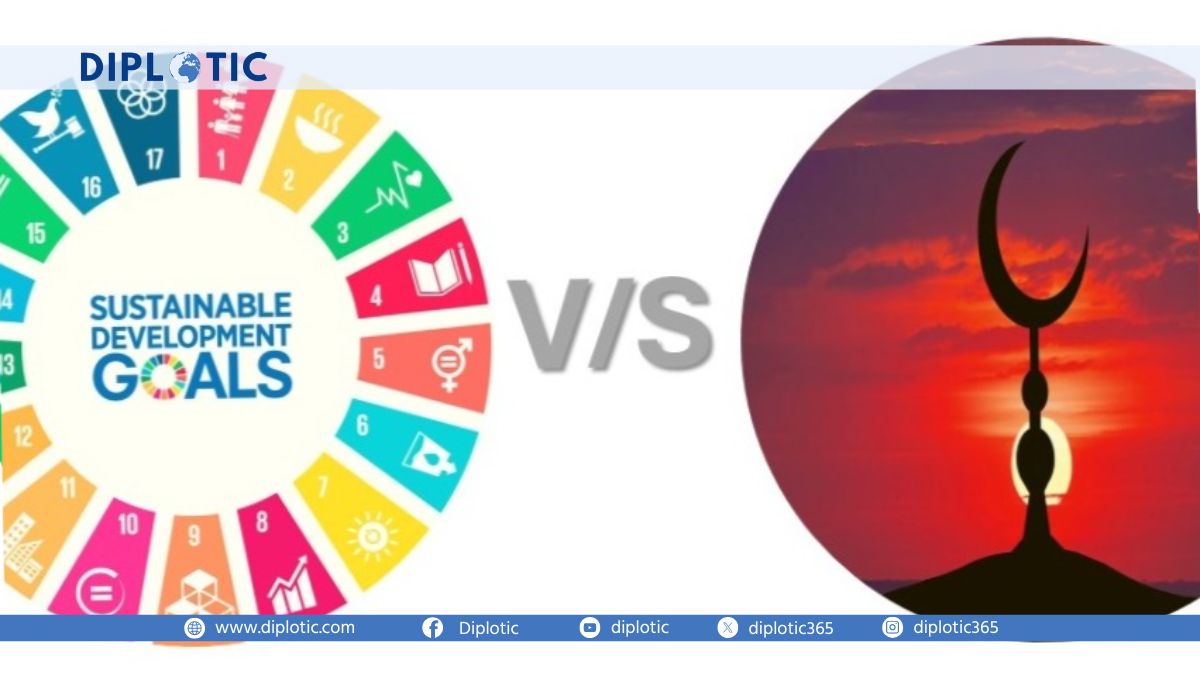
Sustainable development is a central global challenge in the 21st century. The United Nations established 17 Sustainable Development Goals (SDGs) in 2015, aiming to end poverty, ensure inclusive education, achieve gender equality, and promote environmental sustainability by 2030.
These goals represent a global commitment to creating a more equitable and sustainable world.
Islam, as a comprehensive ethical and social system, provides principles that closely align with these goals. Concepts such as Zakat (obligatory charity), Sadaqah (voluntary charity), ethical governance, and environmental stewardship offer guidance on addressing social and economic inequalities. This study explores the areas where Islamic teachings intersect with key SDGs, demonstrating their relevance in contemporary development discourse.
The focus is on four critical SDGs: No Poverty (SDG 1), Quality Education (SDG 4), Gender Equality (SDG 5), and Climate Action (SDG 13). Examining these areas reveals how Islamic ethical values can support sustainable development both locally and globally.
Literature Review
The intersection of religion and sustainable development has been increasingly recognized in scholarly research. Several studies have highlighted the potential contribution of Islamic principles.
Social Welfare and Poverty Alleviation
Islamic economic teachings emphasize social justice and wealth distribution. Mechanisms such as Zakat, Sadaqah, and Waqf (endowments) aim to reduce poverty, support education and healthcare, and ensure equitable resource allocation (Chapra, 2008). By promoting economic fairness, these mechanisms align with SDG 1.
Education
Seeking knowledge is a fundamental obligation in Islam. The Qur’an begins with the command “Iqra” (Read) (Qur’an 96:1–5), emphasizing literacy and intellectual development. Prophet Muhammad (PBUH) encouraged education for all, including women, reinforcing the importance of inclusive learning (Siddiqi, 2006). These teachings support SDG 4, which emphasizes quality education for all.
Gender Equality
Contrary to common misconceptions, Islam affirms the dignity and rights of women. The Qur’an (33:35) and Hadith provide guidance on women’s education, inheritance, and social participation. Implementing these principles can advance gender equality, aligning with SDG 5 objectives (Khan, 2019).
Environmental Responsibility
Islamic texts view humans as stewards (Khalifah) of the earth, responsible for protecting natural resources and preventing environmental degradation (Qur’an 2:205, 6:141). Ethical use of water, tree planting, and avoidance of waste are emphasized. These teachings support SDG 13 on climate action and sustainable environmental management (Sadr, 2011).
Integrating Islamic Principles with Global Goals
Research suggests that integrating ethical and religious values with global development policies enhances both effectiveness and cultural acceptance. Islamic principles can provide moral guidance for policy-making, ensuring socially responsible and sustainable outcomes (Khan, 2019).
Methodology
This study employs a qualitative research approach, including:
- Textual Analysis: Examination of primary Islamic sources (Qur’an and Hadith) and classical jurisprudence to extract ethical principles relevant to development.
- Comparative Analysis: Linking Islamic principles with selected SDGs to highlight alignment.
- Literature Review: Analysis of contemporary scholarly works on Islam and sustainable development.
The selected SDGs—No Poverty (SDG 1), Quality Education (SDG 4), Gender Equality (SDG 5), and Climate Action (SDG 13)—provide a focused lens to analyze the practical implications of Islamic teachings in development initiatives.
Discussion
No Poverty (SDG 1)
Poverty alleviation is central to Islamic ethics. Zakat, Sadaqah, and Waqf are structured mechanisms for wealth redistribution. Beyond providing immediate relief, these initiatives foster education, healthcare, and social welfare, contributing to long-term socio-economic development.
Quality Education (SDG 4)
Education is a fundamental right and ethical obligation in Islam. By promoting literacy, critical thinking, and lifelong learning, Islamic teachings directly support SDG 4. Educational programs inspired by Islamic ethics can be inclusive, ensuring access for marginalized populations.
Gender Equality (SDG 5)
Islamic teachings affirm women’s rights in spiritual, educational, and economic spheres. Proper implementation of these principles reduces gender disparities, promotes female empowerment, and aligns with SDG 5 objectives. Policies reflecting Islamic values can increase women’s participation in education, employment, and governance.
Climate Action (SDG 13)
Environmental stewardship is emphasized in Islamic ethics. Humans are accountable for conserving natural resources, reducing waste, and maintaining ecological balance. Islamic environmental principles provide moral guidance for sustainable practices, supporting global climate action initiatives.
Conclusion
Islamic teachings offer a comprehensive ethical framework that aligns closely with the Sustainable Development Goals. Integrating these principles with contemporary development strategies can foster holistic, culturally sensitive, and ethically grounded solutions to global challenges. By applying Islamic values in policymaking, education, and community initiatives, societies can achieve sustainable development that is both effective and morally responsible.
This study highlights the potential of religion as a constructive force in development, demonstrating that Islamic ethics can contribute meaningfully to social justice, education, gender equality, and environmental sustainability.
References
Chapra, M. U. (2008). The Islamic Vision of Development in the Light of Maqasid al-Shari’ah. Islamic Research and Training Institute.
Khan, M. A. (2019). Islam and Sustainable Development Goals: Bridging Ethics and Policy. Journal of Islamic Studies, 30(2), 45–67.
Qur’an, Translations by Yusuf Ali, A. (1934). The Holy Qur’an.
Siddiqi, M. N. (2006). Islamic Economic Thought: Its Relevance in the 21st Century.
Sadr, M. (2011). Islamic Perspectives on Environmental Management. Journal of Islamic Ethics, 5(1), 12–30.
Rahman, F. (2004). Major Themes of the Qur’an. University of Chicago Press.




