

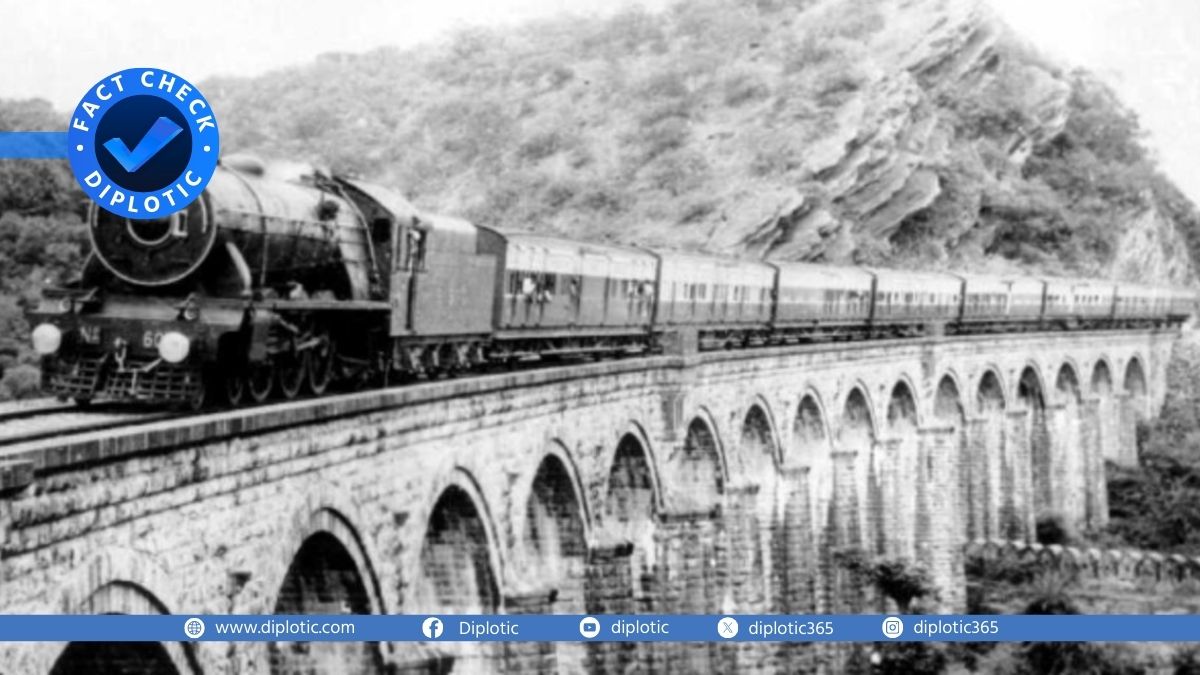
The British Raj, that vast empire that once claimed the sun never set on it, is often painted as a kind force that gifted India its massive rail network—over 40,000 miles by 1947, linking dusty villages to bustling ports. It’s a story we’ve heard since school days: railways as a tool of progress, hauling the subcontinent into the modern age. But as we poke through dusty records and fresh reports, a smirk creeps in— was it really about uplifting India, or just a clever way to squeeze every rupee out of the land? With India’s tracks now the world’s fourth-largest, the claim lingers like a late train, begging for a fact-check.
The tale starts in the mid-1800s, when the East India Company, that quirky mix of traders and rulers, saw railways as a ticket to control. By 1853, the first line chugged from Mumbai to Thane, and soon lines spider-webbed across the land, carrying cotton, tea, and troops. Boosters say it was all for India’s good—better trade, faster travel, a step toward unity. Critics, though, whisper of darker motives: rails built to ship raw goods to British mills and flood India with cheap imports, crushing local crafts. It’s a split view that’s fueled debates for years, from history classes to online forums.
This isn’t just old news; it shapes how we see colonialism today. In 2025, with India marking 78 years free, the railways stand as a mixed legacy— a backbone for 8 billion passenger trips yearly, yet a reminder of extraction that left the economy drained. Economic angles show billions lost to Britain, while social shifts brought famines and divides. As the Diplotic team digs in, we’ll check the claims, cross the facts, and see if the British were modernizers or just masterful takers. Let’s ride this track.
Claim 1: The British Built India’s Railways Solely to Modernize the Country
Fact-Check: False
The sunny side says railways were a gift—uniting India, boosting trade, and kicking off industry. By 1900, lines stretched 25,000 miles, carrying 200 million passengers a year, per old ledgers. They linked farms to markets, cutting famines by moving grain fast, and sparked towns along the way. Some argue it laid the ground for India’s unity, helping the freedom fight by letting leaders like Gandhi hop trains to rallies.
But peek behind the curtain, and it’s clear modernization was a side dish. The push started after the 1857 revolt, to move troops quick and cheap—rails cut travel from months to days. A report notes 80% of early funding came from British investors promised 5% returns, backed by Indian taxes. Raw cotton shipped out, finished cloth shipped in, killing local weavers—millions lost jobs by 1900. It was extraction dressed as progress, not pure goodwill.
Verdict: The claim is false. Railways did modernize parts of India, but the main drive was British profit and control, not selfless uplift.
Claim 2: Economic Motives Were the Primary Reason for Building the Railways
Fact-Check: True
Cash was king for the British. India’s cotton fed Lancashire mills, and rails made it cheap—transport costs dropped 90% by 1880, per economic tallies. The network hauled jute, tea, and opium to ports, with exports jumping from £20 million in 1850 to £137 million by 1913. British firms built and ran the lines, pocketing profits while India footed maintenance bills through taxes. It was a one-way street—goods out, money in for Britain.
Social perks came second. While Indians got jobs (over a million by 1900), wages were low, and the system favored British staff in top spots. Famines hit harder in some spots as rails prioritized exports over local food—millions died in 1876–78 while grain shipped abroad. The setup drained India of £2 billion yearly by 1930s estimates, fueling independence calls.
Verdict: The claim is true. Economic motives—extracting resources and securing markets—drove the railways, with modernization as a handy byproduct.
Claim 3: The Railways Were a Tool of Colonial Extraction Rather Than Development
Fact-Check: True
Extraction’s the dark heart here. Rails tied India tighter to Britain’s economy, shipping raw materials out and flooding cheap goods in—local industries crumbled, with handloom weavers down from 2 million in 1800 to half by 1900. Dadabhai Naoroji’s “drain theory” pegged the loss at £200–300 million yearly, a view echoed in modern takes. Troops zipped across to crush uprisings, keeping control cheap.
Development? Spotty at best. While cities grew and trade boomed, rural areas lagged—rails bypassed many villages, widening gaps. Post-1947, India inherited the network but with debt, and it took decades to flip it for local gain. In 2025, rails carry 8 billion passengers yearly, but the colonial stamp lingers in unequal routes.
Verdict: The claim is true. Railways served extraction by boosting British profits and control, with development benefits secondary and uneven.
Tracks of Empire and Legacy
India’s railways, born in 1853, were the Raj’s iron grip, weaving 40,000 miles by independence—a marvel that moved armies and goods but at a steep price. Economic drains fueled poverty, with millions in famines while trains shipped grain away. Socially, it mixed castes in carriages, sparking unity, yet deepened divides by favoring urban hubs. Politically, it aided the freedom struggle—Gandhi’s train travels spread his message—but also quashed it with troop movements.
In 2025, the network’s a powerhouse, but echoes of extraction remain—rural lines still lag, and privatization debates rage. Globally, it’s a colonial template, seen in Africa’s rails built for minerals. Culturally, trains symbolize progress, yet remind of lost wealth. Environmentally, they cut carbon now, but building them razed forests back then.
From another view, women gained mobility, breaking barriers, while migrants built lives along tracks. As the Diplotic team ponders, it’s clear the rails weren’t charity—they were chains disguised as connections.
Conclusion
The British didn’t build India’s railways solely to modernize it, false—the main aim was profit and control. Economic motives were primary, true, extracting resources while crushing local trade. It was colonial extraction over development, true, draining billions and aiding suppression. As of 11:01 AM on August 24, 2025, the railways stand as a mixed legacy—progress at a price, with extraction the core truth. The “modernization” story’s a gloss over empire’s greed.




