

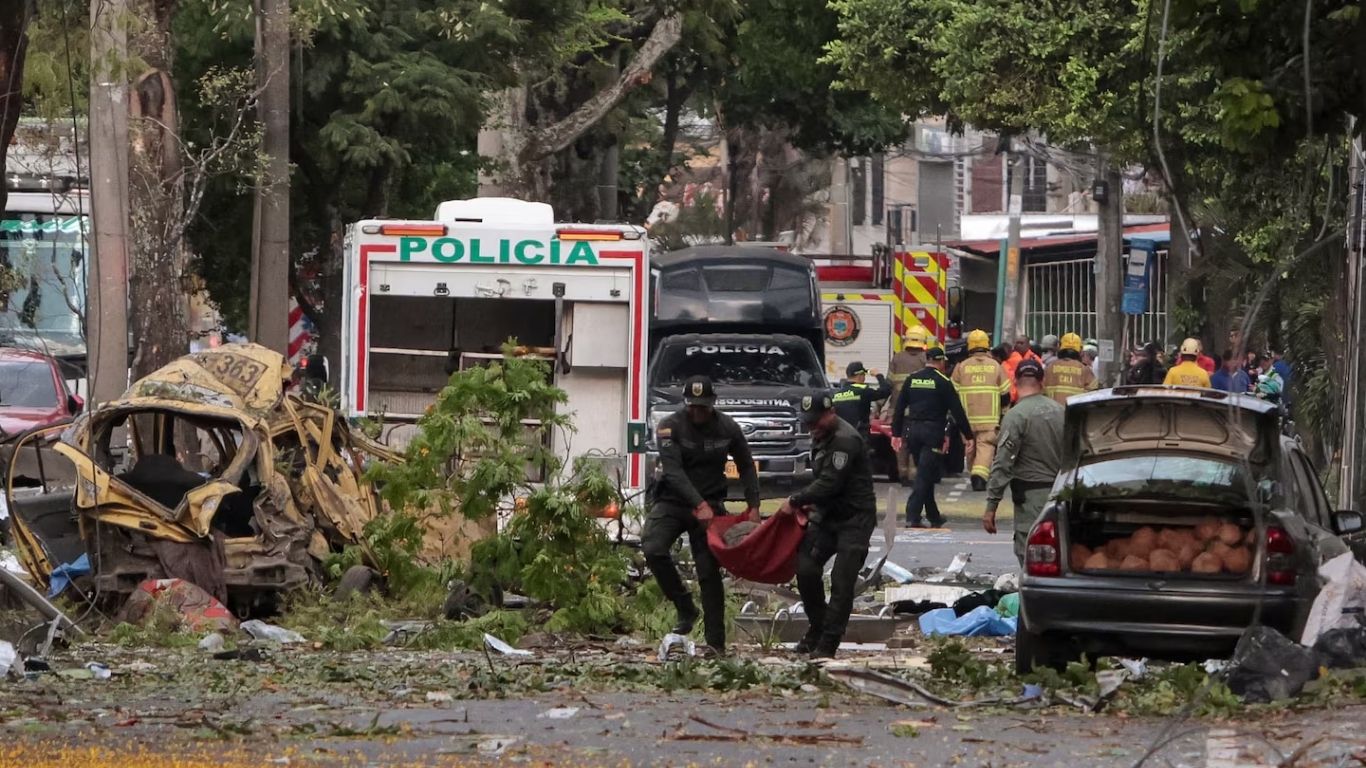
In a shocking escalation of violence, Colombia witnessed a wave of coordinated attacks that left at least 13 people dead, including police officers, in what authorities describe as one of the deadliest strikes in recent years. A car bomb explosion coupled with a helicopter assault has plunged the nation back into the spotlight of global security concerns, raising urgent questions about peace, stability, and the resurgence of armed dissident groups.
Deadly Day of Violence in Colombia
According to officials, the violence unfolded in two devastating stages:
- Car Bomb Detonation:
A powerful explosive-laden vehicle was detonated near a police installation, instantly killing multiple officers and injuring several civilians in the vicinity. Eyewitnesses reported scenes of chaos, with debris scattering across streets and flames engulfing nearby buildings. - Helicopter Attack:
Hours later, a police helicopter carrying personnel on a routine mission came under heavy fire. The assault caused the aircraft to crash, claiming more lives and compounding the tragedy.
The combined attacks left at least 13 dead, though authorities warn the death toll may rise as rescue operations continue.
Authorities Blame FARC Dissidents
Colombian defense officials were quick to attribute responsibility to dissident factions of the Revolutionary Armed Forces of Colombia (FARC), the notorious guerrilla group that officially signed a peace deal in 2016 but has since seen breakaway elements return to armed conflict.
“These violent actions bear the hallmarks of FARC dissidents who refuse to embrace peace,” said Colombia’s Defense Minister. “This is not just an attack on our police but an attack on national security and the Colombian people.”
Impact on Peace and Stability
The twin assaults have reignited fears that Colombia’s fragile peace process could be unraveling. While the 2016 peace agreement with the FARC was hailed as historic, many rural regions remain plagued by guerrilla violence, narcotrafficking, and armed insurgencies.
The symbolic use of both car bombs and aerial assaults underscores a chilling reminder of Colombia’s violent past a period many hoped was behind them. Analysts warn this could mark a dangerous escalation in tactics used by insurgent groups, further destabilizing already volatile regions.
Global Reaction to the Colombian Attacks
The international community has reacted swiftly with condemnation:
- United Nations: Urged restraint and called for renewed dialogue to prevent further bloodshed.
- United States: Pledged continued support for Colombian authorities in combating terrorism and narcotics-funded insurgencies.
- European Union: Labeled the attack “cowardly and destabilizing,” highlighting concerns about security risks in Latin America.
Global leaders agree that the attacks are a stark warning of rising extremist violence that could ripple beyond Colombia’s borders.
Humanitarian Consequences
Beyond the geopolitical fallout, the human cost is severe. Families of slain officers and civilians are grappling with unimaginable loss. Hospitals in the region are overwhelmed with casualties, while communities live in fear of further violence.
Human rights groups are urging the Colombian government to provide greater protection for civilians, particularly in rural areas where dissident groups exert influence. Many fear that innocent citizens will continue to bear the brunt of these terror-fueled campaigns.
What This Means for Colombia’s Future
The attacks come at a critical time when Colombia is striving to boost its international image, attract investment, and build a stronger post-conflict economy. With these violent reminders of instability, questions arise about the nation’s capacity to enforce long-term peace.
Experts suggest three key outcomes could emerge:
- Heightened Security Crackdown: Increased military operations targeting dissident groups.
- Strained Peace Talks: Greater skepticism about negotiating with armed factions.
- International Involvement: A surge in global support for counter-terrorism operations in Colombia.
Conclusion: Colombia at a Crossroads
The Colombian car bomb and helicopter attack is more than just a national tragedy it’s a wake-up call to the global community about the enduring threat of insurgent violence. With lives lost, families torn apart, and peace hanging in the balance, Colombia faces a stark choice: surrender to fear or fight back with unity, resilience, and international support.
As the nation mourns, the world watches closely hoping this dark chapter becomes a catalyst for renewed peace and decisive action against terrorism.




