

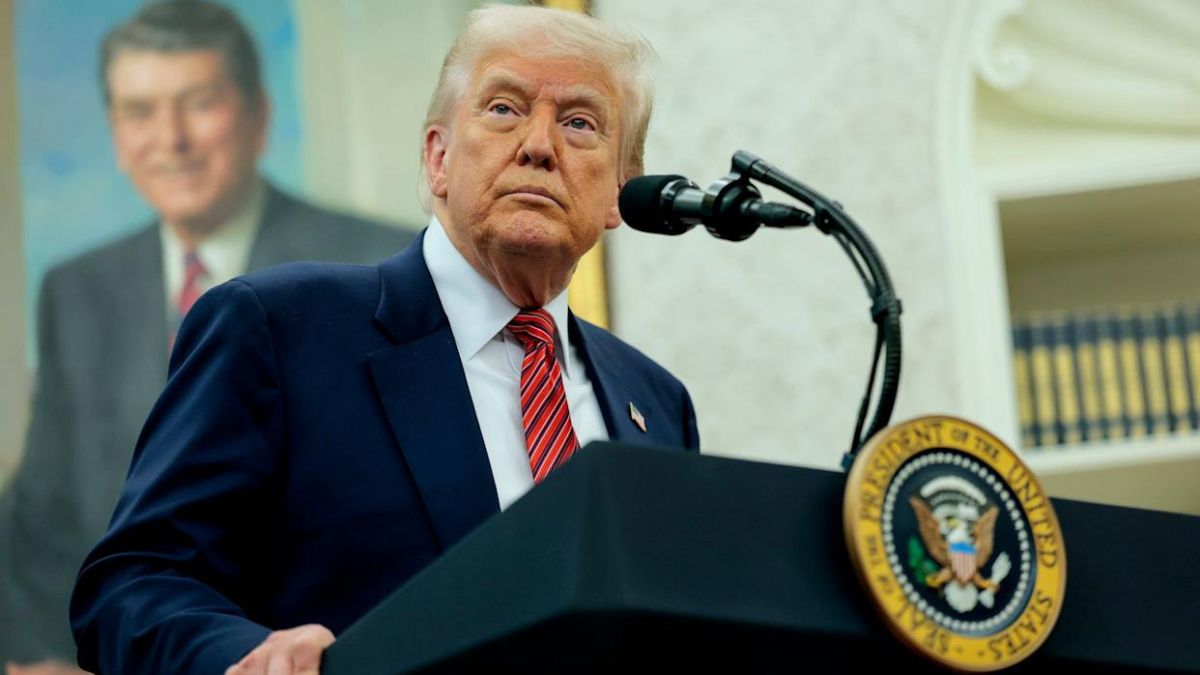
On August 16, 2025, as U.S. President Donald Trump navigates a turbulent geopolitical landscape, a former FBI hostage negotiator offered a provocative lens into his approach, labeling empathy as his “secret weapon.” In a discussion with a journalist, the negotiator, who spent decades defusing life-or-death crises, argued that Trump’s deal-making prowess, rooted in his 1987 book The Art of the Deal, relies on a calculated form of empathy. “Let’s talk about empathy as a skill, not an emotional characteristic,” he stated, framing it as a tool that fosters reason and broadens perspective. This redefinition challenges the public’s perception of empathy as a soft trait, instead presenting it as a strategic asset in negotiations, from hostage standoffs to international summits like the recent Anchorage meeting with Russia’s Vladimir Putin.
Historically, empathy has played a dual role in diplomacy. During the 1962 Cuban Missile Crisis, John F. Kennedy’s ability to understand Soviet fears helped avert nuclear disaster, a tactic documented in accounts of Cold War negotiations. Yet, empathy can also be manipulative, as seen in historical propaganda efforts where leaders feigned concern to sway opinion. The negotiator’s concept of “tactical empathy”—articulating an adversary’s perspective without endorsing it—mirrors these precedents but strips the term of moral weight. Effective in 93 percent of hostage negotiations, this approach depends on the user’s intent. In Trump’s hands, it could either forge breakthroughs in the Russia-Ukraine war or deepen distrust, particularly after the Anchorage summit’s failure to secure a ceasefire, as analyzed in discussions of Trump’s diplomatic strategy.
Critics, who view Trump as divisive, reject the idea of his empathy. Yet, the negotiator’s framing suggests a methodical approach: understanding opponents to outmaneuver them. The 2016 campaign, where Hillary Clinton was criticized for advocating empathy in diplomacy—“barbecued for it as if it’s weakness,” per the negotiator—highlights the term’s fraught perception. By adding “tactical,” the concept aligns with pragmatic strategies like “tactical breathing” for Navy SEALs, distancing it from softness. The Anchorage summit, where Trump’s “genuine smiles” contrasted with his later slumped posture, suggests an attempt at rapport that faltered against Putin’s resolve. The geopolitical stakes of the Ukraine conflict, with its toll of over 100,000 lives, demand that such empathy translate into tangible outcomes, not mere performance.
The Double-Edged Sword of Influence
Tactical empathy’s ethical ambiguity—likened to a knife that can be a “murder weapon” or a “scalpel”—frames Trump’s approach as both opportunity and risk. Historical examples, like the 1972 Nixon-Mao summit, show how understanding adversaries’ interests can yield breakthroughs, despite ideological divides, as seen in the normalization of U.S.-China relations. Trump’s track record, from the Abraham Accords to his 2018 Kim Jong-un summit, reveals a reliance on personal rapport that prioritizes optics over substance. In Anchorage, his attempt to project dominance through hand pats and guiding gestures, as noted by body language experts, failed to secure a deal, leaving Ukraine’s Volodymyr Zelenskyy to demand inclusion in follow-up talks. The negotiator’s assertion that empathy calms the user and broadens perspective suggests Trump’s approach could bridge divides, but only if it avoids concessions that embolden Putin’s territorial ambitions.
Domestically, Trump’s empathetic rhetoric—casting himself as a voice for “forgotten” Americans—has galvanized supporters but polarized opponents, creating skepticism about his motives. Internationally, his reliance on tactical empathy risks being perceived as manipulation, particularly if it leads to a deal sacrificing Ukraine’s sovereignty. The war’s economic fallout—disrupted grain and energy markets—amplifies the need for a resolution that balances empathy with accountability. Putin’s battlefield leverage, with 6,000 square kilometers gained since 2023, strengthens his position, making Trump’s empathetic overtures a high-stakes gamble. If misapplied, as in Neville Chamberlain’s 1938 Munich Agreement, empathy could signal weakness, emboldening authoritarian leaders. The challenge lies in ensuring that tactical empathy serves as a scalpel for peace, not a weapon that undermines trust in a volatile global order.
The Future of Empathy in Global Leadership
The negotiator’s reframing of empathy as a “highly evolved application of emotional-intelligence analysis” offers a blueprint for future diplomacy, where understanding trumps confrontation. Successful historical negotiations, like the 1993 Oslo Accords, leveraged empathetic dialogue to foster trust, though implementation faltered, as detailed in peace process analyses. Trump’s planned meeting with Zelenskyy on August 18, 2025, tests whether tactical empathy can deliver a Ukraine deal that upholds sovereignty without territorial concessions. Success could redefine his legacy, potentially earning the Nobel Peace Prize he seeks, as speculated in discussions of his diplomatic ambitions. Failure, however, risks legitimizing Putin’s aggression, weakening NATO, and destabilizing global markets.
The broader implications hinge on execution. The absence of seasoned U.S. diplomats, coupled with Trump’s reliance on personal charisma, limits the institutional support needed for complex talks. The Anchorage summit’s failure, reflected in Trump’s deflated demeanor, underscores the limits of empathy against an unyielding adversary like Putin, whose relaxed posture signaled confidence. An undivided India, as a historical counterfactual, unified diverse groups through federalism, but Ukraine’s reality demands inclusive diplomacy that Anchorage lacked. Future leaders adopting tactical empathy must balance it with strategic clarity, ensuring it serves as a tool for justice, not manipulation. As the Russia-Ukraine war reshapes global alliances, the negotiator’s knife analogy captures the stakes: in skilled hands, empathy can heal; in reckless ones, it can deepen wounds, defining the trajectory of 21st-century diplomacy.




