

The Choreography of Power: Decoding Body Language at the Trump-Putin Alaska Summit
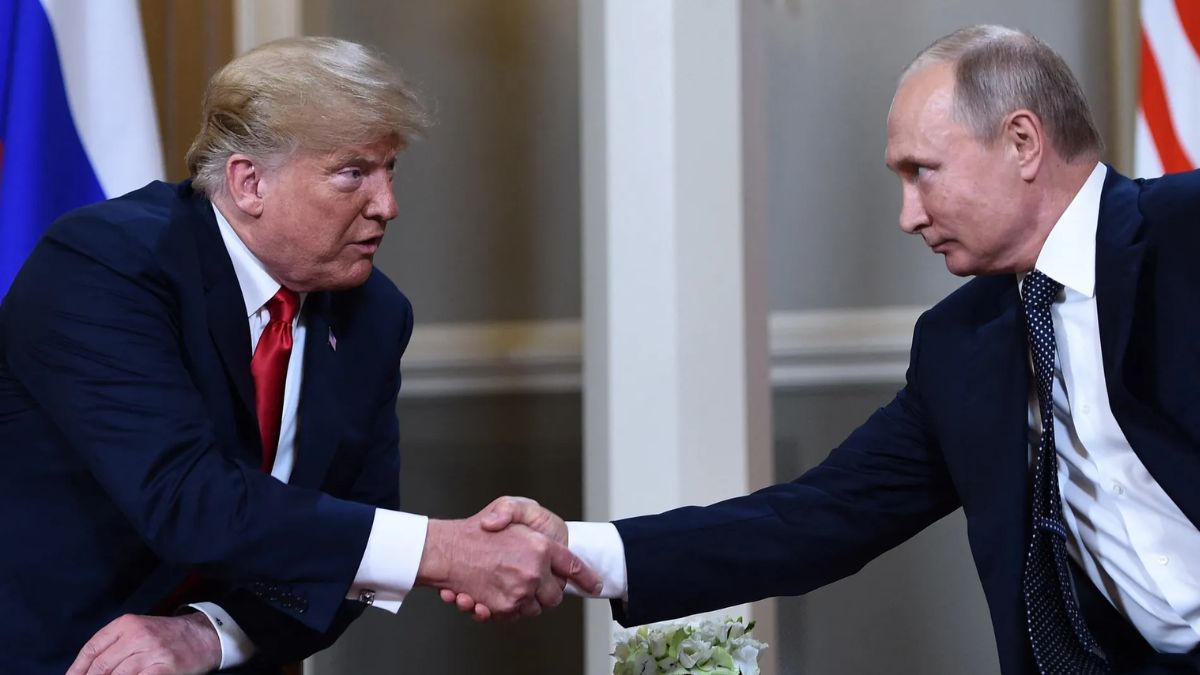
On August 15, 2025, the red carpet at Joint Base Elmendorf-Richardson in Anchorage, Alaska, became a stage for a meticulously choreographed display of power between U.S. President Donald Trump and Russian President Vladimir Putin. Their summit, aimed at addressing the ongoing Russia-Ukraine war, was as much about nonverbal cues as diplomatic outcomes. Body language expert and psychologist Peter Collett, analyzing the encounter, noted that the initial exchange was marked by “genuine smiles,” signaling a calculated warmth between two leaders with a history of public rapport. Yet, as they emerged from a private meeting with no ceasefire agreement, Trump’s demeanor—crumpled posture, pursed lips, and averted gaze—betrayed frustration, while Putin’s upright stance exuded confidence. These cues, subtle yet revealing, underscore the enduring role of body language in high-stakes diplomacy, where gestures can speak louder than words.
Historically, nonverbal communication has shaped perceptions of power in summitry. During the 1961 Vienna Summit, John F. Kennedy’s nervous demeanor contrasted with Nikita Khrushchev’s assertive posture, influencing perceptions of U.S. weakness that emboldened Soviet actions, as documented in accounts of Cold War diplomacy. The Anchorage summit, set against the backdrop of Alaska’s historical ties to Russia, carried similar weight. Trump’s initial handshake, marked by five deliberate hand pats, was a “status reminder,” Collett observed, with Trump allowing Putin a momentary upper hand before reclaiming dominance with a final pat. This interplay mirrors historical power plays, such as Ronald Reagan’s firm handshakes with Mikhail Gorbachev, which projected resolve. The absence of a deal, however, highlighted a disconnect between performative camaraderie and substantive progress, echoing the 1972 Nixon-Brezhnev talks, where public warmth masked unresolved tensions.
The summit’s context—a war that has killed over 100,000 and displaced millions—amplified the stakes of these nonverbal signals. Putin’s first move to extend his hand signaled “enthusiasm and commitment,” per Collett, but also a strategic bid to set the tone. Trump’s response, guiding Putin with a hand on his back, framed as chivalry but interpreted as a dominance display, reflects a calculated effort to control the narrative. Yet, the failure to secure a ceasefire, coupled with Russian strikes on Ukrainian cities like Sumy on the summit’s eve, suggests that these gestures were more theatrical than transformative. The geopolitical dynamics of the Ukraine conflict, with Russia’s battlefield gains and NATO’s expansion, underscore the limits of body language when trust is scarce.
The Subtle Grammar of Dominance
As the leaders transitioned from tarmac to talks, their body language revealed a deeper struggle for control. Putin’s “manspreading”—a wide-legged posture during their seated press conference—projected dominance, a tactic rooted in evolutionary psychology where physical space signals authority. Collett noted that Putin’s “ramrod” upright posture contrasted sharply with Trump’s “crumpled” stance, suggesting the latter’s disappointment at the lack of a deal. This shift from initial warmth to visible discontent mirrors historical summits where nonverbal cues betrayed outcomes, such as the 1990 Bush-Gorbachev meeting, where Gorbachev’s slumped posture hinted at Soviet decline. Trump’s attempt to maintain dominance through physical gestures, like guiding Putin or delivering the final hand pat, aligns with his deal-making persona, rooted in his 1987 book The Art of the Deal. Yet, Putin’s relaxed demeanor under pressure, even when faced with a reporter’s question about civilian deaths, suggested a seasoned control that outmaneuvered Trump’s theatricality.
The cultural and psychological dimensions of these gestures are critical. Manspreading, a term coined in 2013 to describe men’s encroachment on public spaces, carries gendered connotations of power, as explored in studies of nonverbal communication. Putin’s adoption of this posture, contrasted with Trump’s inward turn, reflects a deliberate assertion of confidence amid a summit that yielded no tangible results. The “genuine smiles” both leaders displayed initially, marked by eye muscle engagement, suggested a mutual desire to project camaraderie, but their divergence post-meeting—Trump’s pursed lips versus Putin’s amused smirk—revealed the summit’s failure to bridge their strategic divide. This dynamic echoes the 2018 Trump-Kim Jong-un summit, where initial warmth gave way to skepticism when promises faltered. The psychological interplay of such encounters highlights how leaders use body language to mask or amplify their intentions, particularly when stakes involve global stability.
The absence of Ukrainian President Volodymyr Zelenskyy from Anchorage amplified the significance of these nonverbal cues. Without Kyiv’s voice, the summit risked becoming a great-power spectacle, reminiscent of the 1945 Yalta Conference, where Allied leaders reshaped Europe with limited input from smaller nations. Trump’s guiding hand on Putin’s back, while a power play, also suggested an attempt to foster rapport, a tactic that failed to translate into progress. Putin’s ability to maintain composure under provocative questioning—“relaxed and slightly amused,” per Collett—underscored his strategic advantage, bolstered by Russia’s military gains. The summit’s failure to produce a deal, reflected in Trump’s deflated demeanor, raises questions about whether body language, however calculated, can overcome entrenched geopolitical realities or merely serves as a performance for global audiences.
The Limits of Gesture in a Fractured World
The Anchorage summit’s nonverbal dynamics illuminate the broader challenges of diplomacy in a polarized era. Trump’s reliance on gestures like hand pats and guiding touches reflects a belief in personal charisma as a diplomatic tool, a strategy rooted in his business background but tested by the complexities of the Russia-Ukraine war. Historical precedents, such as the 1993 Oslo Accords, show that successful negotiations require inclusive frameworks, not just bilateral theatrics, as detailed in analyses of peace processes. The summit’s failure, evident in Trump’s body language, suggests that performative dominance cannot substitute for substantive agreement, particularly when Ukraine’s sovereignty hangs in the balance. Putin’s upright posture and relaxed demeanor, by contrast, signal a confidence born of military leverage, complicating Trump’s bid for a legacy-defining deal.
Looking forward, the summit’s nonverbal cues foreshadow the challenges of future negotiations. Trump’s planned meeting with Zelenskyy on August 18 offers a chance to recalibrate, but the absence of a clear U.S. strategy, coupled with a depleted diplomatic corps, limits prospects for success. The war’s global impact—disrupted grain and energy markets, NATO’s rearmament—demands a resolution that transcends gestures. An undivided India, as a historical counterfactual, achieved unity through federalism, but Ukraine’s reality requires international coordination that Anchorage lacked. The ongoing conflict’s stakes underscore the need for transparency and inclusion, qualities absent in the summit’s choreography. As leaders navigate this crisis, body language will remain a powerful lens, revealing intentions and tensions that words often obscure. Yet, without trust and tangible outcomes, gestures like smiles and hand pats risk becoming mere footnotes in a war that continues to reshape the global order.




