

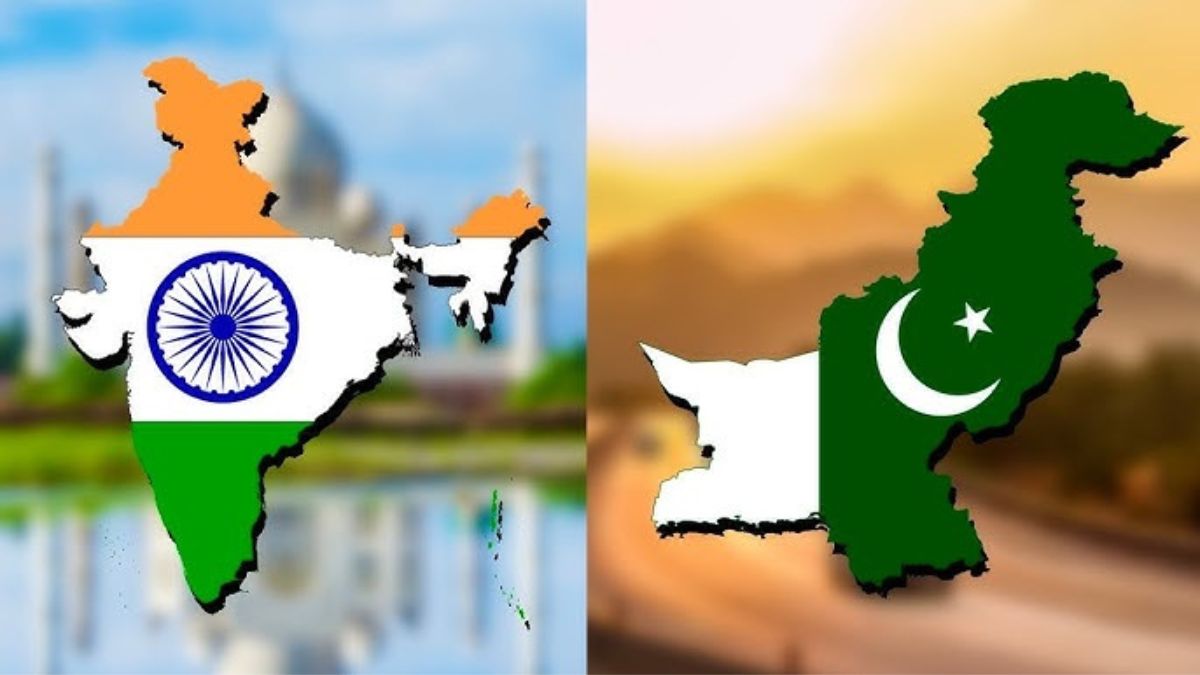
The Historical Crucible of Partition
The partition of India in 1947, which birthed India and Pakistan as separate nations, remains one of the most seismic events in modern history, reshaping South Asia’s political, cultural, and economic landscape. Driven by the British withdrawal from colonial rule and irreconcilable tensions between the Indian National Congress and the Muslim League, the division led to the displacement of 15 million people and the deaths of up to two million in communal violence. But what if this fracture had been avoided? Imagining an undivided India requires grappling with the forces that fueled partition—religious nationalism, colonial mismanagement, and economic disparities—while considering how a unified nation might have altered global geopolitics. The decision to partition, formalized by the Radcliffe Line, was a rushed compromise that ignored cultural and economic interdependencies, setting the stage for decades of conflict, including three India-Pakistan wars and ongoing Kashmir disputes.
Background
The roots of partition trace back to the British policy of divide-and-rule, which exacerbated Hindu-Muslim tensions, as seen in the 1905 partition of Bengal. By 1947, Muhammad Ali Jinnah’s demand for a separate Muslim state clashed with Jawaharlal Nehru’s vision of a secular, unified India. Yet, key figures like Mohan Das Gandhi advocated for unity, proposing a federal structure to accommodate diversity. An undivided India might have adopted such a model, potentially resembling Canada’s federal system, where linguistic and cultural identities coexist under a strong central government. However, the communal violence of 1946-47, fueled by distrust and colonial haste, made compromise elusive. An alternative path could have required earlier British mediation or a slower decolonization process, allowing time to negotiate power-sharing. Such a scenario, though, would have faced immense challenges, given the deep-seated fears of domination among both Hindus and Muslims.
Economically, an undivided India would have retained the integrated markets of the subcontinent, from the ports of Karachi to the jute fields of Bengal. The partition severed these links, weakening both nations’ economies and fueling competition over resources like the Indus River. A unified India could have leveraged its vast population and resources to emerge as an economic powerhouse sooner, potentially rivaling China’s post-1978 growth. However, internal divisions might have hindered governance, as linguistic and regional identities, already evident in the 1950s language-based state reorganizations, could have strained a centralized system. The economic potential of an undivided India thus hinges on whether it could have balanced diversity with cohesion.
Geopolitical and Cultural Realignments
An undivided India would have profoundly altered global geopolitics, reshaping alliances and conflicts in the Cold War and beyond. A unified nation of over 1.5 billion people by 2025, spanning present-day India, Pakistan, and Bangladesh, would likely have emerged as a superpower, wielding unmatched demographic and economic clout. During the Cold War, India’s non-aligned stance, articulated at the 1955 Bandung Conference, positioned it as a leader of the Global South. An undivided India, with greater strategic depth from the Arabian Sea to the Bay of Bengal, might have amplified this role, potentially mediating between the U.S. and Soviet blocs rather than leaning toward Moscow, as India did post-1947. This neutrality could have made it a linchpin in global diplomacy, reducing the proxy conflicts that defined South Asia, such as the Soviet-Afghan War, where Pakistan played a pivotal role.
The absence of partition would have eliminated the India-Pakistan rivalry, a cornerstone of South Asian instability. Without the Kashmir dispute, which has fueled militancy and nuclear escalation risks, an undivided India might have focused its military resources on internal development rather than border conflicts. However, managing religious and ethnic diversity would have been a formidable challenge. The Muslim League’s fear of Hindu domination might have persisted, potentially leading to separatist movements within a federal framework. Bangladesh’s 1971 liberation war, driven by linguistic and cultural marginalization, suggests that even a unified India could have faced regional uprisings, particularly in Bengal or Punjab. A federal system with strong provincial autonomy might have mitigated these tensions, but only if trust-building measures had overcome decades of communal mistrust.
Culturally, an undivided India could have fostered a richer synthesis of Hindu, Muslim, and other traditions, preserving the subcontinent’s shared heritage. Cities like Lahore and Dhaka, now separated by borders, might have remained cultural hubs within a single nation, strengthening a pluralistic identity. Yet, the rise of religious nationalism, evident in India’s post-1980s Hindu majoritarianism, suggests that unity might have required robust policies to prevent marginalization. The global cultural influence of an undivided India could have rivaled that of the West, with Bollywood, Urdu poetry, and Sufi traditions blending into a global cultural force. However, without partition’s trauma, the subcontinent’s literature and cinema might lack the poignant narratives of loss that define works like Saadat Hasan Manto’s stories.
The Future That Might Have Been
Envisioning an undivided India in 2025 reveals both promise and peril. Economically, a unified nation could have surpassed China’s GDP by leveraging its human capital and natural resources, potentially leading global innovation in technology and renewable energy. However, governance challenges would likely persist, as the subcontinent’s linguistic diversity—over 1,600 languages and dialects—could strain centralized administration. A federal model with strong regional autonomy might have succeeded, but only with a commitment to inclusive policies that addressed minority fears. The absence of partition-related conflicts could have accelerated infrastructure development, connecting remote regions like Balochistan to urban centers like Mumbai, fostering economic integration.
Geopolitically, an undivided India would likely dominate the Indo-Pacific, reshaping alliances like the Quad. Without Pakistan’s alignment with China, the Belt and Road Initiative might have faced greater resistance, altering global trade dynamics. Yet, internal instability could have weakened this potential, as regional disparities and religious tensions might have fueled insurgencies, requiring significant security resources. The absence of a India-Pakistan open war would reduce escalation risks but might shift strategic rivalries toward China or internal factions. The global power dynamics of a unified India would thus depend on its ability to project unity while managing diversity.
The cultural and social implications are equally complex. An undivided India might have nurtured a pluralistic identity, but the rise of global populism suggests that religious or ethnic nationalism could still emerge, challenging cohesion. Education and economic equity would be critical to sustaining unity, as disparities between regions like Punjab and Bihar could exacerbate tensions. The absence of partition’s trauma might have diminished communal divides but could also have dulled the urgency for institutional reforms. Looking forward, an undivided India would face the same challenges as today’s divided nations—climate change, economic inequality, and global competition—but with greater scale and complexity. The road not taken offers a tantalizing vision of unity, but its success would hinge on overcoming the very divisions that led to partition in the first place.




