

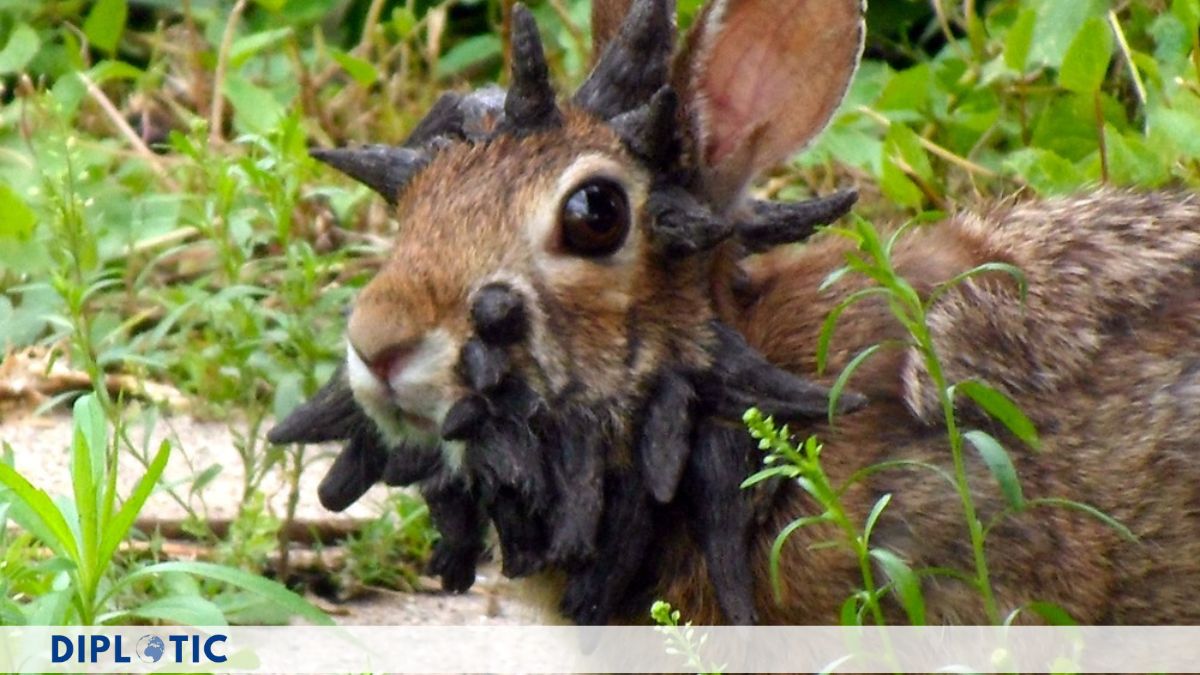
In recent weeks, wild rabbits with black, horn-like growths on their heads have been spotted in places like Fort Collins, Colorado, prompting a wave of social media buzz and local news coverage. Residents describe the growths as “black quills or toothpicks” jutting from the animals’ faces, creating an unsettling sight. “I thought he’d die over the winter, but he came back, and the growths got bigger,” local Susan Mansfield told a news outlet.
The culprit? The Shope papillomavirus, also known as cottontail rabbit papillomavirus (CRPV), a DNA virus that causes wart-like tumors on rabbits’ skin. According to Colorado Parks and Wildlife (CPW), these growths, or papillomas, often appear as black nodules on the head, sometimes elongating into horn-like shapes. First identified in the 1930s by virologist Richard E. Shope, the virus primarily affects cottontail rabbits but can also infect other species like brush rabbits and domestic rabbits.
“It’s not a new disease, but it’s shocking to see. These rabbits look like they stepped out of a myth,” a wildlife biologist shared on social media.
The Science of Shope Papillomavirus
The Shope papillomavirus belongs to the Papillomaviridae family, known for causing warts and tumors in various species, including humans (think HPV). In rabbits, it triggers abnormal skin cell growth, forming keratinized tumors that can resemble horns, spikes, or even tentacles. These growths typically appear on the head, neck, or shoulders, especially in wild cottontails in the Midwest, where the virus is most common.
The virus spreads through direct contact with infected rabbits or via biting insects like mosquitoes and ticks, which carry it between hosts. Studies show it’s highly resistant to drying out, allowing it to linger on surfaces or in the environment. While most wild rabbits recover naturally, with tumors shrinking after the infection runs its course, severe cases can interfere with eating or drinking, leading to starvation. In domestic rabbits, the disease can be more serious, sometimes progressing to squamous cell carcinoma, a type of skin cancer.
“For wild rabbits, it’s usually no big deal. But for pet rabbits, it’s a call to the vet,” a Colorado veterinarian noted.
Why It’s Not a Threat to Humans or Pets
One key point: the virus is rabbit-specific. It cannot infect humans, dogs, cats, or other animals, easing fears of a broader outbreak. However, domestic rabbits kept outdoors are at risk if they encounter wild rabbits or biting insects. CPW advises pet owners to seek veterinary care if growths appear and to keep pet rabbits indoors to limit exposure. The agency also warns against touching infected wild rabbits to avoid spreading the virus unintentionally, such as through clothing or hands.
This specificity sets Shope papillomavirus apart from other wildlife diseases, like bird flu, which has raised concerns about cross-species transmission. Unlike bird flu, which has infected mammals like cows and sparked pandemic worries, CRPV poses no such risk. Still, its striking visual impact has fueled public fascination and some alarm.
A Link to American Folklore
The horned rabbits have a surprising cultural tie: the jackalope, a mythical creature blending a rabbit with antelope horns, popular in Western U.S. folklore. Some experts believe sightings of CRPV-infected rabbits in the early 20th century inspired these tales. The jackalope, celebrated in postcards and roadside attractions, may owe its origins to these viral growths, which can mimic antlers or horns. A historical analysis suggests the legend took root in the 1930s, around the time Shope identified the virus in Iowa’s cottontail populations.
This connection adds a layer of intrigue, blending science with storytelling. Social media posts on X have dubbed the rabbits “real-life jackalopes,” with users sharing photos and speculating about their eerie appearance. Yet, CPW emphasizes that euthanasia is unnecessary unless the rabbit can’t eat or drink, as most recover naturally.
Broader Implications for Wildlife and Public Health
The sightings raise questions about monitoring wildlife diseases. While CRPV is harmless to humans, its spread highlights the role of insects in transmitting infections, a growing concern as climate change extends mosquito and tick seasons. A 2025 study notes that warmer temperatures could increase CRPV cases in regions like Colorado, where outbreaks have been periodic but are now more visible due to urban sprawl bringing people closer to wildlife.
The virus also holds a unique place in medical history. Shope’s 1933 discovery showed that viruses could cause tumors in mammals, a breakthrough that shaped cancer research. CRPV became a model for studying human papillomaviruses (HPV), which cause cancers like cervical cancer. Today, it’s still used in labs to test antiviral therapies and vaccines, per a research overview.
Public Response and Advice
Public reactions range from fascination to unease. Some Coloradans worry about infected rabbits in their yards, while others see it as a quirky natural phenomenon. CPW urges people to report sightings but avoid handling affected animals. For pet owners, keeping rabbits indoors and using insect repellents can reduce risks. Veterinary treatment, like surgical tumor removal, is an option for severe cases in domestic rabbits, though no cure exists for the virus itself.
As this story spreads, it’s a reminder of nature’s complexity—where a virus can turn a common rabbit into a creature of legend. It also underscores the need for balanced wildlife management, ensuring public safety without overreacting to a largely benign condition.




