

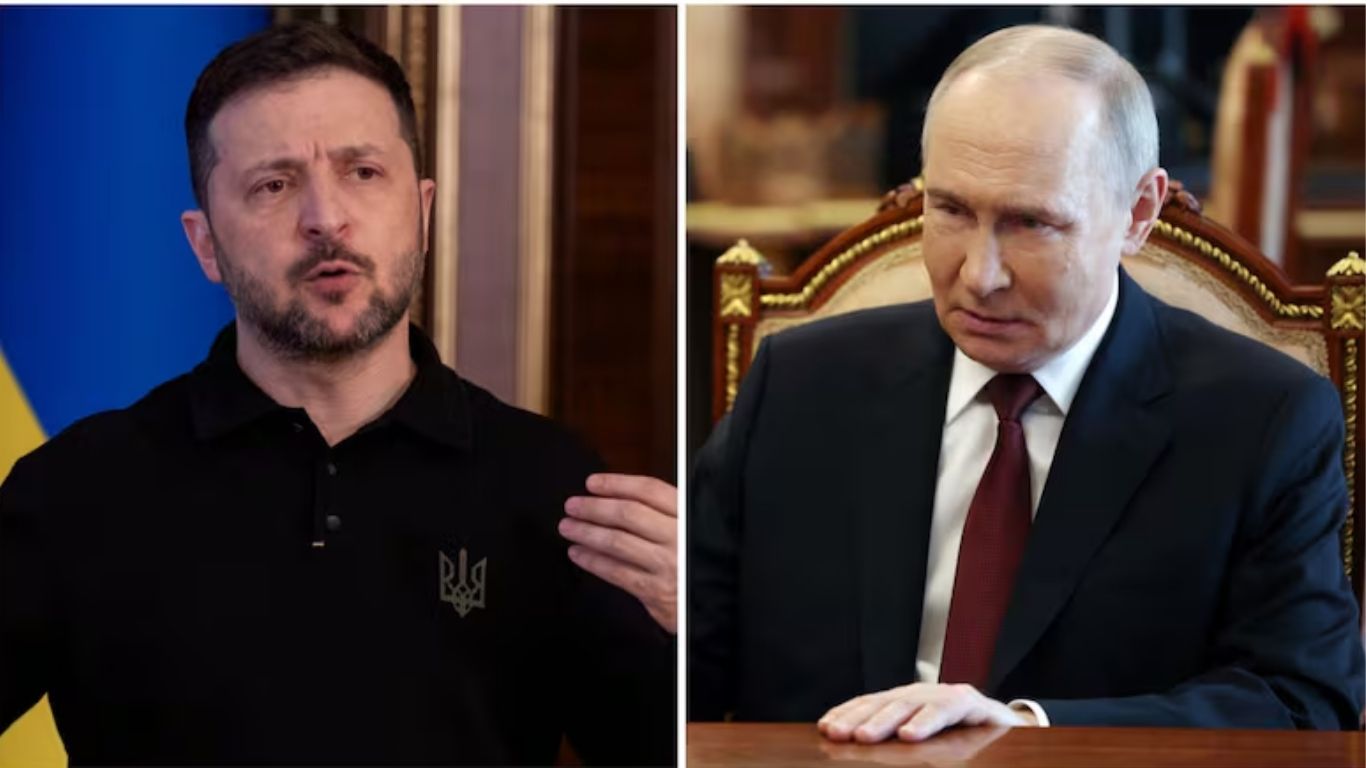
Ukraine’s escalating drone campaign hit a new peak on August 10, 2025, with a strike on a Russian oil refinery in the Saratov region, setting the stage for a high-stakes diplomatic showdown. As Kyiv’s drones pierce deeper into Russian territory than ever before, the attack—confirmed by Ukraine’s military—ignited explosions and a blaze at a key fuel hub, though Russia’s local governor sidestepped naming the refinery. With President Donald Trump set to meet Vladimir Putin in Alaska on August 15, 2025, to discuss ending the four-year war, Ukraine’s bold move signals defiance amid delicate peace talks. From battlefields to boardrooms, let’s dissect this strike, its fallout, and what it means as diplomatic gears grind.
The Strike: Targeting Russia’s Economic Lifeline
Ukraine’s military claimed responsibility for a drone attack on the Saratov oil refinery, a Rosneft-owned facility with a 7-million-ton annual crude processing capacity, on the night of August 9-10, 2025. The General Staff reported “explosions and a fire” at the site, a critical supplier of fuel for Russia’s military. Social media footage showed thick black smoke billowing from the industrial zone, with local reports citing at least eight explosions in Saratov and nearby Engels. Saratov’s governor, Roman Busargin, confirmed one death and damage to residential apartments and an “industrial facility” but dodged mentioning the refinery. Russia’s Defense Ministry reported downing 97 Ukrainian drones overnight, including eight over Saratov, and 21 more by Saturday morning.
“[Ukrainian] drones are targeting … deeper into Russian territory [than] in the past,” Al Jazeera’s Osama Bin Javaid noted from Moscow, highlighting a shift from frontline strikes to economic targets 1,500 km from Ukraine’s border. The refinery, already hit in November 2024, was forced to suspend operations earlier this year due to prior attacks, per Reuters. Ukraine’s strategy? Cripple Russia’s war machine by choking its fuel supply, with X posts noting the strike’s “large effects” on Russia’s export economy.
Tit-for-Tat: Russia’s Retaliatory Strikes
Russia didn’t sit idly. On August 9, its drones hit a bus in Ukraine’s Kherson region, killing two and injuring 16, with a second strike wounding three responding officers. In Zaporizhia, Russian attacks killed two in a car and a 61-year-old woman at home. Ukraine’s air force intercepted 16 of 47 Russian drones overnight, with 31 hitting targets across 15 locations. In Odesa, three swimmers died from unexploded mines on banned beaches, a grim reminder of the Black Sea’s dangers since Russia’s 2022 invasion. Both sides deny targeting civilians, but the daily aerial exchanges—121 Ukrainian drones downed, per Russia—show a relentless cycle.
Ukraine also scored a ground win, retaking Bezsalivka village in Sumy, clearing Russian forces and “eliminating” 18 troops. This comes as Russia presses Sumy, 20 km from its capital, after rolling back Ukraine’s 2024 Kursk offensive. The back-and-forth underscores a war now grinding into its fourth year, with no battlefield resolution in sight.
Diplomatic Stakes: Trump-Putin Summit Looms
The Saratov strike lands as diplomatic efforts heat up. Trump, who vowed to end the war “in 24 hours,” will meet Putin in Alaska on August 15, 2025, claiming a deal is close. He’s reportedly open to inviting Ukraine’s President Volodymyr Zelenskyy, though Putin insists “conditions” aren’t right for a face-to-face with him. Zelenskyy, rejecting land concessions, warned on August 9 via Telegram that “Ukrainians will not give their land to the occupier.”
European leaders—UK, France, Germany, Italy, Poland, Finland, and EU Commission President Ursula von der Leyen—issued a joint statement on August 10, welcoming Trump’s talks but stressing “unwavering support” for Ukraine and pressure on Russia. The Wall Street Journal reported European officials, meeting US Vice President JD Vance in the UK, proposed a ceasefire-first peace plan with reciprocal territory swaps and security guarantees. “This is a war in Ukraine, but in Europe too,” Al Jazeera’s Charles Stratford said from Kyiv, noting its “huge ramifications” for European security.
Why Now? Ukraine’s Strategic Gambit
Ukraine’s deep strikes, like Saratov, aim to disrupt Russia’s war economy. Oil refineries, vital for military fuel and export revenue, are prime targets—X posts claim such hits are “having large effects” on Russia’s finances. A DiploTic analysis on August 10 noted Ukraine’s drone campaign, including strikes on Ryazan and Samara refineries, has cut Russia’s refining capacity by 7% since 2024. This pressure coincides with Trump’s tariff threats on Russian energy, amplifying economic strain.
But it’s a risky play. Zelenskyy’s rejection of land swaps signals distrust in Trump’s deal-making, fearing a US-Russia pact sidelining Ukraine. DiploTic warned on August 9 that Ukraine’s escalatory strikes could complicate talks, as Russia may harden its stance. Yet Kyiv’s calculus is clear: show strength to avoid being shortchanged in Alaska.
Broader Context: A War of Attrition
The Ukraine-Russia conflict, sparked by Moscow’s 2022 invasion, has killed over 70,000 Ukrainian civilians and soldiers, per UN estimates, with Russia’s losses likely higher. Ukraine’s drone strategy, hitting 15 refineries since 2024, aims to offset Russia’s battlefield gains, like in Donetsk. Europe’s backing—$50 billion in EU aid pledged in 2025—keeps Ukraine afloat, but Trump’s push for a quick deal raises fears of a forced settlement.
Russia’s own drone and missile barrages, like the 47 launched on August 9, show no letup, targeting Ukraine’s infrastructure and civilians. The Black Sea’s mine-strewn coast, killing swimmers in Odesa, underscores the war’s indiscriminate toll. Meanwhile, global attention splits—Gaza’s crisis and Iran-Israel clashes dominate headlines, potentially diluting focus on Ukraine.
What’s Next? Talks or Escalation?
The Alaska summit could be a turning point—or a flashpoint. Trump’s promise of a swift resolution contrasts with Putin’s demand for territorial concessions, like retaining Crimea and Donbas. DiploTic reported on August 11 that European leaders fear Trump may prioritize US interests, pressuring Ukraine to cede land for peace. Zelenskyy’s defiance, backed by strikes like Saratov, aims to bolster Kyiv’s leverage, but risks Russian retaliation—X posts hint at Moscow planning “massive” drone responses.
The refinery strike’s success is murky—Russia’s censorship clouds damage reports, but fires raged into August 10, per OSINTtechnical on X. If Ukraine sustains this pressure, it could force Russia to divert resources, but at the cost of escalating a war already bleeding both sides. For now, Kyiv’s drones are a loud message to Alaska: Ukraine won’t be a bystander in its own fate.




