

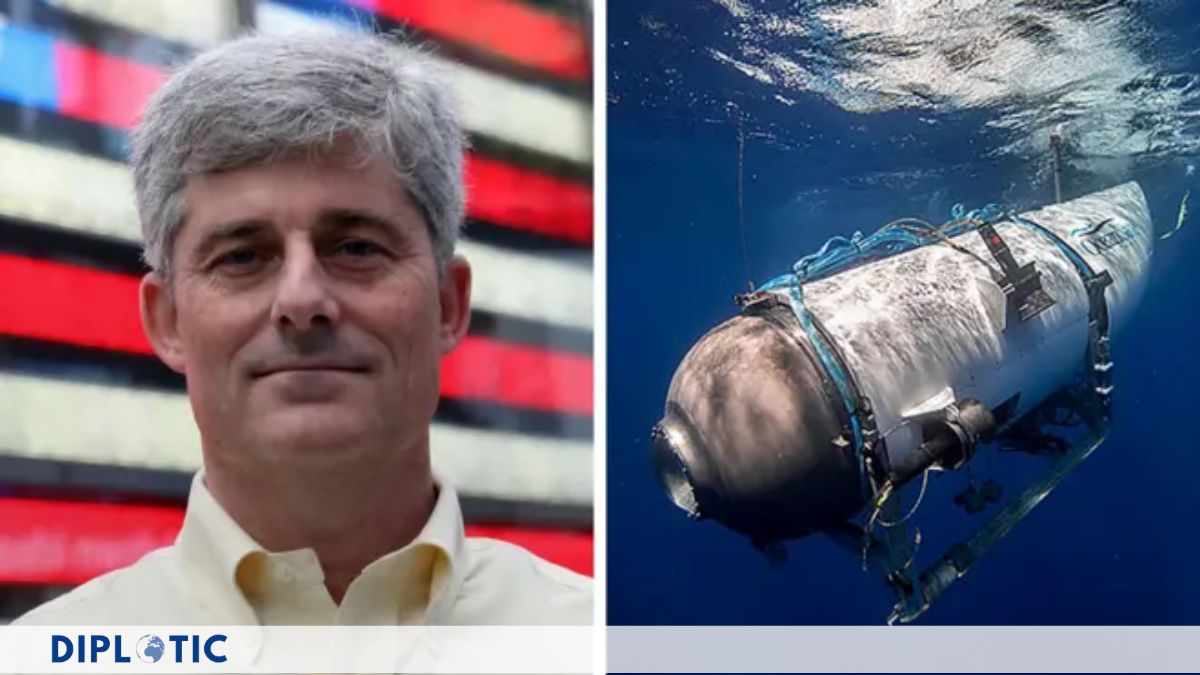
Ah, the ocean depths— that vast, unforgiving void where human ego meets crushing pressure, often with predictable results. Stockton Rush, the bold CEO of OceanGate, dreamed big: turning the Titanic’s grave into a playground for the wealthy. But as a fresh US Coast Guard report lays bare, his shortcuts and disdain for rules turned that dream into a nightmare, claiming five lives in a 2023 implosion. Two years on, the 335-page document paints Rush as a modern Icarus, flying too close to the sea floor on wings of carbon fiber and cost-cutting. This isn’t just a tale of one man’s folly; it’s a wake-up call for an industry teetering between adventure and recklessness. Let’s sift through the wreckage, crosschecking the facts against the latest probes, and explore how this catastrophe ripples through deep-sea exploration.
Stockton Rush: Visionary or Rule-Breaker?
Stockton Rush wasn’t your average desk jockey. A Princeton grad with aerospace engineering chops and roots tracing back to Declaration of Independence signers, he swapped sky-high ambitions for ocean lows. Poor eyesight dashed his astronaut hopes, so after stints at McDonnell Douglas testing F-15 jets and snagging an MBA from UC Berkeley, Rush pivoted to the deep blue. In 2009, he founded OceanGate in Everett, Washington, aiming to “increase access to the deep ocean through innovation,” as his bio boasted.
Rush saw the sea as humanity’s lifeboat amid climate woes. “The future of mankind is underwater, it’s not on Mars,” he told Mexican YouTuber Alan Estrada in a 2021 chat. He dubbed his passion “the deep disease” in a 2019 Smithsonian piece, pushing for bases below the waves. But his methods? Questionable at best. Rush bragged about bending rules: “I think it was General MacArthur who said you’re remembered for the rules you break,” he said, justifying his Titan design. And break them he did, often with “logic and good engineering” as his shield—or so he claimed.
Crosschecking his backstory, Princeton alumni profiles confirm his lineage and drive, while company records show OceanGate’s focus on submersibles like Cyclops 1 and 2 before Titan. Yet, whispers of trouble surfaced early. Former employees told investigators Rush wore too many hats: CEO, safety officer, pilot. No checks, no balances—just Rush calling the shots.
The Toxic Core: Safety Cuts and Workplace Woes
The Coast Guard’s Marine Board of Investigation report, released August 5, 2025, pulls no punches. OceanGate fostered a “toxic workplace” where dissent meant the door. Staff faced “intimidation tactics,” firings, and belittling for flagging risks. “The cumulative effect was an authoritarian and toxic culture where safety was not only deprioritized but actively suppressed,” the report states. One engineering director recalled Rush prioritizing “image and marketing” over fixes, like after a 2019 hull crack in the Bahamas. “He was insistent—he was focused on making sure the media saw that OceanGate was still in operation,” the director said.
Rush “made all engineering decisions independently,” despite directors on payroll. “My job as the Director of Engineering is more about rounding up the cattle than it is about making all the choices,” the first one told probers. Cost-cutting ruled: Titan’s carbon-fiber hull, untested for repeated deep dives, drew flak from experts. In 2018, over 40 industry pros warned OceanGate in a letter, but Rush dismissed it. He once quipped to journalist David Pogue in 2022: “At some point, safety just is pure waste. I mean, if you just want to be safe, don’t get out of bed.”
Background here: Carbon fiber’s light but brittle under pressure—think 5,800 psi at Titanic depths, per physics basics from NOAA data. Traditional subs use titanium or steel spheres for even load distribution. Titan’s cylinder shape? A gamble. The report notes OceanGate skipped proper testing, ignoring 2022 expedition anomalies like a “loud acoustic event” signaling delamination. Stored outdoors in Canadian winters, the hull faced freeze-thaw cycles, worsening wear.
Crosschecked via the report PDF and NPR coverage: Yes, OceanGate’s ops director, with 25+ years in subsea work, said concerns were “dismissed due to cost-cutting measures and poor engineering decisions.” A culture of secrecy fueled dysfunction, all to hit the Titanic fast and turn profits.
The Fatal Dive: What Went Wrong on June 18, 2023
Picture this: Five souls crammed in a 22-foot tube, dropping to 12,500 feet for a $250,000 peek at history’s most famous wreck. On June 18, 2023, Titan launched from Newfoundland’s Polar Prince support ship. At 10:47 a.m. local, a “critical event” hit—the hull buckled instantly, imploding under immense force. No suffering, just gone. Debris scattered 1,600 feet from Titanic’s bow, found days later by ROVs.
Victims: Rush, 61; French Titanic expert Paul-Henri Nargeolet, 77; British adventurer Hamish Harding, 58; Pakistani-British businessman Shahzada Dawood, 48; and his son Suleman, 19. DNA confirmed remains. The search gripped the world—banging noises teased hope, but it was debris all along.
Pre-dive red flags abounded. Missions plagued by glitches; an “antsy” Rush snapped, “I’m going to get a dive in, even if it kills me.” Ironically, it did. The report blames inadequate design, no external oversight, and Rush’s negligence. Had he lived, criminal charges loomed: “seaman’s manslaughter” under US law for misconduct or neglect. “As both a corporate executive responsible for the vessel’s operation and its Master during the casualty, Mr. Rush may have been subject to criminal liability,” investigators wrote.
OceanGate’s post-tragedy statement: “We again offer our deepest condolences… After the tragedy occurred, the company permanently wound down operations.” Defunct now, but lawsuits roll on—Nargeolet’s family seeks $50 million, alleging hidden flaws.
Dodging Rules: How OceanGate Skirted Oversight
Deep-sea tourism thrives in gray zones. International waters lack strict sub regs, unlike classified vessels from bodies like ABS or DNV. OceanGate labeled paying riders “mission specialists”—no real tasks, just a ploy to dodge US rules. Waivers mentioned death thrice on page one, signed post-payment with no refunds. Funds went straight to ops, pressuring dives.
Rush’s aversion? Legendary. Told a Coast Guard officer in 2017 his Titanic plan was illegal? “He would buy a congressman,” per testimony. Falsified docs for credentials, claimed Bahamian registration falsely. The report slams “strategically creating and exploiting regulatory confusion.”
Historical context: Sub accidents aren’t new. The US Navy lost Thresher in 1963 (129 dead) to piping failure at 2,400 feet; Scorpion in 1968 (99 dead) from unknown causes. Russia’s Kursk sank in 2000 (118 dead) after torpedo blasts. Since 2000, over 30 incidents, per Wikipedia lists, including AS-28 minisub entanglement in 2005. Regulations tightened post-Thresher—mandatory safety certs for naval subs—but private tourism? Spotty. The International Maritime Organization has guidelines, but enforcement varies.
Titan’s Logitech gamepad steering? Whimsical, sure, but sardonic reality: It sold out on Amazon post-disaster, fueling memes and “disaster tourism” schadenfreude, as Wired noted.
Ripples in the Deep: Industry Fallout and Future Fixes
This mess shocked deep-sea tourism, a niche blending science and billionaire thrills. Pre-Titan, firms like Triton or EYOS offered safe dives—certified subs, third-party checks. Post-implosion, scrutiny spiked. “The Titan disaster was preventable,” Coast Guard’s Jason Neubauer said August 5, 2025. Report urges stronger oversight, clear rules for innovators.
Impact? Mixed. Sub pilot Ofer Ketter told Newsweek in 2023: Industry’s “proven track-record” of thousands of safe dives shouldn’t suffer from one “non-compliant player.” Yet, documentaries like Netflix’s “Titan: The OceanGate Disaster” (June 2025) and BBC’s “Implosion: The Titanic Sub Disaster” (May 2025) keep the spotlight on risks. Calls for regs echo: Marine Technology Society’s Will Kohnen pushes third-party certs, likening it to freeway lines for safety.
Future? Optimistic, per CNN’s August 6, 2025, piece: Industry eyes growth, but with lessons. No more unchecked experiments—passengers demand verified safety. Dawood family statement: “No report can… fill the void,” but hopes for prevention.
Broader angle: Deep exploration’s legacy. From Charles Wyville Thomson’s 1870s Challenger Expedition mapping oceans to James Cameron’s 2012 Mariana Trench solo dive, progress came with peril. Titan reminds us: Innovation sans caution is folly. Rush’s hubris—charming in interviews, deadly in depths—cost lives. As one ex-employee put it, safety was “pure waste.” Turns out, ignoring it wastes everything.
In the end, the ocean wins. Humanity’s forays below? They demand respect, not shortcuts. With probes ongoing and lawsuits brewing, Titan’s echo urges: Dive smart, or don’t dive at all.




