

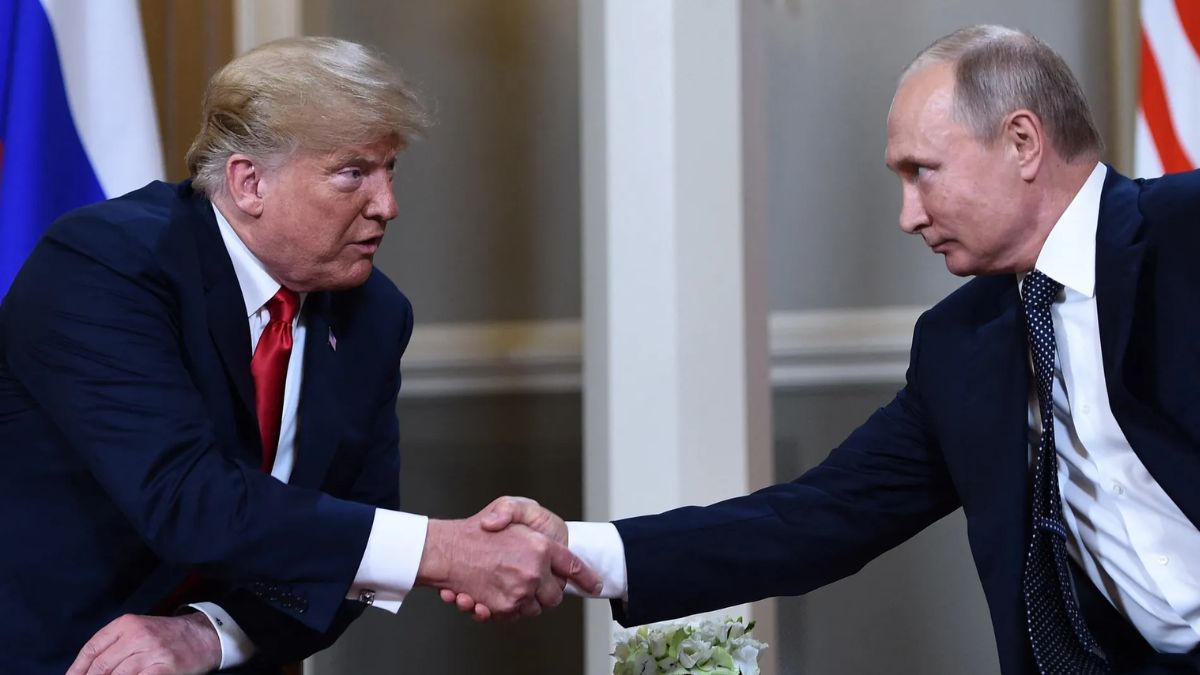
The war in Ukraine, initiated by Russia’s full-scale invasion in February 2022, persists with unrelenting intensity, characterized by Russia’s incremental advances in the east and frequent aerial assaults across both nations’ territories. Against this backdrop, the Kremlin confirmed plans for a high-level meeting between U.S. President Donald Trump and Russian President Vladimir Putin, scheduled for August 15, 2025, in Alaska, to discuss a potential ceasefire. Trump, emphasizing his intent to resolve the conflict, stated, “I’m here to get [the war] over with”. Despite three rounds of U.S.-mediated talks between Russia and Ukraine from May to July 2025 yielding no progress, Trump’s direct engagement with Putin aims to break the deadlock. However, the profound disparities between Moscow’s and Kyiv’s positions, coupled with Putin’s inflexible demands, render a rapid resolution improbable. This article analyzes the structural and diplomatic barriers to a swift ceasefire, exploring Russia’s strategic objectives, Trump’s mediation approach, and Ukraine’s concerns about exclusion from negotiations, while critically assessing the feasibility of Trump-Putin talks achieving meaningful outcomes.
The Intractability of Russian Demands: A Barrier to Ceasefire
Russia’s negotiating stance remains anchored in maximalist preconditions that effectively demand Ukraine’s capitulation. In a June 2025 memorandum presented to Ukraine, Moscow outlined terms for a “final settlement,” including recognition of Russian sovereignty over Crimea, Donetsk, Luhansk, Zaporizhzhia, and Kherson, alongside Ukraine’s demilitarization, neutrality, exclusion of foreign military presence, and new elections. These conditions, reiterated by Putin as unchanged in late July 2025, reflect a consistent strategy of territorial and political dominance. Russian political analyst Tatiana Stanovaya observes, “The Russian side can frame this in a dozen different ways, creating the impression that Moscow is open to concessions… but the core position remains unchanged: Russia wants Kyiv to surrender”.
Despite U.S. envoy Steve Witkoff’s meeting with Putin in Moscow providing Washington with a clearer understanding of Russia’s terms, there is no evidence suggesting Moscow’s willingness to moderate its demands. Putin’s agreement to meet Trump may be a tactical maneuver to delay or mitigate threatened U.S. secondary sanctions on Russia’s trading partners, such as India and China, which Trump set to impose by August 8, 2025, absent a ceasefire agreement. Alternatively, the Kremlin may seek to leverage Trump’s perceived receptivity to Russian perspectives, as evidenced by his reluctance to unequivocally condemn Putin’s actions, to legitimize its conditions.
Trump’s Mediation: Ambiguity and Strategic Leverage
Trump’s approach to mediating the Ukraine conflict combines personal diplomacy with economic coercion, reflecting both his self-styled deal-making persona and a complex relationship with Putin. Since his inauguration in January 2025, Trump has oscillated between optimism and frustration, initially promising to end the war within 24 hours—a claim he later admitted was sarcastic. His administration’s efforts, including Witkoff’s Moscow visit and multiple calls with European allies and Ukrainian President Volodymyr Zelenskyy, have intensified diplomatic momentum. Trump’s announcement of a Trump-Putin summit in Alaska underscores his belief that direct engagement could yield results, with discussions potentially involving “swapping of territories to the betterment of both”.
However, Trump’s mediation is complicated by his ambiguous stance toward Putin. His 2018 Helsinki meeting with Putin, where he appeared to align with Kremlin narratives over U.S. intelligence on Russian election interference, raised concerns about his susceptibility to Putin’s influence. While Trump has expressed impatience with Putin—stating in April 2025, “he’s just tapping me along”—he has refrained from fully denouncing Russian aggression, fostering perceptions of partiality. This dynamic is compounded by Trump’s threats of secondary sanctions and tariffs, which, while pressuring Moscow, have not yet altered Russia’s strategic calculus, as evidenced by a 2.7% rise in Russia’s stock market following Trump’s July 2025 tariff announcements.
Ukraine’s Exclusion: A Risk to Equitable Negotiations
Ukraine’s insistence on inclusion in ceasefire talks reflects its apprehension that Trump-Putin bilateral discussions could marginalize Kyiv’s interests. Ukrainian MP Iryna Herashchenko warned that Ukraine’s absence from the negotiating table is “very dangerous,” particularly given expectations of Russian demands for territorial concessions. Zelenskyy, emphasizing Kyiv’s readiness for dialogue, stated, “Ukraine is not afraid of meetings and expects the same bold approach from the Russian side”. However, Putin’s rejection of a trilateral meeting involving Zelenskyy, citing unripe conditions, underscores Moscow’s intent to dictate terms without Ukrainian input.
Kyiv’s concerns are amplified by Trump’s occasional alignment with Russian narratives, such as labeling Zelenskyy a “dictator” early in his term and suggesting shared responsibility for the war. Although Trump has since engaged Zelenskyy, including a tense Oval Office meeting in February 2025 and subsequent calls, the absence of a firm commitment to Ukraine’s territorial integrity raises fears of a U.S.-Russia deal at Kyiv’s expense. Zelenskyy’s call for a “full and unconditional ceasefire” and continued U.S. engagement contrasts sharply with Russia’s preconditions, highlighting the diplomatic chasm.
Structural Challenges: The Gulf Between Kyiv and Moscow
The fundamental incompatibility of Russian and Ukrainian objectives presents a structural barrier to a swift resolution. Russia’s invasion, which has killed tens of thousands and displaced millions, has hardened Ukraine’s resolve to reject territorial concessions, particularly in regions like Donbass and Crimea, which Moscow demands. Ukraine’s military efforts, including drone strikes on Russian energy infrastructure, demonstrate its commitment to resisting Russian advances, even as Russia intensifies attacks on Ukrainian cities. The failure of May-July 2025 talks, which produced only a prisoner exchange agreement, underscores the difficulty of aligning these positions.
Moreover, Putin’s strategic calculus may prioritize prolonging negotiations to maintain military pressure while avoiding sanctions. X posts reflect skepticism about Trump’s ultimatums, with one user noting, “Moscow has no intention of caving to pressure”. Russia’s deputy UN ambassador Dmitry Polyanskiy’s January 2025 statement that Moscow requires clarity on Trump’s “deal” further indicates a cautious approach, prioritizing strategic advantage over compromise. Conversely, Ukraine’s insistence on a 30-day unconditional ceasefire, backed by European leaders like Emmanuel Macron and Giorgia Meloni, clashes with Russia’s focus on addressing “root causes,” such as Ukraine’s NATO aspirations.
Critical Reflections: The Limits of Personal Diplomacy
Trump’s reliance on personal diplomacy, while generating diplomatic momentum, overlooks the structural complexities of the Ukraine conflict. His administration’s push for a ceasefire, including proposals for Vatican-hosted talks or Middle East-based negotiations, reflects an ambition to resolve “a war a month,” as Trump quipped. However, the absence of concrete concessions from Russia, coupled with Putin’s history of using dialogue to delay action, suggests that the Alaska summit may yield symbolic gestures—such as limited ceasefires on energy targets—rather than a comprehensive peace. European allies, while supportive of Trump’s efforts, remain wary, advocating for sustained pressure on Moscow to ensure meaningful concessions.
Furthermore, the domestic and international implications of a Trump-Putin deal cannot be ignored. A ceasefire requiring Ukrainian territorial concessions could destabilize Zelenskyy’s government and alienate European allies, who have invested $66.5 billion in U.S. military aid to Ukraine since 2022. Conversely, failure to secure a deal could reinforce perceptions of Trump’s diplomatic overreach, undermining his broader foreign policy agenda. The Kremlin’s diplomatic framing of the summit as a “victory” for Moscow, as noted by former Latvian minister Artis Pabriks, highlights the risk of Russia exploiting the talks for propaganda without substantive compromise.
Conclusion: A Protracted Path to Peace
As of August 9, 2025, the Trump-Putin meeting in Alaska represents a high-stakes attempt to advance ceasefire negotiations in the Ukraine war. However, Russia’s unyielding demands, Ukraine’s insistence on inclusion, and the structural gulf between Kyiv and Moscow render a rapid resolution unlikely. While Trump’s mediation has intensified diplomatic efforts, his personal rapport with Putin and ambiguous stance risk skewing negotiations toward Russian interests, raising concerns in Kyiv and among European allies. The war’s resolution will likely require sustained multilateral pressure, including sanctions and military support for Ukraine, to compel Russia toward genuine compromise—a process that extends beyond the scope of a single summit.




