

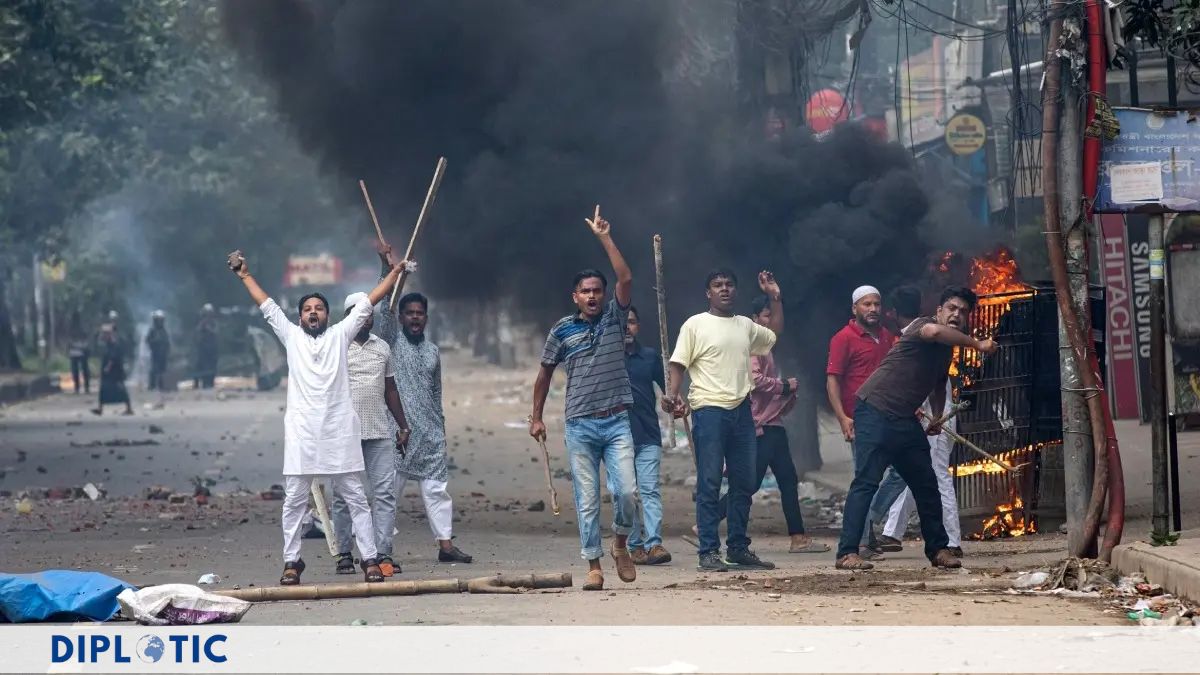
A Dark Turn Post-2024 Uprising
The controversial national election of 2024 and the subsequent fall of Sheikh Hasina marked a turning point in Bangladesh’s political history. While the mass uprising promised a new beginning, reality took a darker turn. The emergence of an interim government, initially seen as a symbol of democratic hope, quickly turned into a source of chaos, insecurity, and legal dysfunction. The government’s failure to ensure justice has directly fueled rising incidents of murder, rape, mob justice, extortion, and terrorism across the nation.
A Culture of Impunity
The interim government assumed power without a public mandate or constitutional legitimacy. As a result, a void in accountability disrupted the foundation of law and governance. Though the leadership repeatedly promised “stability and order,” no effective legal framework or reforms were implemented. A 2025 study by Bangladesh Legal Aid and Services Trust (BLAST) reported, “67% of crimes in the country never enter formal judicial proceedings, and most cases are halted due to influence from powerful groups.” [(Source: BLAST Report, April 2025)]
Mob Justice Epidemic
Frustrated by an absent justice system, citizens have turned to mob justice. Between January and June 2025, 31 mob lynching incidents were recorded, resulting in the deaths of 12 innocent people. In Dhaka, Narayanganj, Barisal, and Khulna, multiple cases showed civilians attacking suspected criminals, while police officers remained passive bystanders. [(Source: Prothom Alo, 19 June 2025)]
Surge in Murder and Rape
The culture of impunity has emboldened criminals. Reports show a significant increase in murder, rape, and violent crimes. According to the National Human Rights Commission (NHRC), “In the first six months of 2025, 1,342 murders and 874 rape cases were recorded, a 43% rise from the previous year.” Experts cite political patronage, interference from influential individuals, and administrative negligence as the primary drivers. [(Source: NHRC Report, July 2025)]
Extortion and Organized Crime
Since taking power, the interim government has reshuffled key administrative and law enforcement posts. In many districts, the newly appointed officers have been accused of colluding with local crime syndicates. In Gabtoli, Dhaka, a truck owners’ union leader was shot dead for refusing to pay extortion money. Investigations later revealed that a police sub-inspector was protecting the accused. [(Source: The Daily Star, 3 March 2025)] Extortion now runs rampant across ports, markets, and public transport systems.
Weakened Law Enforcement
The police, RAB, and other law enforcement agencies now suffer from a leadership vacuum. Political bias and interference from the interim government have weakened their operational independence. An internal police report (leaked in May 2025) revealed, “43% of officers have lost morale, while 27% admit being politically pressured to abandon impartiality.”
Democratic Deficit
The absence of a democratic structure and citizen participation in governance has deepened the roots of injustice. The interim regime, lacking any permanent foundation, continues to exercise political vengeance and suppression, further eroding the judicial system. Transfers of judges, politically influenced verdicts, and arbitrary dismissal of cases have shaken public trust in justice.
Conclusion
The 2024 mass uprising was a historic moment in Bangladesh. However, the post-uprising interim government has failed to deliver justice, order, or safety. Mob justice, murder, extortion, and rape are not isolated issues—they are symptoms of a failed state of justice. The nation’s future demands a neutral, democratic, and functional government, as well as an independent judicial system to restore public trust and ensure lasting security.
Recommendations
– Free the judiciary from political interference.
– Establish fast-track courts to ensure punishment for offenders.
– Ensure professional independence of law enforcement agencies.
– Replace the current interim authority with a neutral election-time caretaker government.




