
As temperatures dip and scarves come out, so does a familiar refrain: “Don’t catch a chill—you’ll get the flu!” Across households, schools, and even some doctor’s offices, the belief that cold weather causes the flu remains one of the most persistent health myths of our time. But how much of it is science, and how much is seasonal superstition?
In this fact-check, Diplotic takes a closer look at the widely held claim that cold weather causes the flu, dissecting the biology of the influenza virus, the role of environmental conditions, and the actual reasons why winter and flu seem so cozy together. As of August 2025, we turn to peer-reviewed research, global health data, and virological insights to set the record straight.
Because while the weather may nip at your nose, the real culprit behind the flu has nothing to do with the cold—and everything to do with how we live, breathe, and sneeze.
Claim 1: Cold Weather Directly Causes the Flu Virus to Develop
Fact-Check: False
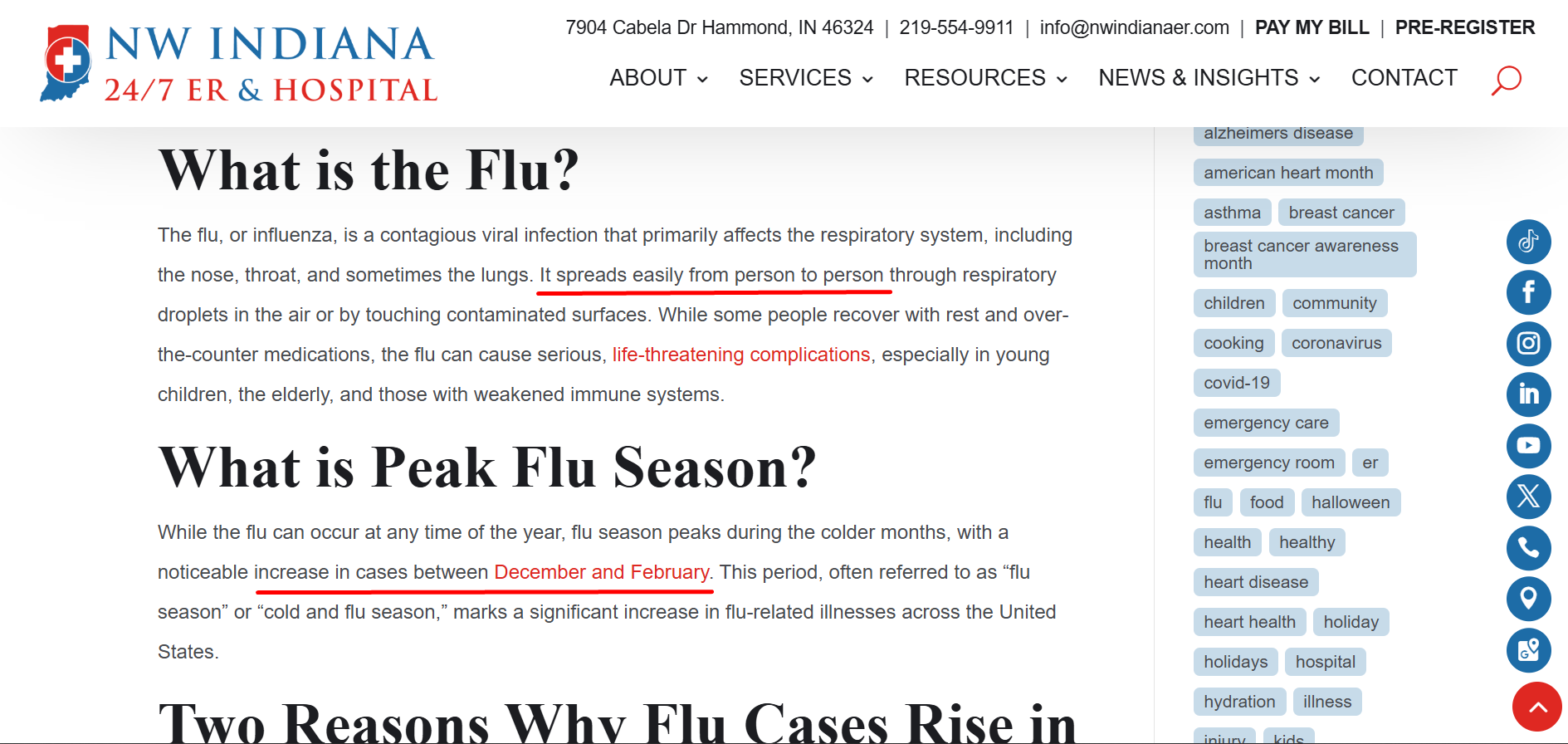
The idea that cold weather itself triggers the flu virus (influenza) to develop in the human body stems from the observation that flu season peaks in colder months, like December to February in the Northern Hemisphere. However, scientific evidence indicates that cold temperatures do not directly cause the influenza virus to form or mutate within a person. The virus, an RNA virus from the Orthomyxoviridae family, exists year-round and is transmitted through respiratory droplets from infected individuals, not generated by weather conditions.
Studies show that influenza viruses are stable and transmissible at various temperatures, with no evidence of cold weather initiating viral development. The misconception may arise from confusion with bacterial infections, like those causing pneumonia, which can be influenced by environmental factors, or from historical observations of weakened immune responses in cold conditions. Cold weather alone does not create or activate the flu virus.
Verdict: The claim is false. Cold weather does not directly cause the flu virus to develop; the virus pre-exists and spreads through human contact, not temperature-induced creation.
Claim 2: Cold Weather Increases the Spread of the Flu
Fact-Check: Partially True
Cold weather is associated with increased flu transmission, as seen in the 2024–2025 season, where cases surged in January across North America and Europe. Research suggests that lower temperatures and lower humidity, common in winter, create favorable conditions for the influenza virus to survive longer outside the body. A study notes that the virus remains viable on surfaces and in aerosols at 5°C (41°F) for up to 24 hours, compared to 6–8 hours at 30°C (86°F). Dry air also reduces mucus clearance in the respiratory tract, potentially aiding viral entry.
However, transmission depends more on human behavior—indoor crowding, reduced ventilation, and close contact during winter—than weather alone. In tropical regions like Bangladesh, flu peaks occur during monsoon seasons (June–September 2025), tied to humidity and crowding, not cold. The global flu report indicates that while cold weather enhances viral survival, it’s not the sole driver; social factors amplify spread.
Verdict: The claim is partially true. Cold weather can increase flu spread by prolonging viral survival and altering indoor dynamics, but human behavior and regional climate patterns play larger roles.
Claim 3: Exposure to Cold Air Weakens the Immune System, Leading to Flu
Fact-Check: False
The belief that cold air weakens the immune system, making people more susceptible to flu, is widespread. This stems from the idea that shivering or being underdressed in winter lowers body defenses. However, a meta-analysis found no direct link between cold exposure and immune suppression sufficient to cause influenza. The immune system, including white blood cell activity, remains effective across a range of temperatures when the body is otherwise healthy.
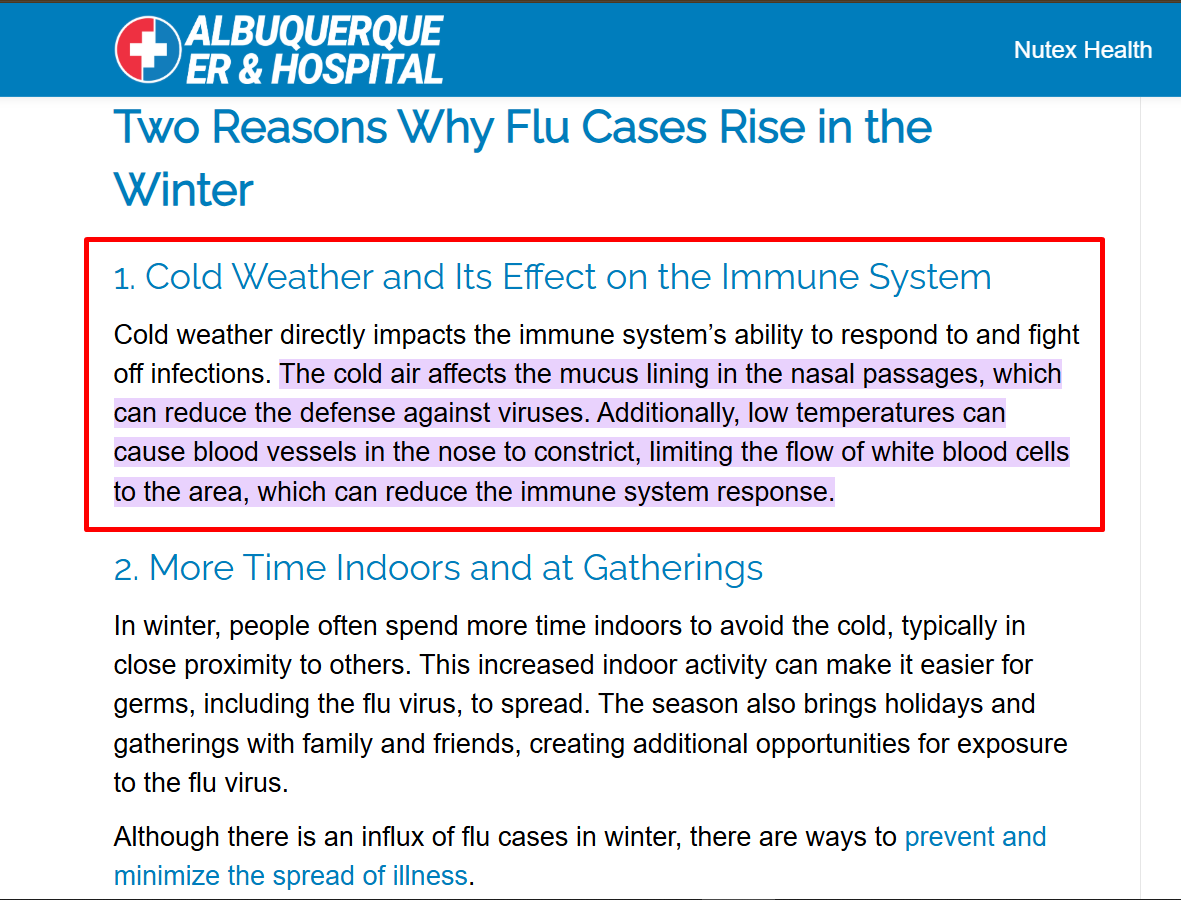
Indirect effects exist—cold air can cause vasoconstriction in nasal passages, potentially aiding viral entry, and vitamin D deficiency from less sunlight in winter may slightly reduce immunity. Yet, these factors are minor compared to vaccination status, pre-existing health conditions, and hygiene. The 2024–2025 flu season data shows vaccinated individuals had 40% lower infection rates, regardless of weather, debunking the immunity-weakening myth.
Verdict: The claim is false. Cold air does not significantly weaken the immune system to cause flu; susceptibility depends more on health and preventive measures than temperature exposure.
Claim 4: Flu Incidence Is Exclusively Tied to Cold Weather Seasons
Fact-Check: False
Flu is often called a “winter disease” due to its seasonal peak in colder months, with the 2024–2025 season reporting 15 million cases in the U.S. by March 2025. This pattern fuels the claim that flu is exclusively a cold-weather phenomenon. However, influenza occurs year-round, with variations by region. In Bangladesh, the 2025 monsoon season (June–August) saw a 10% rise in cases, linked to high humidity and flooding-induced crowding, not cold.
Global data shows year-round flu activity in tropical and subtropical areas, with peaks during rainy seasons. The virus’s spread is influenced by school reopenings, travel, and viral mutations (e.g., H1N1 strains in July 2025), not solely cold weather. Seasonal patterns are real but not universal.
Verdict: The claim is false. Flu incidence is not exclusive to cold weather; it varies by region and is driven by multiple seasonal and social factors, not just temperature.
Weather as a Contributor, Not a Cause
The flu’s association with cold weather reflects enhanced viral survival and indoor crowding, not direct causation. The 2024–2025 season, with 15 million U.S. cases, peaked in winter due to low temperatures (5°C) and humidity, but tropical regions like Bangladesh saw rises in monsoon conditions. Transmission hinges on human contact, ventilation, and immunity, with vaccines reducing rates by 40%. Cold weather amplifies spread, but it’s one piece of a complex puzzle, not the root cause.
They say cold weather brings the flu, and sure, it’s worse in January with everyone huddled inside. But my cousin got it in July during a flood, not a freeze. The virus doesn’t care about the thermometer—it’s the crowds and lack of shots that do the damage. Cold might help it linger, but it’s not the villain here.
“I bundled up and still got sick—guess it’s not the cold’s fault,” I mutter, rethinking the old wives’ tale.
Conclusion
Cold weather does not cause the flu. It does not trigger viral development or significantly weaken the immune system, though it can enhance spread by prolonging viral survival and promoting indoor crowding, as seen in the 2024–2025 winter peak. Flu occurs year-round, with regional variations like Bangladesh’s monsoon surge, driven by social and environmental factors beyond temperature. As of August 8, 2025, evidence shows cold weather is a contributor, not a cause, with prevention relying on vaccines and hygiene rather than weather avoidance.