

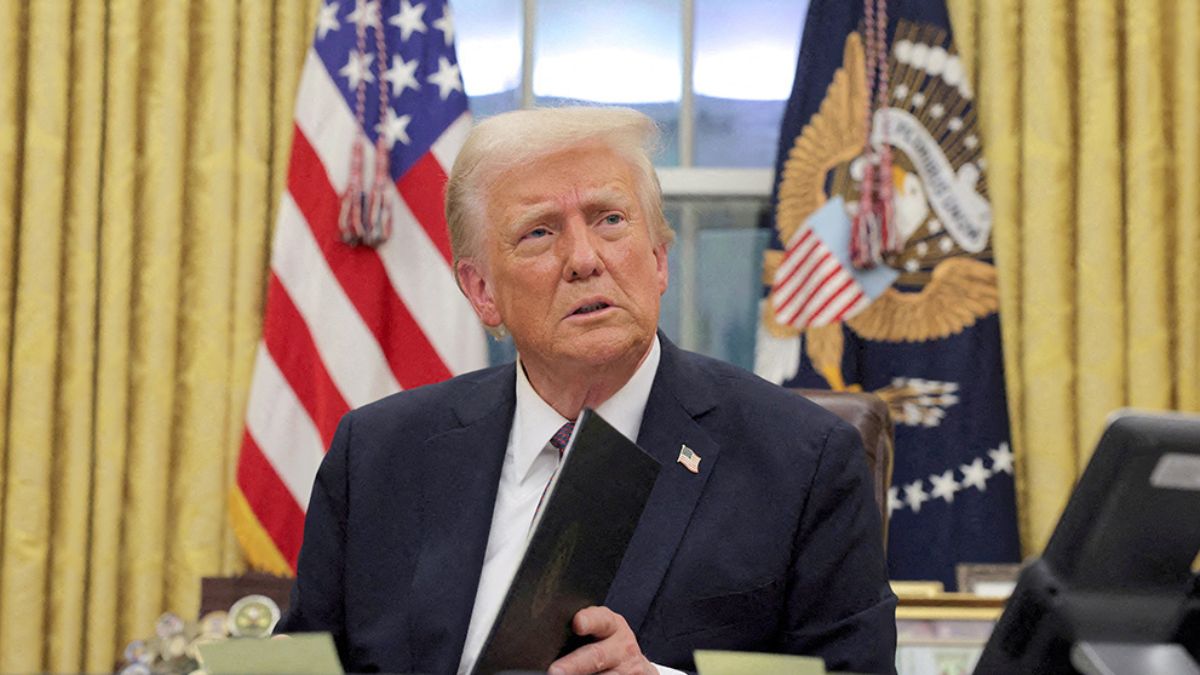
On August 5, 2025, President Donald Trump popped up on the White House roof, waving to reporters like a kid showing off a new toy. The stunt, accompanied by Secret Service snipers and a gaggle of unnamed aides, wasn’t just for kicks—Trump was scoping out the grounds for a $200 million ballroom project, a glitzy addition to the East Wing that’s got everyone talking. Set to break ground in September 2025, this 90,000-square-foot behemoth, funded by Trump and private donors, aims to replace the “unsightly” tents used for state dinners. But is this a practical upgrade for “The People’s House” or a gaudy flex by a real estate mogul turned president? With a nod to the fearless, sardonic style of truth-seekers like Hunter S. Thompson, let’s wade through the gold-plated hype, sidestep the spin, and figure out what’s really going on.
A Rooftop Stroll with Big Plans
Picture this: it’s a muggy Monday morning in Washington, D.C., and Trump, ever the showman, steps onto the roof above the West Wing’s press briefing room. Reporters, tipped off at 9:40 a.m., wait an hour as Secret Service counter-snipers take position—a rare precaution for a president’s rooftop jaunt. At 10:45 a.m., Trump emerges, gesturing wildly and shouting, “Taking a little walk!” to the press below. He’s not alone; architect James McCrery and others join him, though the White House stays mum on who they were or what they discussed. The scene, captured by photographers like Win McNamee, feels like a reality TV moment, with Trump playing the starring role.
Why the roof? Trump was reportedly eyeing the site for his long-dreamed-of ballroom, a project he’s pushed since at least 2010 when he offered to build one for President Obama. That pitch, recounted by Obama’s advisor David Axelrod, was rebuffed, but Trump’s obsession with a grand event space never faded. Now, with renderings from McCrery Architects showing gold chandeliers, Corinthian columns, and a checkered marble floor, the $200 million project is set to transform the East Wing into a 650-seat venue by 2029.
The Ballroom: Necessity or Narcissism?
The White House claims the ballroom is a practical fix. “The White House is currently unable to host major functions honoring world leaders without having to install a large and unsightly tent approximately 100 yards away from the main building’s entrance,” said Press Secretary Karoline Leavitt on July 31, 2025. She’s not wrong—state dinners often rely on South Lawn tents, which Trump has long griped about, saying, “People are schlopping to the tent. It’s not a pretty sight. The women with their lovely evening gowns, all their hair done, and they’re a mess by the time they get in.” The new ballroom, designed to seat 650 (triple the East Room’s 200-person capacity), promises to keep guests dry and dignified.
But let’s not kid ourselves—this isn’t just about logistics. The ballroom’s aesthetic screams Trump: gold leaf, crystal chandeliers, and a vibe straight out of Mar-a-Lago. Renderings depict a space that could double as a set for a Gatsby reboot, with gilded columns and a coffered ceiling. Susie Wiles, White House chief of staff, called Trump “a builder at heart with an extraordinary eye for detail,” but critics see it as a vanity project. “This is what DOGE was all about, folks,” mocked Senate Minority Leader Chuck Schumer on X, referring to Trump’s Department of Government Efficiency. “Cutting things from you, and giving it to the big shots.”
The $200 million price tag, funded by Trump and unnamed “patriot donors,” raises eyebrows. While the White House insists taxpayers won’t foot the bill, the lack of donor transparency fuels skepticism. Posts on X from users like @Bubblebathgirl celebrated Trump’s private funding, but others, like journalist Seth Abramson, called it a distraction from pressing issues like the Epstein files. “You gotta hand it to MAGAs, for about a week they really did have everyone convinced they cared about kids,” Abramson quipped.
A History of White House Makeovers
Trump’s not the first president to leave his mark on 1600 Pennsylvania Avenue. The White House Historical Association notes that Theodore Roosevelt added the West Wing in 1902, William Taft created the first Oval Office in 1909, and Harry Truman gutted the interior from 1948 to 1952, rebuilding it with steel and concrete. Jackie Kennedy curated antiques for the State Floor, and Barack Obama added Wi-Fi and a basketball court. Trump’s own first term saw Melania Trump revamp the Rose Garden, a move that sparked backlash for altering Rachel ‘Bunny’ Mellon’s 1961 design.
This time, Trump’s changes are bolder. Beyond the ballroom, he’s paved over the Rose Garden’s lawn with stone, mimicking Mar-a-Lago’s patio, and added two 88-foot flagpoles costing $50,000 each. The Oval Office now boasts gold embroidery, and the Lincoln Bedroom got a bathroom upgrade. Critics, including Rep. Mark Pocan, argue these projects need Congressional oversight, given the White House’s historic status. “This is a major renovation and clearly should come before the committee,” Pocan told NBC News. The Committee for the Preservation of the White House hasn’t commented, though former first lady staffer Anita McBride noted that every president tweaks the mansion.
The Critics: Outrage or Overreaction?
Not everyone’s thrilled. Preservationists worry the ballroom’s scale—90,000 square feet, dwarfing the East Wing’s current footprint—could clash with the White House’s classical design. The New York Times reported concerns from experts about finishing such a massive project by 2029 without cutting corners. “It’s a perfectly great conversation to have in a subcommittee meeting,” Pocan said, hinting at potential conflicts of interest with private funding. Schumer, ever the thorn in Trump’s side, scoffed, “I’m happy to eat my cheeseburger at my desk. I don’t need a $200 million ballroom.”
On X, opinions split. @Anna_Giaritelli and @AndrewFeinberg echoed the rooftop buzz, while @CandidO12804434 hailed the ballroom as “a seriously useful add-on” for future generations. But the timing—days after Trump criticized the Federal Reserve’s $2.5 billion renovation—smells like hypocrisy to some. NPR’s Tamara Keith noted the White House’s opacity, saying, “There just isn’t a lot of transparency… especially because this is being funded by outside donors.”
What’s Really at Stake?
Trump’s rooftop stroll and ballroom plans are more than a builder’s whim. They’re a statement of legacy, a bid to etch his name into the White House’s stones—literally, with presidential seals embedded in the Rose Garden’s new patio. The $200 million project, led by Clark Construction and AECOM, aims to blend classical design with Trump’s signature excess, but it risks alienating those who see the White House as a symbol, not a canvas. Health and Human Services Secretary Robert F. Kennedy Jr. praised the upgrades, saying, “I’ve been coming to this building for 65 years, and it has never looked better.” Yet the public’s left wondering: who’s paying, and what’s the real cost?
The ballroom may solve a practical problem, but its gilded trappings and Trump’s roof stunt feel like a performance. As he shouted down to reporters, gesturing at the grounds, you could almost hear the Mar-a-Lago playlist in the background. For now, construction looms, and the White House will keep updating its visit page. But don’t expect full transparency—this is Trump’s show, and he’s not sharing the script.




