

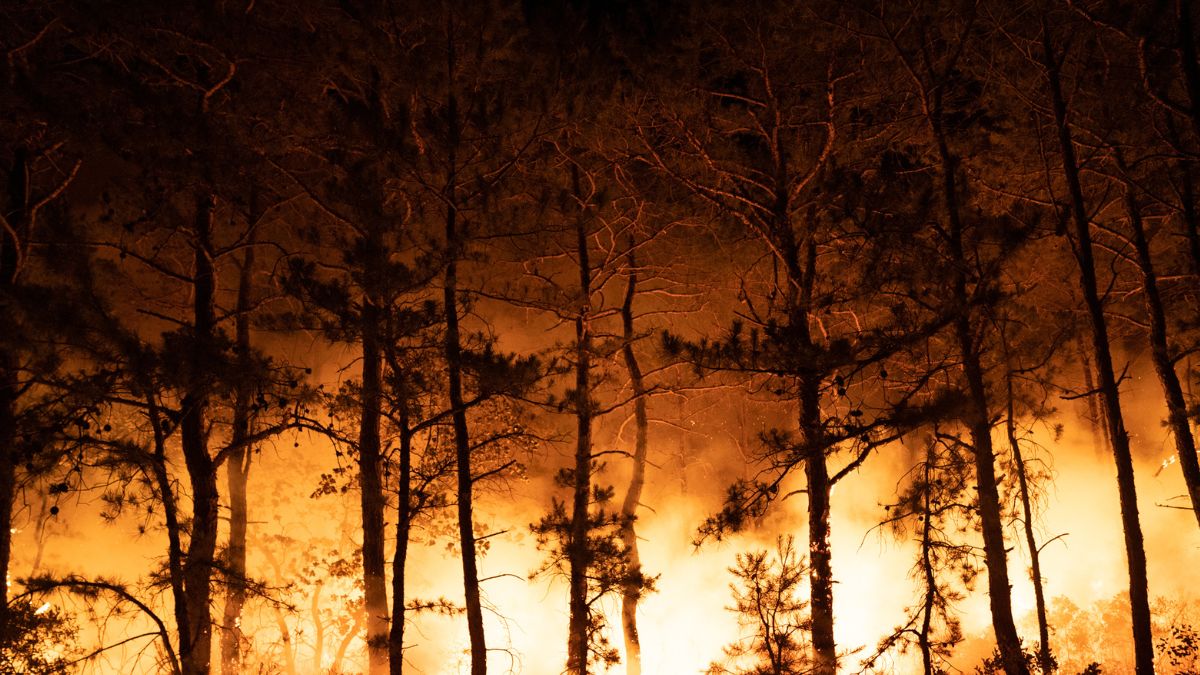
The Reach of Wildfire Smoke
Wildfires are no longer just a local crisis. In 2025, blazes in states like California and Oregon have sent plumes of smoke across state lines, while Canadian wildfires have blanketed U.S. cities from the Midwest to the Northeast with hazardous air. The summer of 2025 saw record-breaking fire activity, with the National Interagency Fire Center reporting over 5 million acres burned by August, a 20% increase from 2024. This smoke, laden with fine particulate matter (PM2.5) and toxic chemicals, can trigger respiratory issues, heart problems, and long-term health risks.
The danger lies in its reach. A single fire in British Columbia can degrade air quality in Chicago or New York days later, as seen in July 2025 when New York City’s Air Quality Index hit 120, deemed unhealthy for sensitive groups. Unlike visible smog, wildfire smoke can be insidious, lingering even when skies appear clear. Understanding and mitigating these risks is critical as climate-driven wildfires intensify.
Measuring the Threat: Air Quality Index Explained
The Environmental Protection Agency’s Air Quality Index (AQI) is the standard for assessing air safety, converting pollutant levels into a single number from 0 to 500. An AQI below 50 is “healthy,” 50–100 is “moderate,” 100–150 is “unhealthy for sensitive groups,” and above 150 is dangerous for all. Wildfire smoke, rich in PM2.5, often pushes AQI readings into the red zone. For example, Seattle hit an AQI of 180 during a July 2025 fire event, while parts of Minnesota reached 160 due to Canadian smoke.
Sensitive groups—those with asthma, chronic obstructive pulmonary disease (COPD), or heart conditions—face heightened risks. Dr. Sanjay Sethi, chief of pulmonary medicine at the University of Buffalo, noted that PM2.5 can penetrate deep into the lungs, triggering inflammation or exacerbating existing conditions. “If you have lung or heart issues, you’re playing with fire by ignoring bad air,” he said. Even healthy individuals can experience symptoms like wheezing or shortness of breath in severe conditions.
How to Know If Your Air Is Unsafe
Visible smoke or a smoky smell is a clear warning, but harmful air isn’t always obvious. The EPA’s AirNow website provides real-time AQI data by region, updated hourly. For hyper-local insights, PurpleAir, a citizen-driven network of air quality sensors, offers street-level readings, showing disparities within neighborhoods. During a June 2025 smoke event in Denver, PurpleAir revealed AQI variations of up to 50 points within a single ZIP code, highlighting the need for granular data.
For indoor air, low-cost monitors—now widely available for $50–$150 online—are a game-changer. Joseph Allen, director of Harvard’s Healthy Buildings Program, emphasized their value: “These devices give you real-time data on PM2.5 levels inside your home, letting you act before the air turns bad.” A 2024 study from the American Lung Association found that 60% of households with monitors adjusted behaviors, like closing windows, during smoke events.
Staying Safe Outdoors
Short outdoor exposure during poor air quality is unlikely to cause lasting harm for healthy individuals, but precautions are essential. An N95 mask, proven effective during the COVID-19 pandemic, filters 90–95% of PM2.5 particles. “An N95 is your best bet,” said Jennifer Stowell, a research scientist at Boston University’s Center for Climate and Health. “Respirator-style masks are even better if you can get them.” Dust masks offer less protection but are better than nothing.
Symptoms like wheezing, shortness of breath, or chest tightness signal danger, even for the healthy. “If you feel those, get indoors immediately,” Sethi advised. During a July 2025 smoke event in Chicago, emergency room visits for respiratory issues spiked by 15%, per local health data, underscoring the need for vigilance. Apps like AirNow’s mobile tool can send alerts when AQI levels climb, helping you time outdoor activities.
Cleaning Your Indoor Air
When wildfire smoke seeps indoors, simple steps can make a difference. Keep windows and doors closed, using blankets or towels to seal gaps under doors. Air conditioners, set to recirculate indoor air, help maintain a clean environment. Upgrading to a MERV 13 filter—capable of trapping fine particles—boosts protection, but proper installation is key to avoid straining HVAC systems. A 2023 EPA study found MERV 13 filters reduced indoor PM2.5 by up to 40% during wildfire events.
Portable air purifiers are another powerful tool. “Even a single-room purifier can significantly lower particle levels,” Stowell said. Models with HEPA filters, starting at $100, are effective for spaces up to 500 square feet. During a 2025 smoke event in Portland, Oregon, households with purifiers reported 30% lower indoor PM2.5 levels compared to those without, per a local air quality survey.
Vulnerable Populations and Long-Term Risks
For those with pre-existing conditions, wildfire smoke is a serious threat. A 2024 study in The Lancet linked prolonged PM2.5 exposure to a 10% increase in asthma exacerbations and a 5% rise in cardiovascular events. Children, the elderly, and pregnant women also face elevated risks. In California’s 2025 fire season, pediatric hospitalizations for respiratory issues rose 12% in smoke-affected areas.
Long-term exposure, even at moderate AQI levels (50–100), can contribute to chronic health issues. A 2025 report from the National Institutes of Health warned that repeated smoke exposure may increase risks of lung cancer and heart disease over decades. Communities near fire-prone areas, like those in the Pacific Northwest, face cumulative risks, with low-income households often least equipped to afford masks or purifiers.
A Growing Challenge in a Warming World
As climate change fuels more intense wildfires, protecting against smoke is becoming a fact of life. The National Oceanic and Atmospheric Administration reported that 2025’s fire season was among the worst on record, with smoke impacting over 100 million Americans. Simple actions—checking AQI, wearing N95s, sealing homes, and using purifiers—can mitigate risks. But as fires grow more frequent, systemic solutions, like better public health alerts and subsidized air quality tools, are critical.
The Sydney Sweeney jeans ad controversy may fade, but wildfire smoke is a persistent threat. By staying informed and prepared, Americans can breathe easier, even when the skies turn hazy.




