

The Promise and Peril of Protectionism
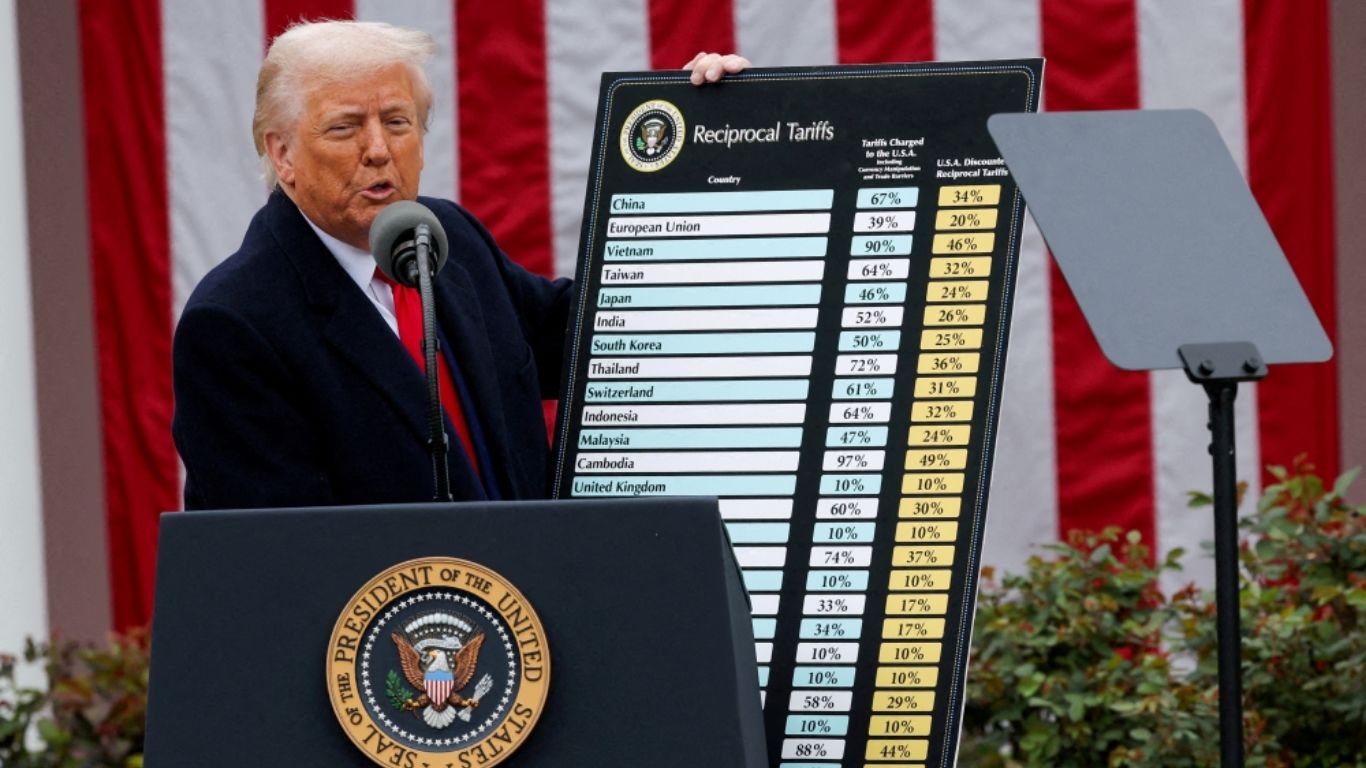
Donald Trump’s trade policy, centered on hefty tariffs, is a cornerstone of his “America First” agenda. The pitch is straightforward: tariffs will raise revenue, shrink the trade deficit, and bring manufacturing back to U.S. shores. But policymaking is never that simple. Every decision carries trade-offs, and Trump’s tariffs are no exception. The challenge lies in balancing competing goals—revenue generation, industrial growth, and global AI leadership—without one undermining the others.
The administration claims tariffs serve three main purposes: filling government coffers, reducing reliance on imports, and spurring domestic production. Yet, these aims clash in practice. As economist Benn Steil has noted, if tariffs succeed in boosting U.S. manufacturing, imports will drop, cutting tariff revenue. Conversely, high revenue from tariffs suggests robust imports, which would widen the trade deficit and weaken reindustrialization efforts. It’s a Catch-22: success in one area could spell failure in another.
“You can’t have it all,” Steil quips. “More tariffs, more revenue? Sure. But that means more imports, not less.”
AI Ambitions vs. Tariff Realities
Trump has made no secret of his goal to cement U.S. dominance in artificial intelligence. In July 2025, his administration unveiled a plan to cut red tape and bolster AI infrastructure, eyeing data centers and advanced computing as key battlegrounds. But tariffs are throwing a wrench in the works. A 50% tariff on imported copper products—vital for powering AI data centers—has driven up costs for energy infrastructure. Similarly, a proposed 25% or higher tariff on advanced semiconductors threatens to choke off the supply of chips critical for AI development.
Building domestic copper and chip production sounds appealing, but it’s a slow process. Studies show new copper mines take an average of 17 years to come online, while cutting-edge semiconductor factories, even with CHIPS Act subsidies, need years to scale. In the meantime, higher costs could hamstring U.S. firms racing against China in AI. “Tariffs on copper and chips might look tough,” says analyst Rebecca Patterson, “but they’re hiking costs for the very data centers Trump wants to champion.”
“We’re shooting ourselves in the foot just as the AI race heats up,” Patterson warns.
Reindustrialization’s Hidden Costs
Trump’s vision of a revitalized U.S. manufacturing sector hinges on bringing supply chains home. Yet, tariffs are making that harder. About half of U.S. imports are intermediate goods—components used in domestic production. Taxing these raises costs for American manufacturers, squeezing their ability to invest in new factories. Since early 2025, domestic steel and aluminum prices have jumped by double digits, hitting industries like automotive, oil and gas, and aerospace—the very sectors Trump aims to strengthen.
The auto industry, a linchpin of U.S. manufacturing, faces particular strain. New trade deals slap 15% tariffs on cars from the EU, Japan, and South Korea, while Canada and Mexico—key suppliers of U.S. auto parts—face 25% or higher tariffs. As analyst Shannon O’Neil points out, this setup favors foreign brands like Toyota and Hyundai over American giants like GM and Ford, whose supply chains lean heavily on North American partners. “It’s a headwind for U.S. carmakers,” O’Neil says. “Tariffs are making it cheaper to build cars abroad than in North America.”
“We’re taxing our own supply chains while hoping to rebuild them,” O’Neil sighs. “Good luck with that.”
Trade Deficits and Dollar Dilemmas
Reducing the trade deficit is a centerpiece of Trump’s agenda, with the president invoking the 1977 International Emergency Economic Powers Act to label it a “national emergency.” But his policies pull in opposite directions. Trump wants a weaker dollar to boost U.S. exports, which has depreciated by about 7% since January 2025. At the same time, he’s courting “trillions” in foreign investment from Japan, South Korea, and the EU. This influx of capital strengthens the dollar, counteracting export goals and potentially widening the trade deficit.
Economist Brad Setser highlights another quirk: tariffs on Chinese goods range from 20% to 37.5%, but goods with Chinese components shipped from Vietnam face up to 40%. “Why punish Vietnamese imports more than Chinese ones?” Setser asks. “It’s like incentivizing direct trade with China.” This inconsistency could undermine efforts to diversify supply chains away from Beijing.
“The math doesn’t add up,” Setser shrugs. “You can’t weaken the dollar and invite foreign cash without consequences.”
Early Wins, Looming Risks
Since Trump’s second term began, tariffs have raked in over $100 billion, the S&P 500 has hit record highs, and the U.S. economy grew at a 3% annual rate in Q2 2025. Inflation has stayed relatively tame, defying some dire predictions. The International Monetary Fund even bumped its global growth forecast to 3%. For now, the administration might feel justified in taking a victory lap.
But cracks are forming. Inflation often lags tariff hikes, and as inventories dwindle, consumer prices could climb. Economic growth may slow within a few quarters as higher costs ripple through industries. The bigger issue is time: tariffs impose immediate costs—higher prices, strained supply chains—while promised benefits like reshoring and AI leadership remain years away, if they materialize at all.
A Global Capitulation—But at What Cost?
Trump’s tariffs have reshaped global trade with surprisingly little pushback. Major partners like Japan and the EU, wary of losing access to the U.S. market, have offered tariff concessions and vague promises to buy American goods. China remains a holdout, but even Beijing has avoided aggressive retaliation so far. This global acquiescence reflects America’s market power, but it doesn’t guarantee success.
The real test lies in navigating the trade-offs. Tariffs may boost revenue but inflate costs for AI and manufacturing. They aim to cut trade deficits but could widen them by strengthening the dollar. They push for reindustrialization but burden domestic producers with pricier inputs. And the long timelines—decades for new mines, years for chip factories—clash with the urgency of Trump’s goals.
“Trump’s rewriting the trade playbook, but it’s a gamble,” Patterson says. “You can’t tax your way to prosperity without paying a price.”
As 2025 unfolds, Trump’s trade policy will face scrutiny. Can it deliver industrial revival without crippling key sectors? Will AI leadership falter under supply chain strains? Can the trade deficit shrink while inviting foreign investment? These questions loom large, and the answers hinge on whether the administration can reconcile its contradictory aims.
For now, Trump has bent the global economy to his will, but the hardest part isn’t imposing tariffs—it’s living with their consequences. In a world of trade-offs, the line between bold and reckless is thin. America’s economic future, and Trump’s legacy, may depend on whether he can walk it.




