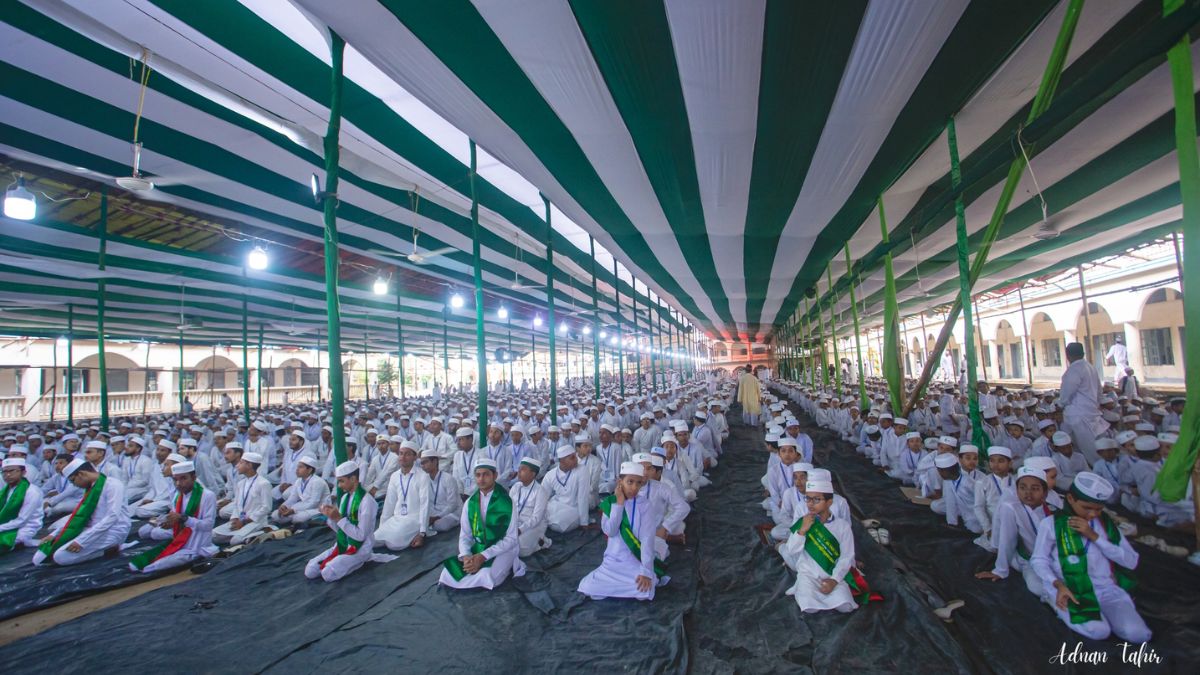
The claim that madrasa students in Bangladesh have access to modern subjects, such as mathematics, science, English, and computer skills, is often discussed in the context of educational reforms and the role of madrasas in providing a balanced curriculum. This fact-check evaluates the extent to which madrasa students have access to modern subjects, focusing on the Aliya and Qawmi madrasa systems, curriculum content, infrastructure challenges, and educational outcomes, using available sources and a critical perspective.
Claim 1: Aliya Madrasa Students Have Access to Modern Subjects as Part of a State-Approved Curriculum
Fact-Check: Mostly True
Aliya madrasas, which are government-recognized and receive public funding, follow a curriculum set by the Bangladesh Madrasah Education Board (BMEB), established in 1979. A 2016 World Bank report indicates that Aliya madrasas offer a combination of religious and modern subjects, including Bangla, mathematics, English, and science, alongside Islamic studies like Quran, Hadith, and Fiqh. Approximately 95% of Aliya madrasas include some modern subjects, with 74% offering mathematics and 44% teaching English at the secondary level (Dakhil, equivalent to SSC). A 2023 Baitun Noor Foundation article confirms that Aliya madrasas integrate secular subjects to provide a balanced education, preparing students for mainstream careers. The curriculum spans five stages: Ibtedayi (primary, 5 years), Dakhil (secondary, 5 years), Alim (higher secondary, 2 years), Fazil (undergraduate, 2 years), and Kamil (postgraduate, 2 years), totaling 16 years, aligning with general education timelines.
However, access is inconsistent. A 2017 The Daily Star article notes that only 10% of the 2 million Aliya madrasa students in 2016 studied science at secondary or higher secondary levels, with poor performance in board exams due to a lack of qualified teachers and infrastructure. Only 25% of Aliya madrasas have science laboratories, and 14% have computer labs, per the Bangladesh Bureau of Educational Information and Statistics (BANBEIS). A 2014 Daily Star report highlights that Information and Communication Technology (ICT) was removed from the Dakhil curriculum due to a shortage of computer science teachers, with non-specialist teachers often handling science and math classes, leading to suboptimal outcomes. A 2025 ResearchGate article points out that Fazil and Kamil curricula emphasize religious subjects in Arabic, with limited social sciences or modern subjects, reducing their equivalence to mainstream degrees for employment purposes.
Verdict: The claim is mostly true. Aliya madrasa students have access to modern subjects like mathematics, English, and science as part of the state-approved curriculum, with 95% of madrasas offering some combination of these subjects. However, the quality and extent of access are limited by teacher shortages, inadequate infrastructure (e.g., only 25% with science labs), and a heavy focus on religious subjects at higher levels, impacting educational outcomes.
Claim 2: Qawmi Madrasa Students Have Limited or No Access to Modern Subjects
Fact-Check: Mostly True
Qawmi madrasas, which are unregistered and operate independently without government funding, primarily focus on religious education based on the Darse Nizamia curriculum, emphasizing Quran, Hadith, Fiqh, and Arabic. A 2022 ResearchGate article states that Qawmi madrasas do not follow the national curriculum and prioritize theological studies over modern subjects like mathematics, science, or English. A 2016 World Bank report notes that Qawmi madrasas account for only 2.2% of secondary enrollment (approximately 1.4 million students across 14,000 institutions, per a 2019 Prothom Alo estimate), and their curriculum is heavily religious, with minimal integration of secular subjects. A 2025 Taylor & Francis article highlights that Qawmi madrasas lack a common secular base, limiting students’ preparation for modern job markets.
Some Qawmi madrasas have begun incorporating modern subjects. A 2023 Baitun Noor Foundation article mentions that certain Qawmi institutions, like Baitun Noor Madrasah, offer mathematics, science, and English alongside religious studies to provide a well-rounded education. However, this is not widespread, and a 2024 Nature article notes that Qawmi madrasa students often come from less privileged backgrounds, with limited access to resources for learning modern subjects. A 2019 X post by @naqvimukhtar suggests efforts to train madrasa teachers in mainstream subjects like English, math, and science, but there is no evidence of significant implementation in Qawmi madrasas by 2025. The 2017 recognition of Dawrae Hadith (Qawmi master’s equivalent) as equivalent to a master’s degree in Islamic Studies and Arabic does not indicate broader inclusion of modern subjects.
Verdict: The claim is mostly true. Qawmi madrasa students generally have limited or no access to modern subjects, as their curriculum focuses on religious education. While some Qawmi madrasas have started integrating mathematics, science, and English, this is not standard practice, and the lack of government oversight and resources restricts widespread access.
Claim 3: Access to Modern Subjects in Madrasas Prepares Students for Mainstream Careers
Fact-Check: Partially True
Aliya madrasas, with their inclusion of modern subjects, aim to prepare students for mainstream careers. A 2022 IsDB-BISEW report highlights the introduction of Dakhil Vocational courses in six Aliya madrasas since 2008, offering trades like dressmaking and electrical work under the Bangladesh Technical Education Board (BTEB). These programs have achieved notable success, with madrasas ranking among the top 20 in board exams, including first place annually until 2016. A 2023 Baitun Noor Foundation article notes that Aliya madrasas’ inclusion of secular subjects like science and English helps students pursue diverse careers. However, a 2024 International Journal of Educational Development article on Cox’s Bazar madrasa graduates indicates that only a small fraction secure mainstream jobs, with many facing unemployment due to limited recognition of Fazil and Kamil degrees outside religious roles. A 2017 The Daily Star article reports that only 3–4% of Aliya madrasa girls in Sylhet proceed to tertiary education, with 79% dropping out by grade 12 due to poor educational quality and societal pressures.
Qawmi madrasa students face greater challenges. A 2025 Taylor & Francis article notes that their focus on religious education limits career paths to socio-religious roles, with few opportunities in mainstream sectors. The lack of standardized curricula and government recognition hinders employability. A 2025 ResearchGate article emphasizes that educational inequalities, including inadequate English fluency and limited curricula, exacerbate unemployment risks for Qawmi graduates. While vocational programs show promise in Aliya madrasas, no similar initiatives are widely reported for Qawmi madrasas.
Verdict: The claim is partially true. Access to modern subjects in Aliya madrasas, particularly through vocational programs, prepares some students for mainstream careers, with successes in board exams and limited job placement. However, poor educational quality, high dropout rates (especially among girls), and limited degree recognition restrict outcomes. Qawmi madrasa students, with minimal access to modern subjects, are largely unprepared for mainstream careers, often limited to religious roles.
Claim 4: Infrastructure and Teacher Quality Support Effective Delivery of Modern Subjects in Madrasas
Fact-Check: False
The delivery of modern subjects in madrasas is hindered by inadequate infrastructure and teacher quality. A 2017 The Daily Star article reports that only 25% of Aliya madrasas have science laboratories and 14% have computer labs, limiting practical learning in science and ICT. The Government Madrasah-E-Alia in Dhaka, one of the oldest institutions, has only 31 teachers for 70 posts at secondary and higher secondary levels, with unqualified teachers often handling science and math classes. A 2014 Daily Star article notes that the lack of computer science graduates led to ICT’s removal from the Dakhil curriculum. A 2025 ResearchGate article highlights that Aliya madrasas’ infrastructure and teacher training lag behind mainstream schools, with only one training institute for 100,000 higher secondary Aliya teachers.
Qawmi madrasas face even greater challenges. A 2024 Nature article notes that their students, often from socioeconomically disadvantaged backgrounds, have limited access to learning resources like computers or textbooks beyond religious texts. A 2025 Taylor & Francis article emphasizes the need for more equipped classrooms and trained teachers to deliver modern subjects effectively. While some madrasas, like Misbahul Ulum Kamil Madrasah in Dhaka, boast modern facilities like computer labs (BestinBangla, 2023), these are exceptions rather than the norm.
Verdict: The claim is false. Both Aliya and Qawmi madrasas face significant barriers in delivering modern subjects due to inadequate infrastructure (e.g., only 25% of Aliya madrasas have science labs) and a shortage of qualified teachers, particularly for science and ICT. Limited training facilities and resources further undermine effective teaching.
A Mixed Bag of Access and Opportunity
Madrasa education in Bangladesh, serving over 2.75 million students in 2023 (ReligionUnplugged, 2024), plays a significant role in the education system, particularly for rural and lower-income communities. Aliya madrasas, with government support, integrate modern subjects like mathematics, English, and science, with 95% offering some combination, enabling some students to pursue mainstream careers through programs like Dakhil Vocational.
However, only 10% of Aliya students study science, and high dropout rates (79% of girls by grade 12 in Sylhet) reflect challenges in quality and infrastructure. Qawmi madrasas, enrolling ~1.4 million students, focus heavily on religious education, with limited and inconsistent access to modern subjects, restricting graduates to religious roles.
Both systems suffer from teacher shortages, inadequate facilities (e.g., 14% of Aliya madrasas have computer labs), and societal perceptions that madrasa education is subpar. Reforms, such as vocational programs and teacher training initiatives, show promise but are limited in scope, particularly for Qawmi madrasas. While Aliya madrasas align partially with national education goals, true modernization requires addressing infrastructure deficits, teacher quality, and curriculum standardization.
Conclusion
Madrasa students in Bangladesh have varying access to modern subjects, with significant differences between Aliya and Qawmi systems. Aliya madrasas offer mathematics, English, and science to 95% of their students, supported by the BMEB, but only 10% study science, and shortages of qualified teachers and infrastructure (25% with science labs, 14% with computer labs) limit effectiveness. Qawmi madrasas prioritize religious education, with minimal and inconsistent inclusion of modern subjects, leaving graduates largely unprepared for mainstream careers. Vocational programs in Aliya madrasas show promise, but high dropout rates (79% of girls by grade 12) and limited degree recognition hinder outcomes. Both systems face challenges in infrastructure, teacher training, and societal perceptions, undermining the delivery of modern subjects. To enhance access, Bangladesh must invest in teacher training, modern facilities, and standardized curricula, particularly for Qawmi madrasas, to align with national education and employment goals.