

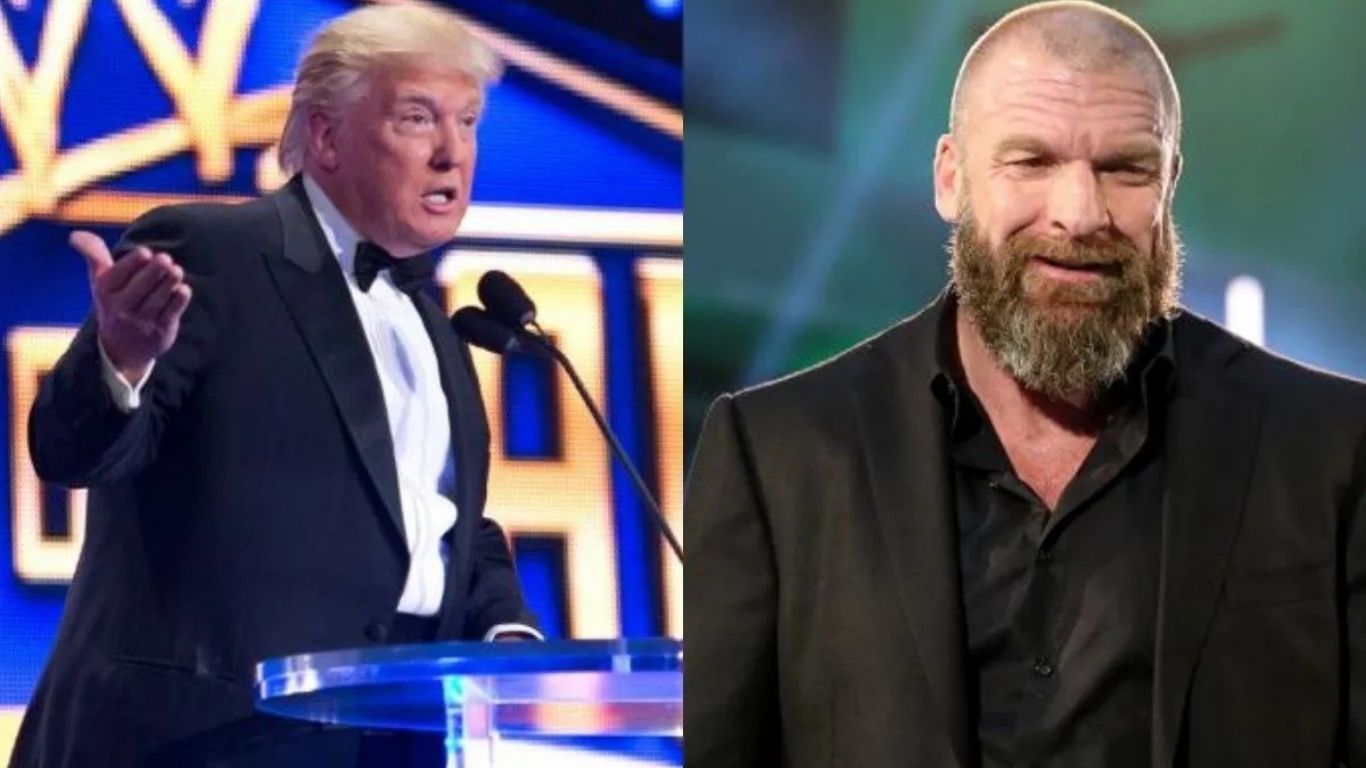
WWE legend Triple H, alongside President Trump and other prominent athletes, reintroduces the Presidential Fitness Test to combat America’s obesity crisis. Discover how this fitness revival aims to reshape the nation’s health agenda.
On July 31, 2025, President Donald Trump signed a landmark executive order reinstating the Presidential Fitness Test, a program that once symbolized America’s commitment to youth physical fitness. In a high-profile event at the White House, Trump was flanked by an assembly of sports legends, headlined by WWE icon Paul “Triple H” Levesque, signaling a powerful shift towards revitalizing America’s health and wellness culture.
The reintroduction of the fitness test comes amid rising concerns about obesity and chronic diseases affecting American youth. This executive order not only revives a historic fitness initiative but also reinstates the President’s Council on Physical Fitness and Sports, which will now operate under the Department of Health and Human Services led by Robert F. Kennedy Jr.
Triple H: WWE Powerhouse Becomes Face of America’s Fitness Revival
Paul Levesque, globally recognized by his ring name “Triple H,” stood out as a central figure at the signing ceremony. A 2025 inductee into the WWE Hall of Fame and currently serving as WWE’s Chief Content Officer, Triple H has transitioned from wrestling stardom to an influential corporate and philanthropic figure. Known for his monikers “The Game,” “The Cerebral Assassin,” and “The King of Kings,” Triple H embodies physical prowess and discipline qualities central to the fitness initiative’s ethos.
President Trump, visibly impressed by Triple H’s formidable physique, humorously remarked, “(A) man who you’re not gonna mess around with,” as he patted the wrestler’s arm and squeezed his bicep, calling him a “very strong guy.”
Adding a familial dimension to the event, Triple H’s mother-in-law, Linda McMahon former WWE executive and current Secretary of Education was also present, underscoring the family’s deep-rooted influence in both sports’ entertainment and government initiatives.
A Return to Physical Excellence
Originally launched in 1956 during President Dwight D. Eisenhower’s administration, the Presidential Fitness Test challenged American schoolchildren with a series of physical activities designed to assess their overall fitness. Traditional components of the test included:
- One-Mile Run
- Pull-Ups or Flexed-Arm Hang
- Sit-Ups
- Shuttle Run
- Sit-and-Reach Flexibility Test
Later, right-angle push-ups were incorporated, adapting to evolving fitness standards. However, in 2013, during President Barack Obama’s tenure, the program was sunsetted to prioritize general health education over performance benchmarks.
The 2025 executive order now reintroduces the program with an urgent objective: to combat escalating rates of childhood obesity, type 2 diabetes, and sedentary lifestyles. Trump emphasized, “This is an important step in our mission to make America healthy again.”
A Power-Packed Roster
Joining Triple H at the ceremonial signing were notable athletes spanning various disciplines. Among them were:
- Lawrence Taylor, NFL legend often regarded as the greatest defensive player in history, albeit a figure marred by past legal controversies.
- Harrison Butker, Kansas City Chiefs’ kicker known for his polarizing 2024 commencement speech encouraging women to prioritize domestic roles.
- Bryson DeChambeau, powerhouse golfer from LIV Golf.
- Annika Sorenstam, a 10-time major championship-winning pro-golfer.
- Cody Campbell, who heads Texas Tech’s NIL (Name, Image, Likeness) collective.
Additionally, the newly reinstated President’s Council on Physical Fitness and Sports will feature a formidable lineup of sports luminaries, including NFL Commissioner Roger Goodell, former Dallas Cowboys quarterback Tony Romo, Miami Dolphins star Tua Tagovailoa, NHL legend Wayne Gretzky, and NFL running back Saquon Barkley.
Why This Fitness Initiative Matters
The reinstatement of the Presidential Fitness Test is not merely symbolic; it represents a broader national health strategy aimed at reversing troubling health trends among American youth. The Centers for Disease Control and Prevention (CDC) reports that childhood obesity affects approximately 20% of children and adolescents in the U.S., a statistic that has steadily worsened over the past decade.
By leveraging high-profile athletes and influencers like Triple H, the administration seeks to inspire younger generations to embrace physical fitness. The emphasis on celebrity athletes serves a dual-purpose, drawing public attention while providing relatable role models who exemplify dedication, hard work, and physical health.
A Politically Charged Fitness Revival
While the event celebrated fitness, it also reflected deeper political undercurrents. Figures like Butker and Taylor, whose personal controversies have generated public debate, signal the administration’s willingness to embrace polarizing yet influential personalities in its health campaign. The move has already ignited discussions about the intersection of politics, celebrity influence, and public health policy.
Nevertheless, advocates argue that reviving the Presidential Fitness Test is a step in the right direction, one that could spark a nationwide conversation about youth wellness and the importance of physical education in schools.
A New Era of Presidential Fitness with Triple H Leading the Charge
With Triple H a symbol of strength, resilience, and global recognition front and center, the reintroduction of the Presidential Fitness Test marks a defining moment in America’s pursuit of a healthier future. Backed by a star-studded council and a national agenda that prioritizes wellness, this initiative aims to redefine the role of physical fitness in American education and public life.
The message is clear: The fight against obesity and sedentary lifestyles has a new team of champions, and they’re ready to make America fit again.




