

A Firestorm’s Fiery Grip on the Grand Canyon
The Dragon Bravo Fire, ignited by a lightning strike on July 4, 2025, has scorched over 105,000 acres on the Grand Canyon’s North Rim, making it the largest U.S. wildfire of the year. As of Thursday, July 31, only 4% of its perimeter is contained, with nearly 1,000 firefighters battling relentless flames. The blaze, which destroyed the historic Grand Canyon Lodge and over 70 structures, shows no signs of slowing under record-breaking dry conditions and winds gusting up to 25 mph.
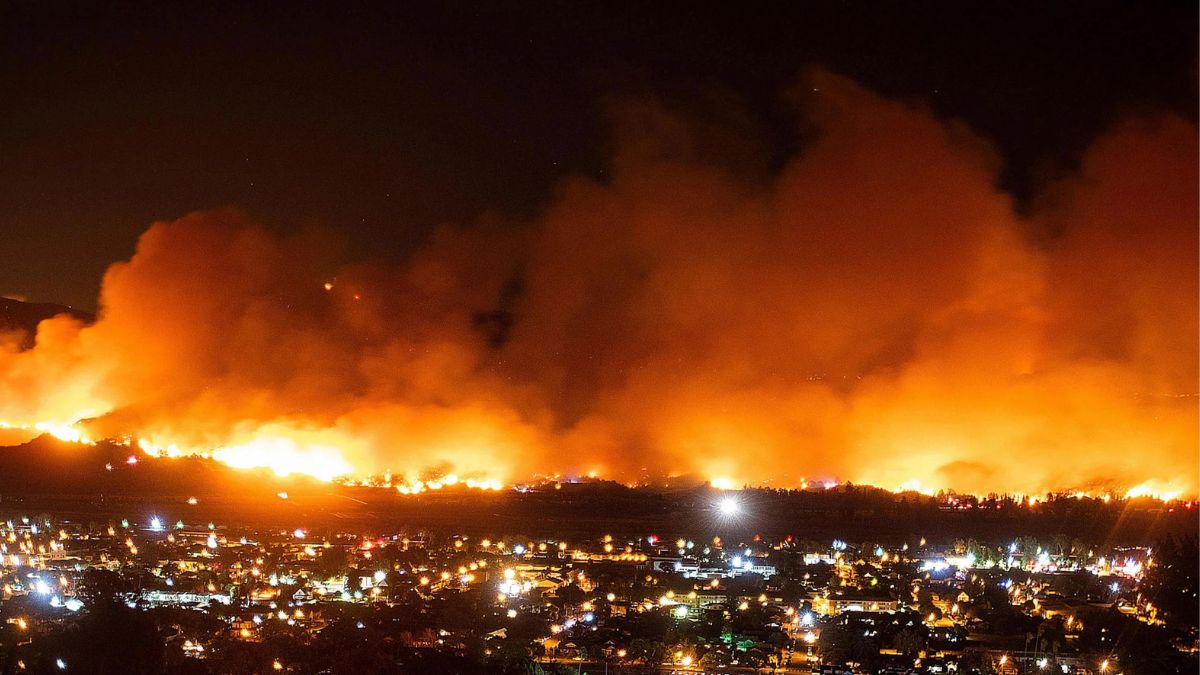
A timelapse video from Tuesday captures the fire’s most striking feature: a massive pyrocumulus cloud, or “fire cloud,” soaring above the canyon. Formed when intense heat thrusts smoke high into the atmosphere, these clouds are a spectacle—condensing water vapor at high altitudes to create towering formations that can spark lightning or even tornadoes. “These clouds are incredibly powerful,” noted fire officials, warning they can also spread smoke far beyond the fire’s footprint.
Smoke’s Silent Threat
The fire’s smoke, visible from states away, is drifting north into towns near the Grand Canyon, raising serious health concerns. Wildfire smoke contains fine particles (PM2.5) that can burrow deep into lungs, posing risks to everyone but especially children, seniors, and those with respiratory or heart conditions. “Breathing in wildfire smoke can pose serious health risks,” fire officials warned, urging residents to stay indoors, seal windows, use air filters, and wear N95 masks if venturing outside. Air quality updates are available at portal.airfire.org.
The smoke’s reach is staggering. “It can be seen from states away, not just miles away,” said a fire behavior analyst, highlighting its visibility from the South Rim and beyond. A 2024 study noted that wildfire smoke exposure has increased 20% in the U.S. West since 2000, with PM2.5 levels linked to higher rates of asthma and heart issues. The North Rim’s closure for the 2025 season underscores the crisis, with smoke and fire risks shutting down trails, campgrounds, and infrastructure.
Why the Fire Won’t Quit
The Dragon Bravo Fire thrives on record dry conditions, with humidity dipping to 10% and temperatures soaring past 110°F at lower elevations. “We’re getting hotter and drier every day without moisture,” the analyst said, noting that dry vegetation and gusty southwest winds are driving the fire’s northward push into the Kaibab National Forest. Spot fires have leaped 3-4 miles ahead, and pyrocumulus columns have reached 24,000 feet, signaling extreme fire behavior.
The fire’s volatility was evident when it triggered a chlorine gas leak at a North Rim water treatment plant, forcing firefighter evacuations. While the gas poses no major threat to nearby communities like Marble Canyon, residents may notice a chlorine odor. The blaze’s destruction of the Grand Canyon Lodge, a 1928 landmark, and other structures has drawn scrutiny, with Arizona’s governor calling for a probe into why the fire was initially managed as a “confine and contain” burn before it exploded.
A Broader Inferno: The West Burns
The Dragon Bravo Fire isn’t alone. The nearby White Sage Fire, also lightning-sparked, has burned over 50,000 acres in the Kaibab National Forest, doubling in size recently with zero containment. Across the West, 2025’s wildfire season is brutal—natural disasters have caused $131 billion in losses so far, per federal estimates. Canadian wildfire smoke has also drifted into the Upper Midwest, with parts of North Dakota hitting “very unhealthy” air quality levels this week.
Climate change is fanning the flames. Warmer temperatures and prolonged droughts—2024 was the hottest year on record—have turned forests into tinderboxes. Lightning, responsible for 10% of global wildfires, can ignite multiple trees at 54,000°F, and the Grand Canyon’s parched fuels are no match. A monsoon may bring relief by Thursday or Friday, but for now, firefighters are focused on protecting the Kaibab Lodge and reinforcing lines along Forest Roads 610 and 611.
Economic and Ecological Fallout
The fire’s toll extends beyond the flames. The North Rim’s closure has crushed local businesses like the Jacob Lake Inn, a 102-year-old lodge reliant on tourism. “We don’t know how we’ll pay our employees,” said an owner, facing months of lost revenue. The fire threatens the Roaring Springs aquifer, the park’s sole drinking water source, with ash and fire retardant risking contamination. Flash floods, expected this summer, could worsen the damage by washing pollutants into Bright Angel Creek.
The destruction of the Grand Canyon Lodge and 70-80 structures, including visitor cabins and park offices, marks one of the park’s worst fire losses. With nearly 5 million visitors in 2024, the North Rim’s closure is a blow to Arizona’s economy. Firefighters, stretched thin by limited resources, face criticism for the initial “confine and contain” strategy, which some argue underestimated the fire’s potential in a record-dry summer.
A Fiery Wake-Up Call
The Dragon Bravo Fire’s pyrocumulus clouds are a stunning sight, but their smoke is a stark reminder of wildfire’s dangers. For residents, it’s a call to monitor air quality and take precautions. For firefighters, it’s a grueling battle against nature’s fury, with nearly 1,000 personnel working to save what’s left. For policymakers, it’s a chance to rethink wildfire management and invest in resilience, as climate-driven fires grow fiercer.
The Grand Canyon, a global treasure, is burning—and its smoke is choking communities far beyond. “Just say a prayer,” said a Kaibab Lodge owner. With the fire still raging and containment slipping, those prayers might be all that’s left. The West’s wildfire crisis isn’t slowing down, and neither is the Dragon Bravo.




