

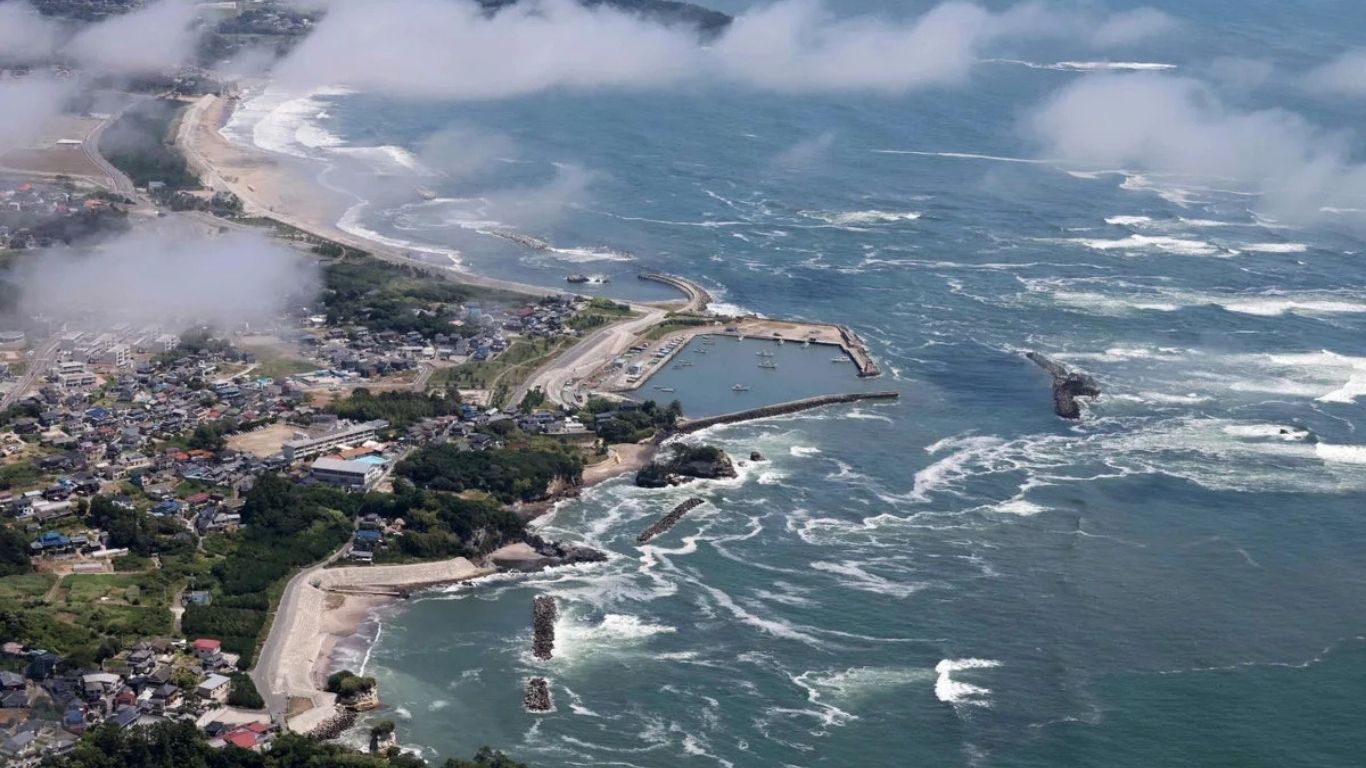
A Big Quake, A Small Splash
On July 29, 2025, a magnitude-8.8 earthquake struck 60 miles off Russia’s Kamchatka Peninsula, jolting the Pacific and triggering tsunami warnings for Hawaii, California, and Washington. Waves raced across the ocean at 500 mph, hitting Hawaii in eight hours and California in 12. But the feared catastrophe didn’t arrive—waves peaked at 1.5 meters (5 feet) in Hilo, causing minor flooding with no reported U.S. deaths or major damage.
Some on social media called it a “non-event,” but experts see it differently. “We should count it as a win that a tsunami happened, we got a warning, and it wasn’t the worst case,” said a seismic network director. The muted impact doesn’t mean the forecast failed—it shows a system built to prioritize safety over spectacle. So why didn’t the waves match the hype? Let’s unpack it.
The Quake’s Power: Underestimated at First
The Kamchatka quake, a megathrust event along a subduction zone, was initially pegged at magnitude 8.0 before being upgraded to 8.8. “Big quakes overwhelm our algorithms early on,” the director explained. “It’s like cranking an amp and getting distortion.” The 8.8 rating means it unleashed 16 times more energy than an 8.0, per a USGS tool.
A NOAA DART buoy, 275 miles from the epicenter, caught a 90-centimeter (35-inch) wave—the second-largest ever recorded, trailing only the 2011 Tōhoku tsunami that killed nearly 16,000 in Japan. “That’s a jaw-dropping signal,” said a NOAA modeler. “It screamed catastrophic potential.” Unlike Tōhoku’s 9.0 quake, which triggered 40-meter waves due to massive seafloor displacement, Kamchatka’s displacement was less severe, tempering the tsunami’s impact.
Kamchatka’s seismic history set the stage. A 9.0 quake in 1952 devastated Severo-Kurilsk with 30-60-foot waves, killing thousands. Recent quakes signaled growing stress, making this event “expected,” per a geology professor. In Russia, minor damage hit Sakhalin Island, but no deaths were reported.
Forecasting Under Pressure: How It Held Up
Within two hours, forecasters issued a Pacific-wide tsunami alert, predicting water levels and flood risks for U.S. coasts. Using seismic data and over 70 DART buoys—more than half U.S.-operated—the models nailed key estimates: Hilo’s 2-meter (6.5-foot) forecast came in at 1.5 meters (5 feet), and California saw similar accuracy. “We aim to be conservative,” the modeler said. “It’s exactly how we want it.”
Flooding in Hawaii matched predictions, though full inundation data is still coming in. “TV reports looked spot-on,” the modeler noted. The system’s speed—covering the Pacific in hours—is a feat, but predicting how far water reaches inland remains tricky. Still, the conservative warnings likely prevented casualties.
Why Evacuate for a 5-Foot Wave?
A 1.5-meter tsunami wave sounds small but can be deadly, especially in Hawaii’s shallow waters. Unlike wind waves, tsunamis pack massive energy, surging tens of meters inland and whipping up lethal currents. “A 2-meter wave can kill,” said a tsunami researcher. “Currents can drag people out to sea.” In Hawaii, boats and docks took a hit, and swimmers faced risks.
Evacuations in Hawaii, like at Waikiki Beach, were cautious but justified. “Warnings have to lean safe,” the director said. “We don’t want people thinking they can ignore them.” A 2024 survey found 20% of coastal residents dismiss tsunami alerts if past ones seemed overhyped.
Not Historic, But a Warning Shot
Kamchatka’s quake wasn’t historic—1952’s was worse—but it’s a reminder of the Pacific’s volatility. The Ring of Fire, home to 80% of the world’s biggest quakes, keeps scientists on edge. “This area was primed,” the professor said, citing recent seismic activity. The 1952 tsunami’s devastation, killing thousands, shows what’s possible when warnings lag.
Tuesday’s success—hours of lead time—averted a repeat. “People weren’t ready in 1952,” said a sedimentology expert. “This time, we were.” But complacency is a risk. Rising sea levels, up 3.7 mm yearly since 1993, could amplify future tsunamis.
A Cascadia Wake-Up Call
Kamchatka mirrors the Cascadia subduction zone, running from Northern California to Vancouver Island. An 8.8 there is plausible, with models suggesting 100-foot waves hitting in just 30 minutes. “It’s a mirror image,” the director said. Such a quake could kill 10,000 and cost $80 billion, per a 2024 report.
Short lead times would strain forecasting. “We need more seafloor sensors and AI to speed things up,” the modeler said. The U.S.’s 39 DART buoys have gaps along Cascadia. Tuesday’s warning proves the value of NOAA and USGS, agencies facing budget scrutiny. “Without them, we’re blind,” the director said.
A Quiet Win, But for How Long?
The Kamchatka tsunami wasn’t a blockbuster, but it wasn’t a dud. The warning system worked, leaning cautious to save lives. For coastal folks, it’s a reminder to take alerts seriously. For scientists, it’s a push for better sensors and faster models, with Cascadia looming. “This shows why we fund monitoring,” the director said. “The next one could hit closer.”
With 15,000 quakes yearly and subduction zones like Kamchatka and Cascadia always active, another strike is inevitable. The U.S. dodged a bullet this time, but luck won’t last forever. “Don’t laugh off a 5-foot wave,” the researcher warned. “It’s enough to kill.”




