

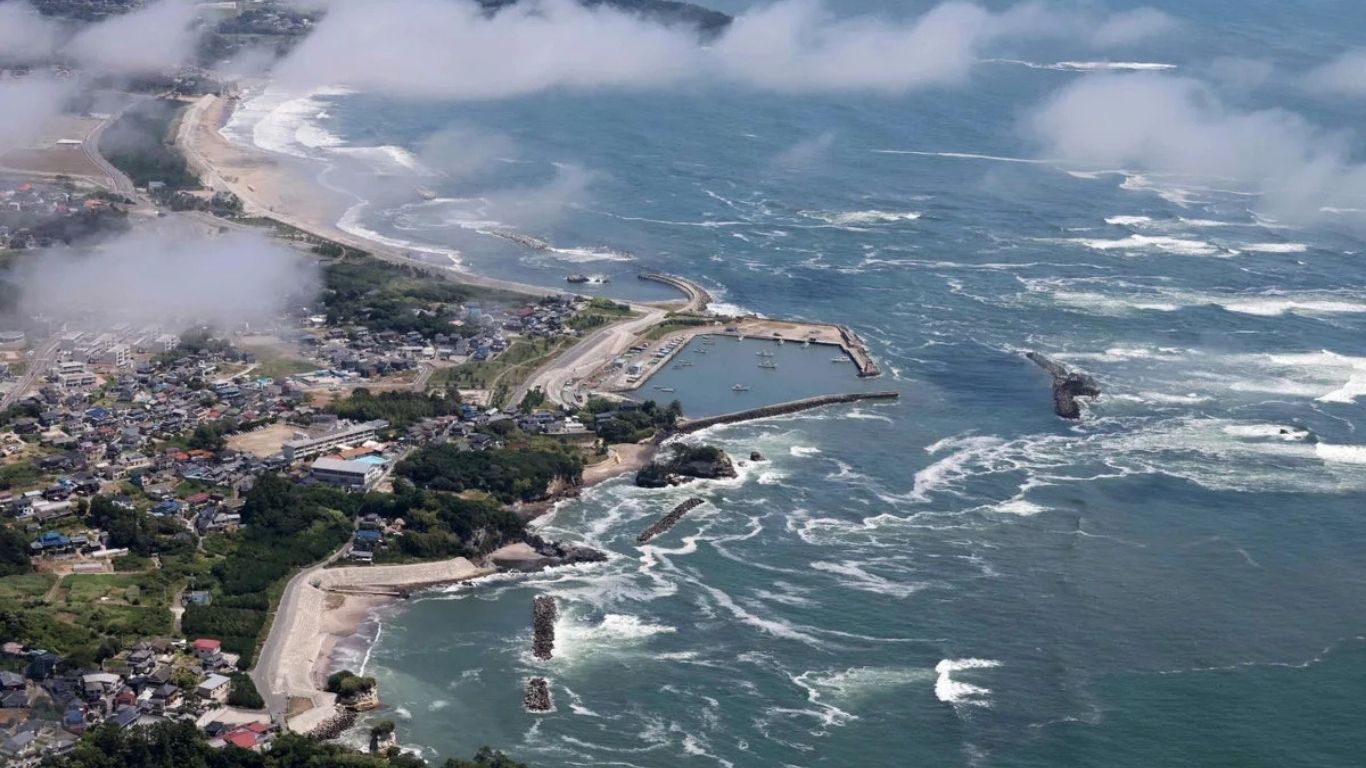
A powerful 8.8 magnitude earthquake off Russia’s eastern coast has triggered a worldwide tsunami alert, mass evacuations across Chile, and a volcanic eruption. Explore the full impact, global response, and unfolding crisis
A cataclysmic 8.8 magnitude earthquake that struck off Russia’s remote eastern coast has set off a chain reaction of disasters across the Pacific Rim, from volcanic eruptions in Kamchatka to mass evacuations in Chile and French Polynesia. The quake, among the most powerful in recent history, has triggered tsunami waves that reached the U.S. West Coast, damaged ports in California, and sent shockwaves through multiple continents.
Experts warn that this seismic event, followed by over 125 significant aftershocks, may lead to prolonged geological instability. Global authorities have launched urgent evacuation and emergency protocols to mitigate further risks from aftershocks and tsunami surges.
Chile on Red Alert: Mass Evacuations and Prison Transfers Underway
Chile’s national emergency response agency, SENAPRED, swiftly issued a “red alert” for the entire coastline, including the Chilean Antarctic Territory. As tsunami waves threatened the Pacific coastline, evacuations were initiated across seven northern regions: Arica and Parinacota, Tarapacá, Antofagasta, Atacama, Coquimbo, Valparaíso, and O’Higgins.
Emergency sirens echoed through coastal cities like Iquique, warning residents with urgent “emergency” alerts. Even remote Easter Island was urged to evacuate as a precaution.
In a striking move, five Chilean prisons located at low elevations are also being evacuated. Inmates are being transferred to safer facilities under heightened security, according to Interior Minister Álvaro Elizalde. The evacuations are part of a strict national protocol for natural emergencies.
“These are sensitive operations conducted with strict security procedures,” Elizalde stated, declining to give further operational details for safety reasons.
Tsunami Waves Hit French Polynesia and U.S. Coastline
The tsunami threat extended far beyond Latin America. French President Emmanuel Macron issued a statement urging vigilance across French Polynesia, where tsunami waves impacted the Marquesas Islands, nearly 10,000 kilometers from the quake’s epicenter.
“All services of the state are mobilized to protect our citizens in the Pacific,” Macron posted on social media platform X (formerly Twitter).
In the United States, tsunami advisories were temporarily issued across the West Coast, with coastal cities like Crescent City, California sustaining structural damage. At around 2:40 a.m. PT, a surge several feet high tore apart a dock in the Crescent City Harbor District, submerging parts of the Inner Boat Basin.
“Fortunately, no injuries occurred,” said Harbormaster Mike Rademaker, “but the damage was significant.”
Russian Doctors Operate Through Chaos as Earthquake Hits Kamchatka
As the massive earthquake struck, doctors at the Kamchatka Cancer Center in Russia were performing surgery. Dramatic footage released by the regional health ministry shows surgical staff holding down equipment and stabilizing the patient as the operating room trembled violently.
“We secured the patient and all essential equipment,” said Dr. Yana Gvozdeva. “If the anesthesia machine had disconnected, the consequences could have been fatal.”
Authorities have announced that the surgical team will be nominated for state honors in recognition of their bravery and professionalism during the crisis.
Powerful Aftershocks Shake Russian Far East
Seismic data from the U.S. Geological Survey (USGS) revealed more than 125 aftershocks of magnitude 4.4 or higher following the main 8.8 magnitude quake. The strongest aftershock so far, a 6.9 magnitude tremor, struck just 45 minutes later.
Lead meteorologists explain that this pattern of high-frequency aftershocks could continue for weeks or even months, with the potential for quakes in the 7.0–7.9 magnitude range still looming.
“This kind of seismic behavior isn’t just expected; it’s practically guaranteed after a quake of this size,” said CNN meteorologist Brandon Miller.
Beaches Reopen Cautiously in California but Risks Remain
While Los Angeles County and other parts of California have reopened beaches following the lifting of tsunami advisories, officials continue to urge extreme caution. Dangerous currents and wave surges could still pose risks throughout the day.
“We’re on a downward trend in wave size, but strong and unpredictable currents are still present,” warned National Weather Service meteorologist Matthew Kidwell. “People should avoid the ocean today and remain vigilant.”
A Wake-Up Call for Pacific Nations
This event has become a sobering reminder of the Pacific Ring of Fire’s volatility and the interconnected risk zones that stretch across the globe. Experts emphasize the importance of early warning systems, coastal preparedness, and international cooperation in the face of such multifaceted disasters.
Key statistics and observations:
- 8.8 magnitude earthquake off Russia’s eastern coast
- 125+ aftershocks, including several over magnitudes 6.0
- Tsunami waves reach Chile, French Polynesia, and the U.S.
- 5 Chilean prisons evacuated
- Crescent City, California suffers harbor damage
- Volcano erupts in Kamchatka region
- Chilean coast under full “red alert”
Conclusion: A Global Seismic Event with Lasting Impacts
As nations recover and reassess, this disaster will likely shape policies and infrastructure for years to come. The earthquake has not only revealed nature’s brute force but also humanity’s resilience from doctors in Kamchatka to first responders in Chile.
While the seismic waves may eventually subside, the political, environmental, and humanitarian ripples are just beginning.




