

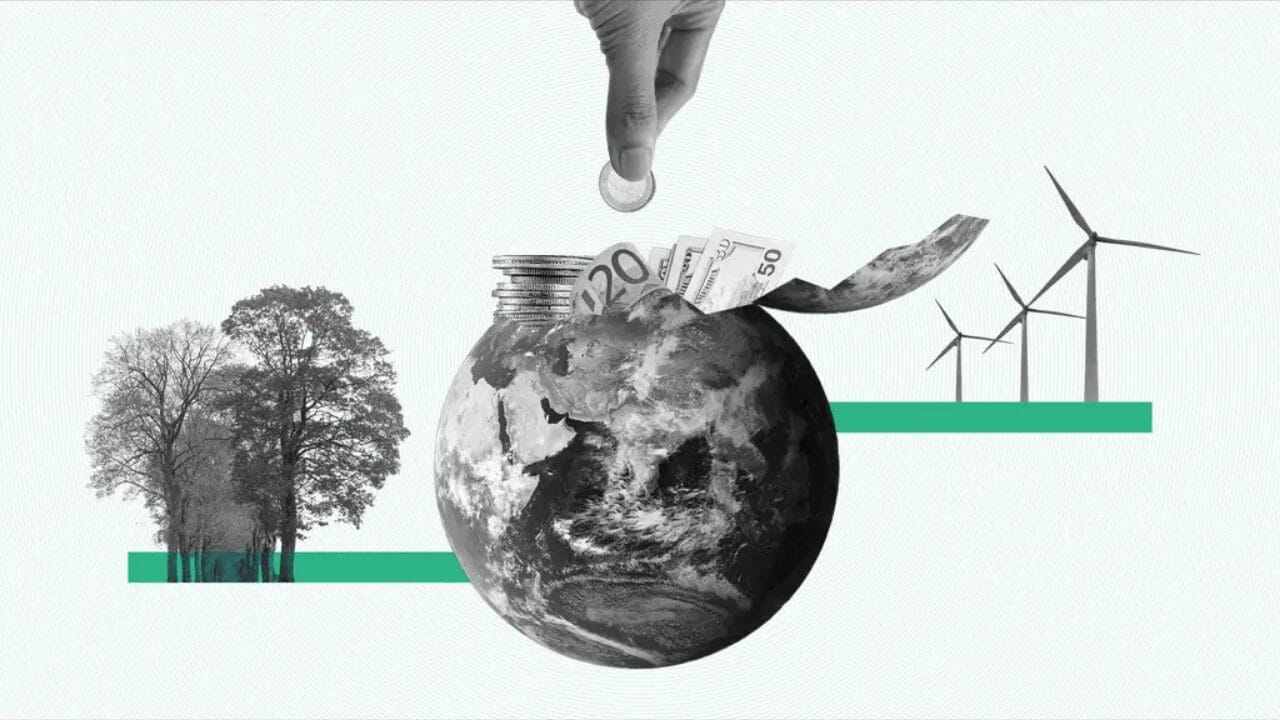
The 29th United Nations Climate Change Conference (COP29) was held in BAKU, the capital of Azerbaijan. This important conference is attended by businessmen and entrepreneurs every year. Although the heads of state of major carbon-emitting countries such as the United States, China, and France were absent, their presence carried special importance in the discussions.
Environmental experts suggest reducing greenhouse gas emissions by 43 percent by 2030 to maintain global warming below 2 degrees Celsius. The Baku climate conference was called the ‘Finance COP’ or ‘Climate Finance Conference.’ Developing countries have asked for 1.3 trillion dollars per year to cover their climate change losses. And industrialized countries have agreed to pay a maximum of 300 billion dollars per year. And they will not be the only ones to pay that money; fast-growing countries such as China, India, and Brazil will also have to contribute to the fund.This money will play a small role. However, there is no agreement on moving away from fossil fuels. This is the cause of a big problem. Because developed countries have higher carbon emissions.
But on the first day of the BAKU conference, significant progress was expected on tackling climate change. The Paris Agreement focuses on climate finance, adaptation, and global assessments. Leaders of nearly 200 countries discussed ways to provide more financial support to poor countries.
Moment of Truth for the Paris Agreement
The UNEP report said that developing countries need $1 billion a day to address the current climate crisis, but they are receiving only $75 million. UN Secretary-General Antonio Guterres called it a crisis and called for rapid adaptation. Conference President Mukhtar Babayev called COP-29 a “moment of truth for the Paris Agreement.”
On the second day of COP-29, civil society groups criticized the carbon market trading process. They believed that it could have a detrimental impact on poor people in the South, indigenous peoples, and small farmers.
“I am not exaggerating that our islands are sinking.” How do you expect us to go back to our women, men, and children with a weak agreement?” said Cedric Suster, head of the coalition of small island states.
According to data released on the third day of the COP-29 climate conference, fossil fuel emissions in 2024 will be 8 percent higher than in 2015, despite pledges to reduce emissions. Although countries decided to move towards renewable energy at COP-28 in 2023, there has been no sign of change in reality.
Although discussions began at the 26th Glasgow conference to implement the Loss and Damage Fund, there was no visible progress in its implementation at the 29th COP. Although this year’s COP is called the ‘Climate Finance COP,’ developed countries did not agree on the trillion-dollar fund. Failure to provide financial assistance here will create problems. Poverty and developing countries will be particularly affected.
Fossil Fuel Lobby Overshadows Climate Commitments
The main goals of COP-29 were to create a loss and damage fund, increase the use of renewable energy, and take steps to control global temperatures. However, little progress has been made in implementing these goals. Fossil fuel-producing countries have had a greater influence at the conference, and the possibility of compensation for affected countries has been reduced.
Experts say that poor countries need $1 trillion per year to address the climate crisis, a third of which should come from rich countries. Some economists have proposed new sources of climate funding, such as a plastic production tax or a wealth tax.
The host of COP29, Azerbaijan, has given more priority to fossil fuel-producing countries, which has reduced the chances of affected countries receiving compensation. Experts say that future climate conferences should only be held in countries that are actively involved in preventing climate change.
Is it possible to deal with the crisis?
The discussions at the 29th UN Climate Conference have shown that there are still many shortcomings in international policies and cooperation to combat climate change. In particular, the lack of transparency and effective accountability in the rules for reducing emissions under Article 6 of the carbon market was evident. The proposed rules for the carbon market fail to ensure internationally standardized carbon credit trading, which undermines effective solutions to climate change. Some countries, including Switzerland, the Maldives, Canada, and Australia, protested.
They said the language used in the agreement to reduce global use of fossil fuels was too weak. But pledging more money is an acknowledgment that poor countries are bearing an unfair burden of climate change. These countries have contributed much less to the climate crisis, but they are also suffering from it.
This year is set to see another record of hot weather. Along with regular heat waves and deadly storms, countries are facing huge losses globally.
Overall, the COP29 conference made progress on some proposals but missed an opportunity to ensure transparency and accountability for effective change. Without the active role of developed countries, it is impossible for developing countries to address this crisis.




