

On July 16, 2025, Israeli warplanes didn’t just hit Damascus—they aimed for its soul. The targets: Syria’s defense ministry, military headquarters, and the area near the presidential palace, right in the heart of Umayyad Square. This wasn’t about skirmishes on some dusty frontline; it was a calculated slap, a symbolic gut-punch to a nation still reeling from Assad’s fall eight months prior. Israel’s excuse? Protecting Syria’s Druze minority. But let’s not kid ourselves—this was about power, not protection, a chapter in a decades-long saga to fracture the Middle East into weak, manageable chunks.
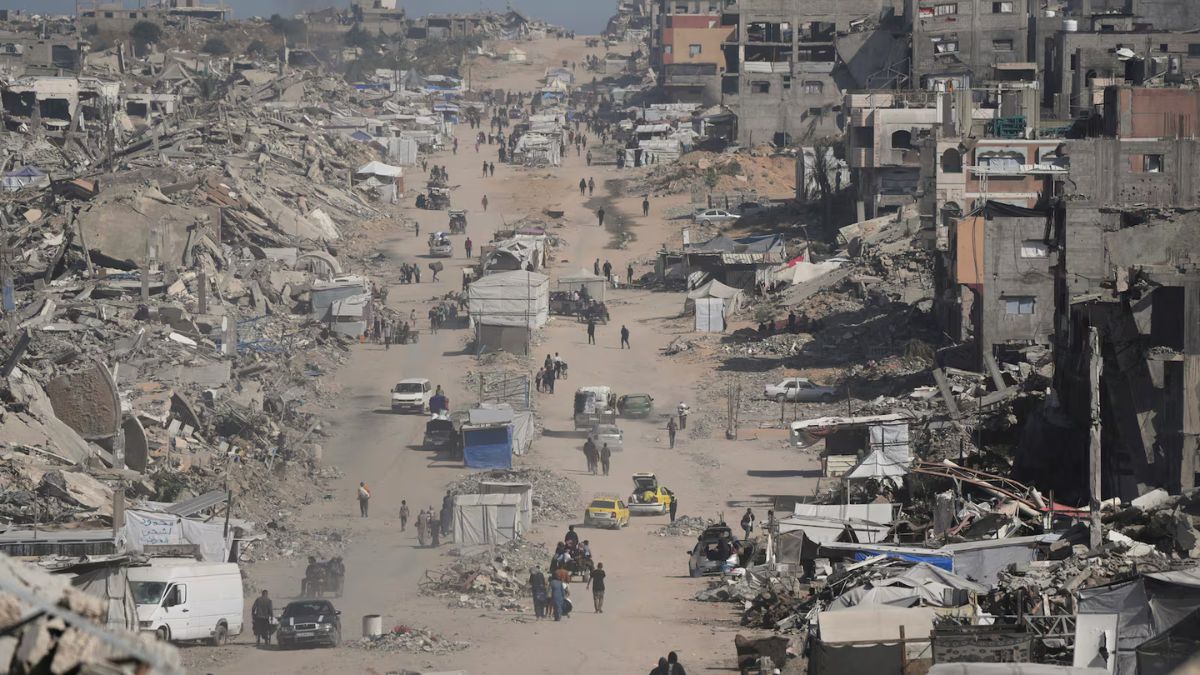
“We’re not here to save anyone,” tweeted an anonymous X user, echoing the cynicism rippling through Arab capitals. “This is Israel saying, ‘We own this region.’” With Gaza reduced to rubble—60,000 dead, 130,000 wounded, and 80% of buildings destroyed, per UN figures—Israel’s claim to moral high ground is as shaky as a house of cards in a sandstorm. Yet the strikes keep coming, from Beirut to Tehran, each one a brick in a doctrine of domination that’s as old as Israel itself. The question isn’t just why—it’s whether this strategy’s fatal flaw will finally bring it crashing down.
The Damascus Strike: Theater of Power
The Damascus attack wasn’t about military necessity—it was a performance. Umayyad Square, a symbol of Syrian pride and Arab heritage, was the stage. Eight months ago, Syrians packed this square to celebrate the end of Assad’s dictatorship. On July 16, Israel turned it into a spectacle of humiliation, striking during a workday as TV cameras rolled. Israeli Defense Minister Israel Katz couldn’t resist gloating, sharing a clip of a Syrian presenter fleeing her broadcast as flames lit up the defense ministry. “It was theater designed to shock Syrians and frighten Arabs,” wrote Middle East Eye, and they’re not wrong.
The Druze excuse? Pure fiction. Syria’s Druze, Arab citizens woven into the nation’s fabric, didn’t ask for Israel’s “protection.” This was about signaling dominance, a move straight out of Israel’s playbook to exploit ethnic divisions. “The choice of target wasn’t strategic—it was symbolic,” said Syrian analyst Hassan Hassan. “Israel’s saying, ‘We can hit your heart and call it charity.’”
The Doctrine: Fragment and Conquer
Israel’s not freelancing here—it’s following a script. The Periphery Doctrine, cooked up in the 1950s by David Ben-Gurion, laid it out: since Israel couldn’t blend into the Arab world, it would break it. Ally with non-Arab powers like Turkey or pre-1979 Iran, stoke divisions within Arab states, and neutralize their collective pushback. Ben-Gurion was blunt: “Our aim is to smash Lebanon, Trans-Jordan, and Syria,” he said in 1948. “We bomb, move on, and take Port Said, Alexandria, and Sinai.” His vision? A “dynamic state, oriented toward expansion” with no fixed borders or agreements.
Fast-forward to 2025, and the doctrine’s alive and well. Foreign Minister Gideon Saar declared post-Assad, “A single sovereign Syria is unrealistic.” Finance Minister Bezalel Smotrich went further: “The fighting won’t end until hundreds of thousands of Gazans leave and Syria is partitioned.” Military lecturer Rami Simani doubled down: “Syria’s an artificial state. Israel must make it disappear into five cantons.” This isn’t loose talk—it’s policy, etched in airstrikes and occupations.
Since Assad’s fall in December 2024, Israel’s ramped up its Syria campaign, launching over 300 strikes in 2025 alone—more than in the previous decade combined. Military bases, air defenses, and strategic heights like the Golan are now Israeli playgrounds. “These raids are routine now, meant to normalize violation,” noted Al Jazeera. Syria’s not alone—Israel’s applied this fragment-and-conquer approach in Lebanon, Iraq, and Sudan, exploiting ethnic fault lines to weaken Arab unity.
Gaza: The Doctrine’s Darkest Face
Nowhere is this clearer than Gaza, where Israel’s war has turned a strip of land into what UN rapporteur Francesca Albanese calls “the world’s largest open-air concentration camp.” With 60,000 dead, mostly women and children, and 130,000 wounded, Israel’s tactics—starvation, bombardment, and infrastructure destruction—aren’t just warfare; they’re a blueprint for erasure. In the West Bank, daily apartheid and settlement expansion, codified in Israel’s Basic Law, mock any claim to moral authority.
Yet Israel spins its Damascus strike as “protecting minorities,” a claim so hollow it’s almost laughable. “A state starving Gaza and entrenching apartheid can’t play savior,” Albanese told Common Dreams. The Druze, like Syria’s Kurds, are pawns in a game to splinter Arab states, a tactic Israel’s honed since Ben-Gurion’s day. “Israel’s cultivating these groups to use as levers for fragmentation,” warned Ali Bakir, a Middle East analyst.
The Periphery Expands: Iran, Pakistan, and Beyond
Syria’s not the endgame—it’s a stepping stone. Israel’s sights are set on Iran and, increasingly, Pakistan, as part of a broader vision to remake the region from “Pakistan to Morocco.” Jerusalem Post editorials and neoconservative outlets like the Foundation for Defense of Democracies openly call for Iran’s partition, targeting its Sunni, Kurdish, and Balochi minorities. One FDD piece urged Trump to “forge a coalition for Iran’s breakup,” offering security guarantees to breakaway regions. Pakistan, with its nuclear arsenal and CPEC ties to China, is next on the list, with Israeli voices like Smotrich framing it as a threat to regional stability.
The Abraham Accords, sold as peace deals, are really tools to cement Israel as the region’s economic and security hub. “Israel provides the violence, and neighbors pay tribute,” wrote The Cradle. Trump’s envoy Steven Witkoff put it slickly: “If these countries worked together, it’d be bigger than Europe—AI, robotics, blockchain.” It’s not partnership—it’s annexation by another name, a vision of Israel as a protectorate empire.
The Fatal Flaw: Uniting the Enemy
Here’s where Israel’s doctrine stumbles. The more it bombs, occupies, and fragments, the more it galvanizes its foes. “Israel may redraw maps and starve children, but it can’t bomb its way to permanence,” Albanese said. From Gaza to Damascus, Israel’s actions have unified Arab sentiment like no summit could. Iran, Turkey, and even Pakistan—once distant rivals—now see Israel as an existential threat. “Across the Arab world, Israel’s genocide in Gaza and attacks on Damascus have unified hearts,” wrote Middle East Monitor.
This isn’t new. History’s littered with empires—Crusaders, British, Ottomans—that overreached and fell. Israel’s betting on fragmentation, but it’s brewing unification—of resentment, of resistance. Hezbollah in Lebanon, Houthi in Yemen, and even Pakistan’s military are watching, not cowering. “The region’s memory isn’t a wound—it’s a weapon,” tweeted @ArabVoice, capturing the mood.
The Endgame: Empire or Collapse?
Israel’s doctrine—born in Ben-Gurion’s expansionist dreams and refined through decades of war—sees a Middle East of weak, divided states bending to its will. But empires built on subjugation don’t last. “The more Israel acts like a colonial power, the more the region sees it as one,” said Rami Khouri. Gaza’s suffering, Damascus’s humiliation, and strikes on Sanaa and Tehran aren’t just attacks—they’re rallying cries.
As I sit here, chuckling at the irony of a nation claiming to protect minorities while flattening Gaza, one thing’s clear: Israel’s doctrine is a gamble. It can bomb capitals and exploit divisions, but it can’t erase memory. The Middle East has buried empires before, and it’s got a long memory. Syria’s ruins, Gaza’s dead, and the region’s growing defiance suggest this doctrine’s fatal flaw isn’t just moral—it’s practical. Push too hard, and the fragmented become united. Keep bombing, and the periphery becomes the center of resistance. Israel’s dreaming of dominance, but it might just wake up to a fight it can’t win.




