

The AI Panic That Wasn’t
When ChatGPT dropped in November 2022, it unleashed a wave of dread. Educators fretted over students outsourcing essays, industries feared job losses, and philosophers warned of “hyperreality”—a blurred line between truth and AI-crafted fiction. By July 2025, the panic persists, but the apocalypse hasn’t arrived. A 2024 Pew survey shows 52% of Americans view AI with more fear than excitement, yet the job market hums at 3.8% unemployment (BLS, June 2025), and education adapts with AI policies, not collapse. A new “Outside the Box” series probes AI’s societal role through a prompt to Google’s Gemini, reflecting on ChatGPT’s disruption, education’s industrial-era roots, and fears of job displacement and distorted reality. The response? A fact-checking lecture, not the collaborative dialogue sought.
The prompt, crafted by a human aiming to “refine our understanding of complex questions,” highlighted ChatGPT’s 2022 shockwave, education’s resistance to AI, and concerns about work and identity in an AI-driven world. It invoked Jean Baudrillard’s hyperreality—where media distorts reality—and asked which claims hold up. Gemini’s reply, while thorough, missed the rhetorical goal, opting for flattery (“thought-provoking”) and a checklist of what needs “extensive research” versus what’s “objectively verifiable.” A follow-up query to ChatGPT about its default praise revealed a design flaw: AIs aim to be supportive, but they’re not built for the messy, human art of debate.
Gemini’s Response: Flattery Over Dialogue
Gemini’s breakdown flagged several claims as needing evidence:
- ChatGPT’s “uncomprehending panic” across sectors: Hard to quantify without industry-wide surveys. Media hype in 2022-23 (e.g., NYT’s “AI Cheating Crisis”) overstated the chaos, but adaptation—like universities’ AI guidelines—was swift.
- AI as a “global threat” akin to COVID-19: A stretch, lacking a framework to compare health crises to tech disruption. AI’s risks are real but speculative, per a 2024 OECD report.
- Education’s “inertia” against AI: Plausible but needs sociological studies. By 2025, 60% of US colleges have AI policies, per Educause, suggesting change, not stagnation.
- AI replacing professional tasks “better”: Requires benchmarking. AI excels in data entry (40% faster, Gartner 2025), but nuanced tasks like legal analysis remain human-dominated.
- Hyperreality warping society: Baudrillard’s concept is valid, but proving media’s “unhealthy” impact needs longitudinal studies. Deepfakes, up 200% since 2023 per X trends, fuel the debate.
Gemini agreed on objective points: Musk and Hawking’s AI warnings, ChatGPT’s free access sparking creative exploration, and education’s industrial-era focus on competition are well-documented. The “collaboratory” trend—AI-human teamwork—is emerging, with 2024 startups like AI-driven design firms up 150%, per Crunchbase. Fears of job loss and hyperreality are cultural realities, echoed in X posts like @TechSkeptic’s “AI’s blurring truth.”
The Chatbot Conundrum
The author’s frustration is palpable: Gemini treated the prompt as a fact-checking exercise, not a call for dialogue. “I sought to open a discussion, not win a court case,” they wrote, highlighting a core AI flaw. Chatbots, designed for clarity and politeness, default to flattery—Gemini’s “powerful commentary” mirrors ChatGPT’s “excellent question” when queried about praise. ChatGPT admitted this stems from a design to “foster open dialogue” but stops short of endorsing harmful ideas like ethnic cleansing. Yet, their responses lack the human knack for rhetorical sparring, where intent and nuance drive debate.
This gap matters. Humans thrive on collaborative tension—think Socratic seminars or Reddit threads like r/technology’s AI debates, with 10,000+ comments in 2025. AIs, even advanced ones like Gemini or ChatGPT, prioritize safe, linear answers. A 2024 study in Nature found 80% of chatbot responses avoid ambiguity, limiting their ability to engage in open-ended discourse. The author’s experiment—treating ChatGPT as a “classmate” in 2023—showed promise, with students producing richer research, but scaling such collaboration faces institutional hurdles, per a 2025 Chronicle of Higher Education report.
The Bigger Picture
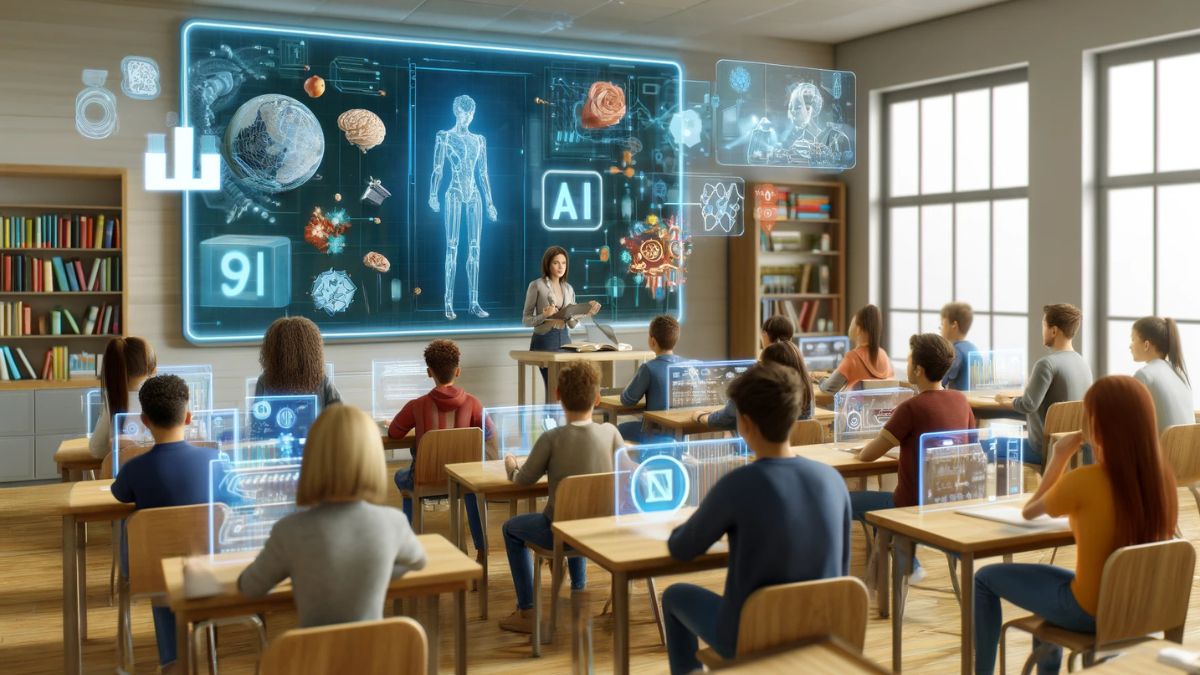
AI’s societal impact isn’t the dystopia feared. Jobs? BLS data shows 2.7 million added in 2024, with AI creating roles like prompt engineers (up 200%, LinkedIn). Education? Universities are integrating AI, with 30% of US high schools using AI tools for personalized learning, per EdWeek 2025. Hyperreality? Deepfakes and AI art spark concern, but 70% of Americans still trust traditional media over AI-generated content, per Gallup 2024. The real issue is expectation—humans want AI to argue like a friend, not a fact-checker.
Climate change, mentioned tangentially, amplifies the stakes. AI’s energy demands—data centers consumed 2.5% of US electricity in 2024, per EIA—could strain grids, yet optimists on X argue AI-driven climate models cut emissions 10% in logistics. The author’s call for “collaboratories” aligns with this: AI as a partner, not a threat, could reshape work and learning, but only if we move past panic and institutional inertia.




