

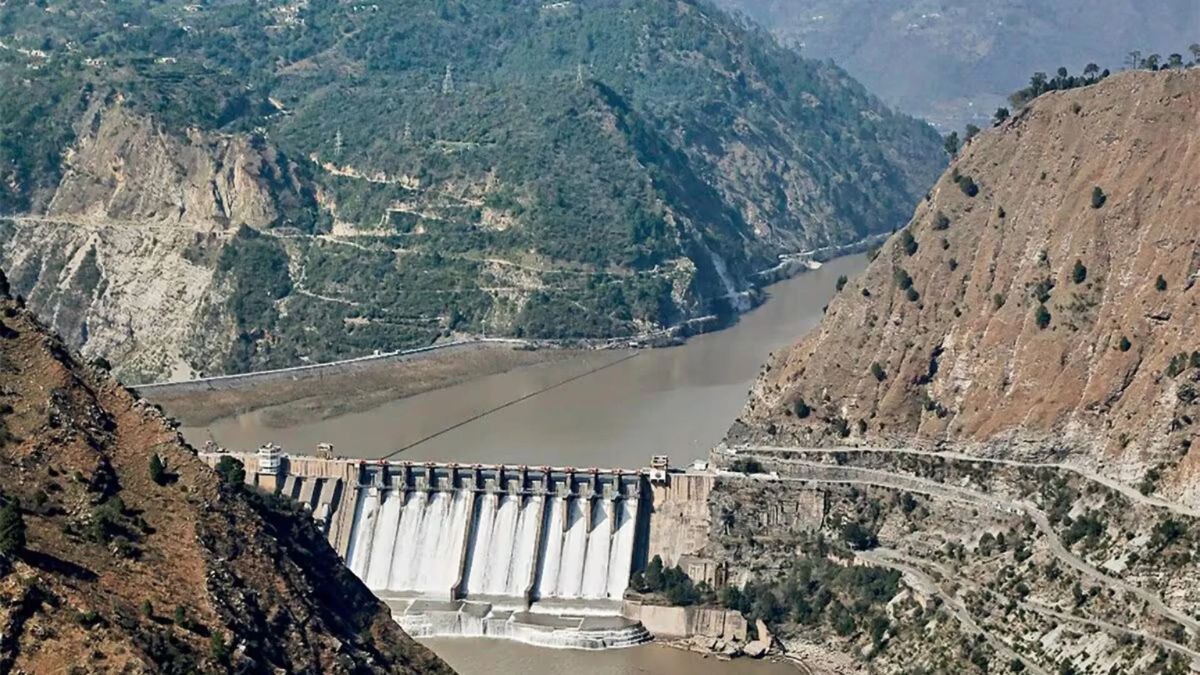
The Indus Waters Treaty, signed in 1960 under the World Bank’s watchful eye, is a marvel of endurance, surviving three Indo-Pak wars and countless border flare-ups. It carves up the six-river Indus system: India gets near-total control of the eastern rivers (Ravi, Beas, Sutlej, yielding 41 billion cubic meters annually), while Pakistan relies on the western rivers (Indus, Jhelum, Chenab, delivering 99 billion cubic meters), with India allowed limited uses like hydropower. A Permanent Indus Commission, neutral experts, and PCA arbitration ensure disputes don’t spiral. For 65 years, this framework held firm—until India’s April 2025 bombshell.
Following a Pahalgam terror attack that killed 26, India froze the treaty’s mechanisms, halting annual data exchanges, barring Pakistani engineers from inspecting dams like Kishenganga, and declaring PCA arbitration “illegal”. Delhi framed the IWT as a colonial relic, unfair to an upstream India grappling with climate change and energy demands. Home Minister Amit Shah’s vow to divert western river flows to Rajasthan electrified nationalists, who cheered it as reclaiming “hydrological sovereignty”.
The Hague’s Legal Hammer
Pakistan didn’t sit idle. It hauled India to the PCA, challenging the suspension and India’s hydropower projects, which Pakistan claims breach IWT’s technical limits. On June 27, 2025, the PCA’s unanimous Supplemental Award of Competence delivered a stinging rebuke. It affirmed its jurisdiction, dismissing India’s “illegal” argument, and ordered India to resume data sharing, allow inspections, and honor dispute resolution. The court also rejected India’s push for a Neutral Expert over arbitration, noting the PCA’s broader authority to tackle legal disputes.
Pakistan’s Foreign Ministry crowed, calling it a “vindication” of international law and the IWT’s staying power. India’s Ministry of External Affairs, unbowed, branded the PCA a “political charade” and its rulings “void,” doubling down on suspension until Pakistan curbs “terrorism”.
A Strategic and Diplomatic Fumble
India’s gambit was meant to corner Pakistan, but it’s boomeranged. The PCA ruling exposed India’s legal overreach, as the IWT’s Article XII demands mutual consent for termination—a clause India ignored. Diplomatically, Pakistan has spun itself as the “lower riparian victim,” winning sympathy in global forums. Social media posts on X highlight Pakistan’s fears of agricultural collapse if flows drop, amplifying its underdog narrative.
India’s move also risks a broader geopolitical fallout. China, controlling Indus tributaries in Tibet, could use India’s precedent to justify damming the Brahmaputra, a nightmare for India’s northeast. Bangladesh and Nepal, downstream neighbors, are eyeing India’s reliability in their own river agreements with suspicion. At home, critics argue India’s tarnished its image as a treaty-abiding democracy, a blow to its clout in climate and trade talks.
The High Stakes for the Region
The Indus is Pakistan’s lifeline, irrigating 80% of its farmland and sustaining cities like Karachi. India’s brief diversion of Ravi waters in March 2025 left the Chenab near Sialkot nearly dry, raising fears of crop failures and food insecurity in Punjab and Sindh, where agriculture drives 21% of GDP. In Jammu & Kashmir, locals fret over mega-dams like Kishenganga, which threaten river ecosystems and fuel unrest in an already tense region.
The World Bank, the IWT’s guarantor, is in a bind. India’s opt-out undermines its role as a neutral facilitator, prompting calls for third-party mediation from think tanks like Chatham House. But with trust between India and Pakistan at rock bottom, any talks face long odds.
India’s Precarious Path Forward
India’s now in a corner. Its call for an IWT 2.0—updated for climate change, hydropower sharing, and population growth—sounds reasonable but ignores the treaty’s no-exit clause. Further defiance risks Pakistan escalating to the UN or International Court of Justice, invoking principles of the UN Watercourses Convention, which India hasn’t signed but still influences global norms. Continued water diversions could also spark border clashes along the Line of Control, where tensions already simmer.
Compliance with the PCA ruling would quiet international criticism but enrage India’s nationalist base. Mediation, perhaps via a neutral state, is a faint hope given the rancor. A modernized treaty addressing flow variability and energy needs could work, but only if both sides rebuild trust—a tall order when Modi’s “blood and water” rhetoric still echoes.
India’s water gambit aimed to punish Pakistan but instead handed Islamabad a legal and diplomatic win. The PCA’s ruling reaffirms the IWT’s resilience, exposing the limits of India’s upstream leverage. As climate pressures shrink the Indus’s flows and regional tensions flare, India must decide: double down on defiance or swallow the bitter pill of diplomacy. The stakes—legal, moral, and geopolitical—are as high as the Himalayas.




