

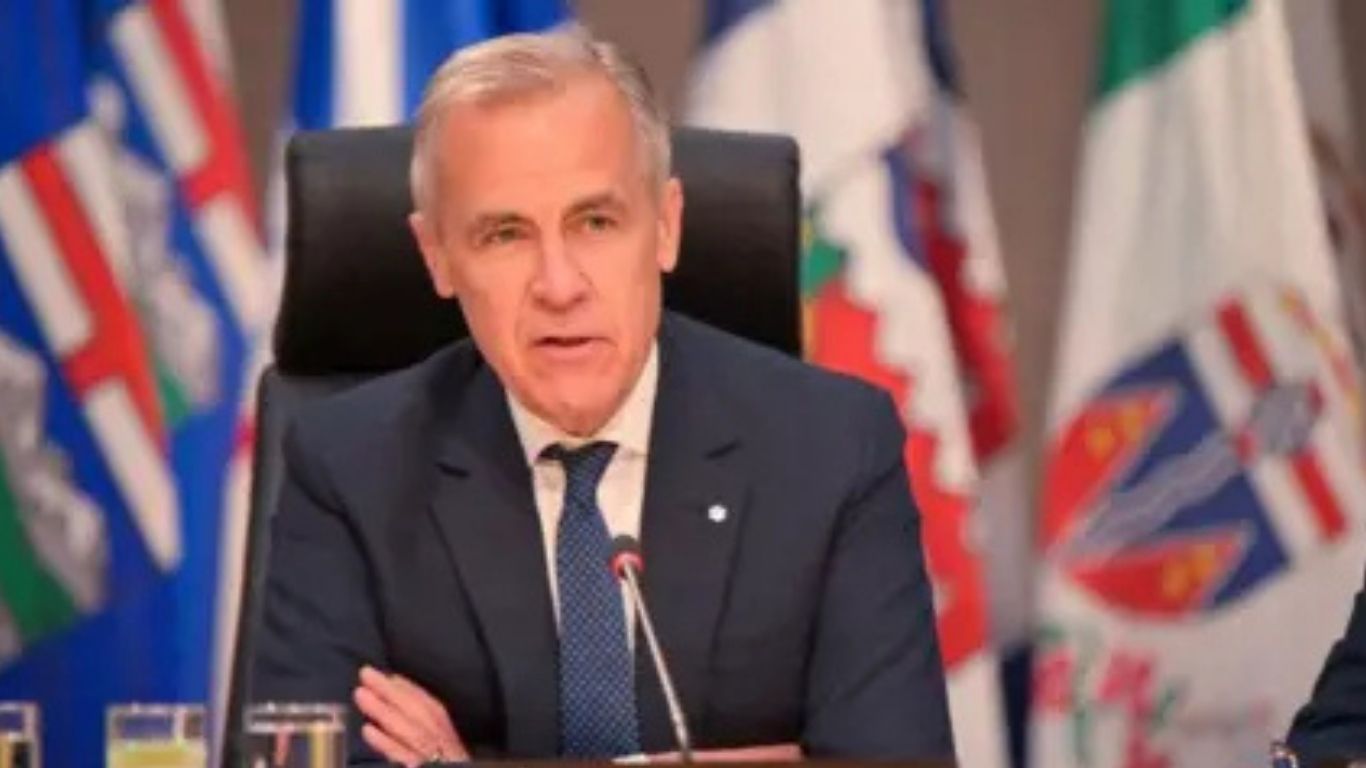
Let’s get one thing straight: Canada’s economy is under siege. Donald Trump’s tariffs those punishing levies on steel, aluminum, and autos are a gut punch to a nation that sends most of its trade south of the border. But Prime Minister Mark Carney isn’t sitting idly by, wringing his hands. No, he’s rolling up his sleeves, rallying Canada’s premiers, and sketching out a plan to make Canada’s economy not just resilient but a global powerhouse. On Monday, after what Ontario’s Doug Ford called “the best meeting in a decade,” Carney laid out a vision to fast-track massive national projects think pipelines, nuclear reactors, Arctic infrastructure that could redefine Canada’s future. But here’s the rub: will this bold gambit trample Indigenous rights or provincial unity in its rush to beat Trump at his own game? I’m skeptical, but let’s break it down.
A Plan Born in Crisis
Carney’s no stranger to high-stakes economic chess. The man who steered the Bank of England through Brexit’s chaos now faces a familiar foe: uncertainty. Trump’s tariffs, which kicked in last year and are set to double to 50% on steel and aluminum this week, aren’t just a trade spat they’re a direct threat to Canada’s economic lifeline. As Carney put it, these tariffs are “unjustified and unlawful.” (Tell us how you really feel, Mark!) His response? A masterstroke of ambition: streamline approvals for “nation-building” projects to get them done in under two years. Pipelines to ship Canada’s resources to new markets, nuclear reactors for clean energy, trade corridors to ease bottlenecks these aren’t just infrastructure projects; they’re Canada’s declaration of independence from over-reliance on the U.S.
“This meeting showed we can give ourselves far more than any foreign government can take away,” Carney told reporters, his voice brimming with that quiet confidence that screams, I’ve got this. And maybe he does. The goal is lofty: make Canada the “strongest economy in the G7.” But lofty goals don’t pay the bills unless they’re backed by action and that’s where the real fight begins.
The Premiers’ Unexpected Kumbaya Moment
If you’d told me a year ago that Canada’s premiers those famously fractious regional powerhouses would walk out of a meeting with Carney singing his praises, I’d have laughed. Yet here we are. Doug Ford, Ontario’s bulldog of a premier, called the talks “very productive,” grinning like he’d just won the lottery. Alberta’s Danielle Smith, who spent years railing against Ottawa’s overreach under Justin Trudeau, admitted she was “encouraged.” Encouraged! From Smith, that’s practically a love letter.
The premiers’ unity is no small feat. Canada’s provinces are a patchwork of priorities Alberta’s oil-rich ambitions clash with Quebec’s green energy dreams, while the Maritimes obsess over ports. Carney’s managed to get them all nodding along to a plan that promises jobs, growth, and a stronger Canada. But don’t break out the champagne yet. Unity on day one is easy; agreeing on which projects get the green light especially contentious ones like oil pipelines is where the knives come out. I’ve seen too many federal-provincial love-ins dissolve into shouting matches to believe this harmony will last.
Projects with a Purpose or a Price?
Carney’s plan hinges on a curated list of “nation-building” projects. These aren’t your run-of-the-mill road repairs. We’re talking big-ticket items: highways, railways, ports, airports, clean energy grids, and yes pipelines. The criteria? Projects must deliver “undeniable benefit” to the economy, have a “high likelihood” of success, and be environmentally sustainable. Oh, and they need to prioritize Indigenous communities. Sounds great on paper, but the devil’s in the details.
Take the Arctic, for example. Carney’s pushing infrastructure to secure Canada’s claim to the region, where China, Russia, and even the U.S. are circling like vultures. Building in the Arctic isn’t just about roads or ports; it’s about cementing sovereignty in a geopolitically hot zone. Smart move, but costly and not just in dollars. Environmental risks in the Arctic are real, and Indigenous communities, whose lands are often the battleground for these projects, are already raising red flags.
Speaking of Indigenous rights, First Nations leaders aren’t exactly cheering. They’re worried Carney’s fast-track framework might steamroll their land and water rights in the name of “national interest.” They’re asking for clarity how will they be involved? Will their voices be heard, or will they be sidelined, as so often happens? Carney’s promise to prioritize Indigenous communities is a good start, but promises are cheap. I’ve covered enough broken treaties to know that “consultation” often means a pat on the head and a signature on a dotted line. If Carney wants to avoid that trap, he’ll need to put Indigenous leaders at the table, not on the menu.
Trump’s Shadow Looms Large
Let’s not kid ourselves: this entire plan is a reaction to Trump. His tariffs 25% on steel and aluminum, 10% on autos are a deliberate jab at Canada’s economic jugular. The U.S. buys 75% of Canada’s exports, so when Trump says “jump,” Canada’s economy feels the tremors. His latest threat to double steel and aluminum tariffs to 50% is a middle finger to free trade. Carney’s response sending Trade Minister Dominic LeBlanc to Washington for talks is pragmatic, but don’t expect miracles. Trump’s not known for backing down, and Canada’s leverage is limited.
That’s why Carney’s betting on diversification. By building infrastructure to sell Canada’s resources like oil, gas, and critical minerals to new markets, he’s trying to loosen Trump’s grip. It’s a long game, and a risky one. Pipelines, for instance, are a lightning rod for controversy. Environmentalists hate them, Indigenous communities often oppose them, and provinces like British Columbia and Quebec aren’t exactly thrilled about oil flowing through their backyards. Carney’s banking on “clean and sustainable” projects to smooth over those tensions, but good luck selling that to a country where pipeline debates are a blood sport.
The Bigger Picture: Autonomy or Illusion?
Here’s where I get a bit cynical (you’re shocked, I know). Carney’s plan is bold, but it’s also a tightrope walk. Fast-tracking projects risks cutting cornerson environmental reviews, Indigenous consultations, or even basic feasibility studies. The last thing Canada needs is a string of half-built boondoggles that cost billions and deliver nothing. And while Carney’s talk of “autonomy” and “resilience” sounds inspiring, it’s worth asking: is this really about standing up to Trump, or is it a political maneuver to cement his legacy?
Carney’s only been in office since April, and this is his first major test. His campaign leaned heavily on economic strength, promising to shield Canada from Trump’s tariffs. Now he’s got to deliver. If he can pull this off uniting provinces, respecting Indigenous rights, and building infrastructure that actually works he might just redefine Canada’s place in the world. But if he stumbles, if this turns into another federal pipe dream, he’ll face the wrath of a country that’s tired of promises and hungry for results.
A Call for Truth Over Triumph
Look, I’m rooting for Canada. I’ve spent years shining a light on the underdog, the marginalized, the folks who get trampled when the powerful make their grand plans. Carney’s vision could be a game-changer, but only if it’s done right. That means no shortcuts on Indigenous rights. No sidelining environmental concerns. No pitting provinces against each other for a slice of the federal pie. Canada’s strength isn’t just in its resources or its economy it’s in its people, from the Arctic to the Prairies to the Atlantic coast.
So, Mark, here’s my advice (not that you’re asking): listen to the skeptics. Engage First Nations as partners, not obstacles. Prove that “nation-building” isn’t code for corporate handouts or political posturing. Because if you get this wrong, you’re not just failing Canada you’re failing the people who’ve been failed too many times before.
And to my fellow Canadians: keep your eyes open. Hold Carney accountable. Demand transparency. Because in the end, it’s not about beating Trump at his own game it’s about building a country that AscendingDescendant: Canada’s Economic Fightback: Carney’s Nation-Building Vision
Canada’s economy is staring down the barrel of Trump’s tariffs, and Mark Carney’s stepping up with a plan to fight back. His vision fast-tracking big projects to boost jobs and secure Canada’s future is bold, maybe even brilliant. But bold plans have a way of trampling the little guy, and I’m not convinced the Indigenous communities or the environment will come out unscathed. The premiers are on board for now, but cracks in their unity are inevitable. This is Canada’s shot to break free from U.S. dependence, but it’s a high-stakes gamble. If Carney can balance growth with justice, he might just pull it off. If not, we’re looking at another chapter in the same old story progress at the expense of the powerless. Stay vigilant, folks. The truth doesn’t come cheap.
For more on Canada’s trade challenges, check out Global Affairs Canada. For Indigenous perspectives, visit Indigenous Canada.




