

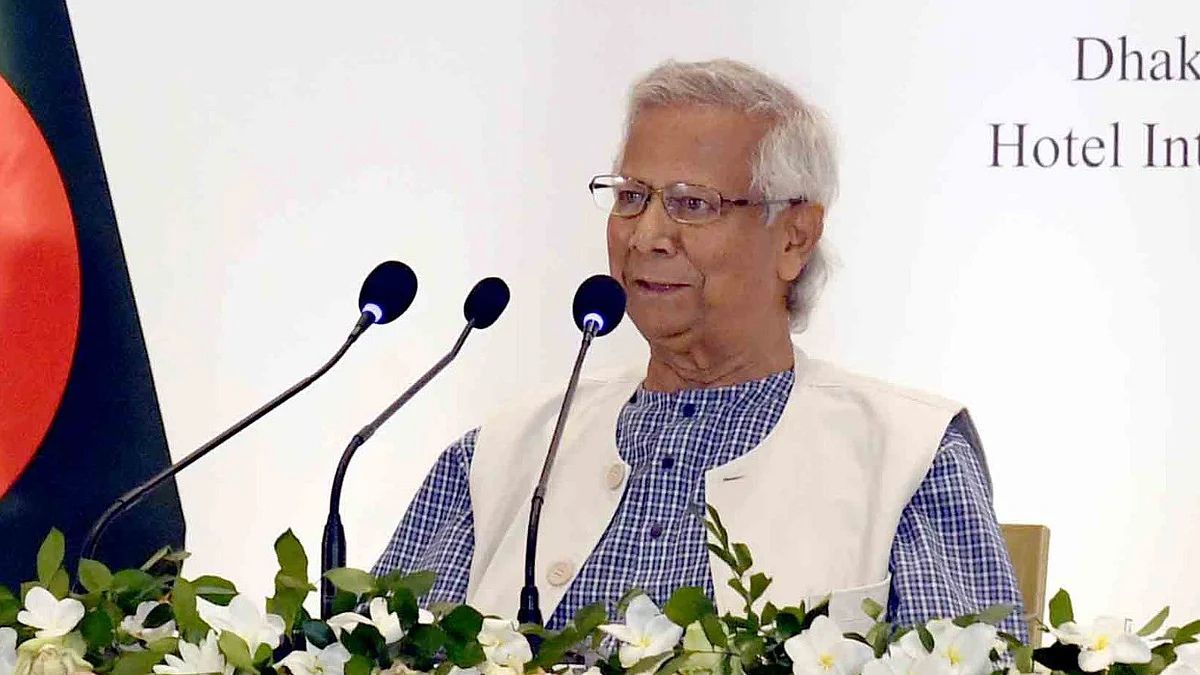
A quiet, closed-door meeting on May 20 between Bangladesh’s interim leader Muhammad Yunus and the heads of the nation’s armed forces was anything but routine. Held amid swirling political unrest and whispers of a power struggle at the heart of Dhaka, the meeting has since become the focal point of a deepening crisis that threatens to derail the country’s transition to electoral democracy.
Yunus, the Nobel Peace Prize-winning economist who took over as chief advisor nine months ago following the ouster of long-time Prime Minister Sheikh Hasina, is now facing escalating pressure from all directions the military, political opposition, and an increasingly restless public. While interim Planning Minister Wahiduddin Mahmud denied on Saturday that Yunus was stepping down, the rumours persist, fueled by internal dissent and a visible breakdown in civil-military relations.
Mounting Military Discontent
The relationship between Yunus’s civilian-led interim administration and Bangladesh’s powerful military appears increasingly strained. Since July 2024, the military has remained deployed across the country following a complete collapse of the civilian police force amid a mass uprising. Although police resumed operations in August, the military’s continued presence has blurred the lines between defence and governance.
Army Chief General Waker-Uz-Zaman added fuel to the fire last Wednesday with a rare and pointed public address, demanding national elections be held by December 2025. “Bangladesh needs political stability. This is only possible through an elected government, not by unelected decision-makers,” he said, speaking before senior officers at Dhaka Cantonment and joined virtually by military missions worldwide.
The general’s comments directly challenged Yunus’s declared timeline of holding elections no earlier than mid-2026 a position grounded in the need for comprehensive electoral reform. However, Waker’s remarks made clear the military’s diminishing patience. “The army is meant for defending the nation, not for policing. We must return to barracks after elections,” he declared.
Sources say the military is also alarmed by several policy directions pursued by Yunus’s administration. Chief among them is the proposed humanitarian corridor into Myanmar’s Rakhine State, a region marred by ethnic conflict and the Rohingya crisis. Waker has rejected the plan outright, calling it a “security threat” and a potential entry point for foreign proxy conflicts. “Only a political government elected by the people can make such decisions,” he warned.
Concerns over other initiatives, including potential foreign involvement in managing the Chattogram Port and the planned rollout of Elon Musk’s Starlink satellite internet system, have also raised red flags within military ranks. “The army will not allow anyone to compromise our sovereignty,” the general reportedly said, reflecting a deepening mistrust in the interim government’s authority.
Adding to the storm, unconfirmed rumours circulated last week that the Yunus administration had attempted to dismiss General Waker a move analysts say, if true, would signify a major fracture in civil-military relations. While neither side has addressed the speculation publicly, the timing of Waker’s public speech is widely seen as a strategic countermeasure to reassert the military’s position.
Rising Political Pressures
Yunus is also battling increasing resistance from the country’s political parties. Since its inception on August 8, 2024, the interim government has struggled to unify key political forces.
The Bangladesh Nationalist Party (BNP), the nation’s largest opposition group, has demanded national elections by the end of 2025, rejecting Yunus’s proposed delay. Meanwhile, the newly formed National Citizen Party (NCP) a student-led movement born from the protests that toppled Hasina insists that no elections can be held until political and electoral reforms are complete and former ruling party members are prosecuted for last year’s protest-related killings.
On Thursday, BNP escalated tensions by holding a press conference demanding the resignation of two student advisers and National Security Adviser Khalilur Rahman. The party warned that continued collaboration with Yunus’s administration would be “impossible” without swift action.
Protesters have also called for the reinstatement of a BNP-backed candidate who lost the Dhaka mayoral election in 2020 a vote they allege was rigged under Hasina’s regime.
Yunus is expected to meet with BNP and Bangladesh Jamaat-e-Islami (BJI) leaders on Saturday in a bid to defuse the political standoff. However, many remain sceptical about whether such talks can bridge the widening chasm.
Resignation Rumours and Cabinet Reassurance
Reports surfaced late last week that Yunus had signalled his intention to resign during a Thursday cabinet meeting. Social media exploded with speculation that he would deliver a televised address announcing his departure. That same evening, student leader Nahid Islam now head of the NCP met Yunus privately and pleaded with him to stay.
By Saturday, the administration issued a public denial. “The chief adviser [Yunus] is staying with us – he hasn’t said he’ll resign – and the other advisers are also staying,” Planning Minister Mahmud told reporters. Still, analysts caution that these reassurances may only be temporary if current conditions persist.
What’s at Stake for Bangladesh?
The outcome of this multi-front power struggle could determine whether Bangladesh navigates a peaceful transition to democracy or plunges back into authoritarianism or unrest. The military’s increasing assertiveness, combined with political gridlock and Yunus’s limited ability to implement reforms, paints a sobering picture.
“Without consensus among the military, political actors, and civil society, Yunus’s vision of a reformed electoral system may remain a pipe dream,” said one Dhaka-based political analyst. “And the longer this uncertainty drags on, the greater the risk of instability.”
As Yunus stands at the crossroads of governance and upheaval, the world watches to see whether the Nobel laureate’s moral authority and reformist ambition can hold against the storm gathering around him.




