

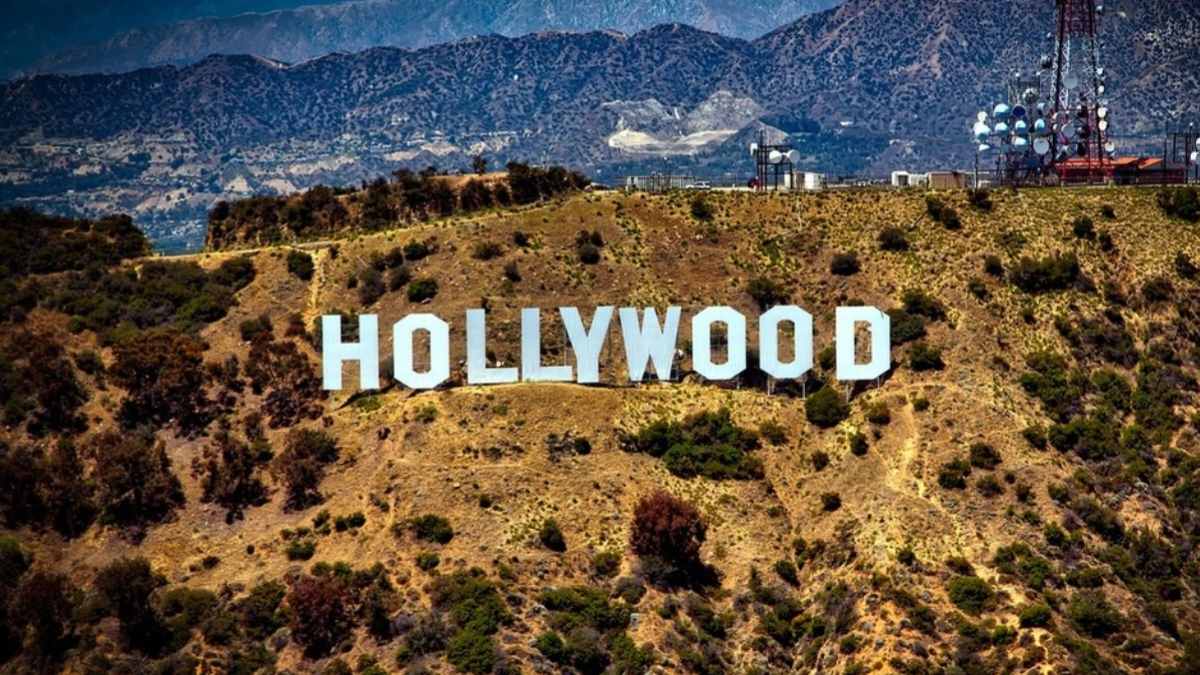
Hollywood, as we know it, the world’s largest film industry, started its life in the second decade of the 20th century with the rise of production facilities in South California. It is a film industry that has been making more than 500 movies per year for many decades. These movies are consistently among the top ten at the international box office. It is clear that such a success allows Hollywood to be in a leading position on the international film market.
Hollywood is considered the oldest film industry, where the earliest film studios and production companies emerged. It is the birthplace of various genres of cinema—among them comedy, drama, action, musical, romance, horror, science fiction, epic, etc.—and has set the example for other national film industries.
Where is Hollywood located, and how did it get its name?
Hollywood is located in Los Angeles, California, United States. It is a neighbourhood that is situated northwest of Downtown Los Angeles, and it is bordered by the neighbourhoods of Los Feliz, Silver Lake, and West Hollywood.
The name “Hollywood” is believed to have originated from the founder of the area, Harvey Wilcox, who, along with his wife Daeida Wilcox, moved to California from Kansas in the late 19th century. In 1886, they purchased 120 acres of land in the area and named it “Hollywood” after the holly bushes that were common in the area.
Hollywood film revolution over the years
The silent film era in Hollywood lasted from the 1890s to the late 1920s. The silent era produced many famous films, including Ben-Hur, The Ten Commandments, and The Circus. This period saw the rise of iconic stars like Charlie Chaplin, Buster Keaton, and Mary Pickford. The silent era ended in the late 1920s with the advent of sound film.
The transition to sound films in the late 1920s ushered in the “talkies” era, which brought about a profound shift in the way films were made and consumed. This period saw the rise of the “studio system,” in which major studios controlled every aspect of film production, distribution, and exhibition. This era produced some of the most memorable films in Hollywood history, such as Gone with the Wind, Casablanca, Citizen Kane, and The Wizard of Oz. This was the Golden Age of Hollywood, which is also known as the classical era of Hollywood. The first talkie was ‘The Jazz Singer’.
The post-World War II era saw a decline in the studio system as the industry grappled with the rise of television and the emergence of independent filmmakers. This period, often referred to as the “Silver Age” of Hollywood, was marked by a shift towards more serious, socially conscious films, like On the Waterfront, A Streetcar Named Desire, and Rebel Without a Cause.
The Great Depression and Hollywood films
The Great Depression that followed the 1929 stock market crash turned Hollywood into a powerhouse. Now, not to discredit the films of the roaring twenties, which can be argued to be part of the Golden Age of Hollywood, once the Great Depression started, a majority of Americans turned to cinema as their form of escapism. Movie tickets were often far cheaper than tickets to theatre shows and concerts. According to history.com, up to 80 million Americans went to the movies each week during the Depression.
“During this Depression, when the spirit of the people is lower than at any other time, it is a splendid thing that for just 15 cents an American can go to a movie and look at the smiling face of a baby and forget his troubles,” said Franklin D. Roosevelt on watching Shirley Temple films.
The “Hollywood” that truly made Hollywood famous was controlled by just a few big studios. These studios weren’t just making movies; they practically owned the whole system. They held the rights to the pictures, had leading stars in multi-year contracts, and even owned all the major theatres. They also propelled technological advances like talking pictures, studio lighting, anamorphic lenses, aspect ratios, and colour film.
Technology helps shape Hollywood across all eras.
Technology can create drastic changes in what filmmakers can do and who can break into the industry. Technological advancements have played a significant role in shaping the evolution of Hollywood. From the introduction of sound and color films to the development of computer-generated imagery (CGI) and virtual reality, technology has continually pushed the boundaries of what is possible in filmmaking. Special effects and technology launched an entirely new era that takes us toward the present. The advent of CGI in the late 20th century revolutionized the industry, allowing filmmakers to create stunning visual effects and fantastical worlds that were previously unimaginable. Films like Jurassic Park, The Matrix, and Avatar showcased the power of this technology, paving the way for a new era of visually spectacular filmmaking.
So it became the centre of the film industry for many reasons, including
Technical and organizational advantages:
- Hollywood has a dense network of specialized producers and a pool of talent from around the world.
- First-mover advantage: U.S. studios were the first to master mass-producing and distributing high-quality films.
Global appeal:
Hollywood movies are entertaining and highly visible, and English is a universal language.
Strong home market: The United States has the world’s largest single home market for movies.
Distribution infrastructure:
The Big Five major studios (Universal, Paramount, Warner Bros., Walt Disney, and Sony) have an efficient distribution infrastructure that allows them to distribute hundreds of films each year to international markets.
Conclusion: Hollywood, land of dreams
In the movie Pretty Woman, the character Happy Man says, “Welcome to Hollywood! What’s your dream? Everybody comes here; this is Hollywood, land of dreams”.




