

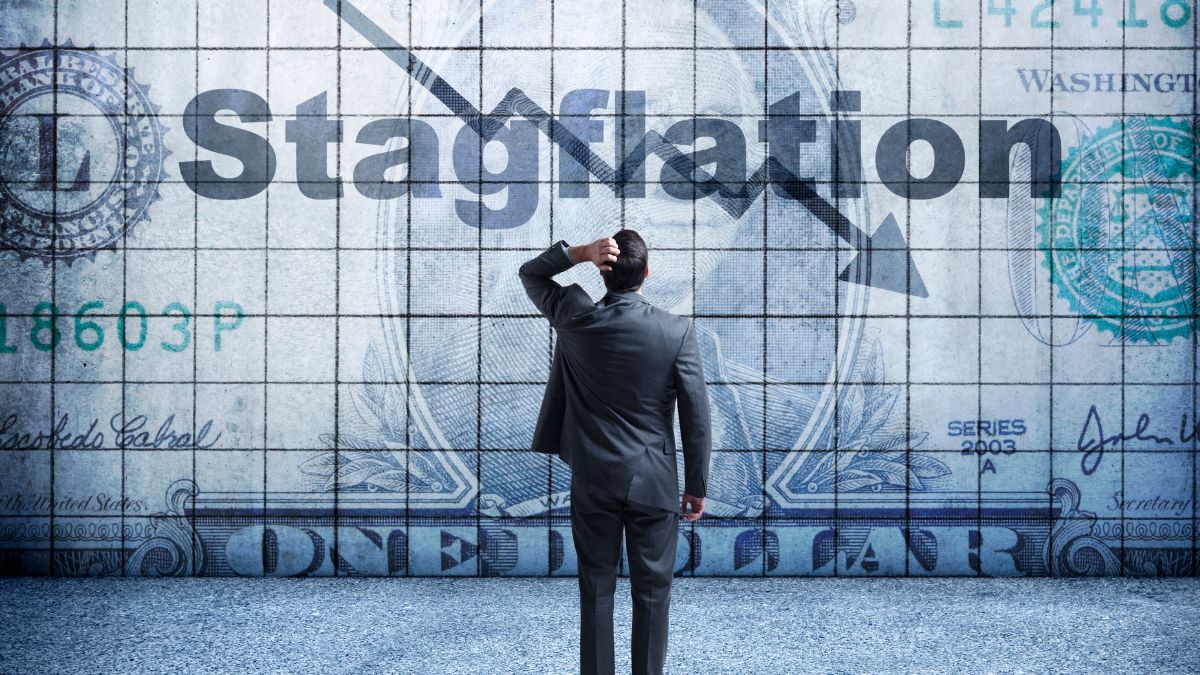
As inflation remains high and growth slows, fears of stagflation are resurfacing. Explore the warning signs, economic risks, and what it could mean for American workers, businesses, and policymakers.
America’s economy, that great, groaning beast, is puffing along, according to the Federal Reserve’s latest report. It’s “strong,” they say, despite a fog of “heightened uncertainty” creeping in. But let’s not kid ourselves there’s a ghost in the machine, one we haven’t seen since the polyester-soaked 1970s: stagflation. You know, that nasty mix of high inflation, high unemployment, and growth so sluggish it might as well be napping.
I’m not here to cheerlead for the suits in Washington or the Wall Street crowd who think everything’s just dandy. My beat has always been the underdog the worker scraping by, the family staring down a grocery bill that looks like a car payment. And right now, the truth is this: stagflation isn’t just a buzzword for economists to toss around at cocktail parties. It’s a real threat, and it’s got the potential to hit the most vulnerable the hardest. So, let’s pull back the curtain and figure out what’s really going on and what you can do to brace yourself.
The Stagflation Specter: Why It’s Back
Federal Reserve Chairman Jerome Powell, with his measured tone and knack for saying a lot without saying much, dropped a bombshell on May 7. “The risks of higher unemployment and higher inflation appear to have risen,” he said, as reported by CNBC. Translation? The economy’s on a tightrope, and stagflation is the gust of wind waiting to knock it off.
Now, stagflation isn’t here yet don’t let the doomsayers on X fool you. The unemployment rate is still low, and inflation, while stubborn, has cooled from its post-pandemic peak. It’s still above the Fed’s 2% target, mind you, but Powell’s crew decided to keep interest rates steady, betting on the economy’s “solid position.” Fair enough. But here’s the kicker: the conditions for stagflation are simmering, and the heat’s coming from an unexpected source tariffs.
Tariffs: The Economic Wildcard
If there’s one thing that keeps economists up at night (besides their spreadsheets), it’s uncertainty. And tariffs, those blunt instruments of trade policy, are uncertainty’s best friend. Greg McBride, Bankrate’s chief financial analyst, put it plainly: “Uncertainty, in and of itself, is a drag on economic growth.” Businesses, spooked by the prospect of new tariffs, are freezing up hitting pause on hiring, expansion, and investments. It’s like the whole economy’s holding its breath, waiting for someone to make a move.
“Even if a lot of [the tariffs] never actually come to fruition, this period of uncertainty itself is a headwind to the economy,” McBride told CNBC. And he’s not wrong. Tariffs, whether they materialize or not, are already casting a long shadow. They’re pushing up prices, rattling consumer confidence, and making everyone a little jumpier about the future.
Let’s not forget the human cost here. When businesses stall, it’s not the CEOs who feel the pinch it’s the workers, the small business owners, the folks who can’t afford to wait out the storm. And if stagflation hits, it’ll be those same people staring down higher prices, fewer jobs, and a government that’s often too slow to act. Sound familiar? It should. We’ve been here before.
A Blast from the Past: The 1970s Redux?
Cast your mind back to the 1970s bell-bottoms, disco, and an economy that was, frankly, a mess. The U.S. was reeling from the Vietnam War, a manufacturing sector that was starting to creak, and oil prices that shot through the roof. Stagflation was the word on everyone’s lips, and it wasn’t just a theory it was a lived reality. Families watched their savings evaporate as prices soared and jobs vanished.
Today’s triggers are different, but the vibe’s eerily similar. Greg Daco, chief economist at EY Parthenon, didn’t mince words when he told CNBC, “Stagflation is a more pronounced risk than at any time over the past 40 years.” That’s not hyperbole; that’s a warning. Consumer confidence, per the Conference Board’s April survey, has tanked to its lowest in five years, thanks in part to tariff fears. People are worried about their jobs, their bills, and whether they’ll be able to afford the basics.
But here’s the twist: consumers are still spending. Retail sales were up in April, both month-over-month and year-over-year, according to the CNBC/NRF Retail Monitor. Why? Because folks are rushing to buy now, before tariffs jack up prices even more. It’s not optimism it’s survival. And it’s a sign that people are bracing for impact.
The People’s Playbook: How to Weather the Storm
So, what’s a regular person supposed to do when the economy’s doing its best impression of a tightrope walker with a bad case of vertigo? The experts have some ideas, and I’ve got a few of my own. Here’s how you can shield yourself from stagflation’s sting because, let’s face it, the government’s not going to do it for you.
1. Ditch the High-Interest Debt
If there’s one thing I’ve learned from years of poking around the world’s economic underbelly, it’s this: debt is a trap, and high-interest debt is a bear trap. Credit card balances, home equity loans anything with a double-digit interest rate needs to go. “If stagflation comes to pass, you’re going to need that breathing room, because inflation will be high, and prices for all your expenses will be moving higher,” McBride said. He’s spot-on. Paying off that debt now frees up cash for when things get tight. Plus, with interest rates likely to stay put for a while, you’re not missing out on any cheap borrowing opportunities.
2. Build Your Cash Cushion
Here’s a little secret the big banks don’t want you to know: cash is still king, especially when the economy’s wobbling. The May CNBC Fed Survey found that 65% of respondents expect the Fed to cut rates if stagflation hits. But for now, interest rates are holding steady, which means savers have a rare chance to earn decent returns. Online savings accounts are offering rates above inflation grab them while they last.
Why bother? Because a cash reserve is your lifeline. It keeps you from racking up more debt or dipping into your retirement savings when life throws a curveball think job loss, medical bills, or just the cost of keeping the lights on. McBride’s advice is gold: “Having cash set aside can help prevent the accumulation of high-cost debt or the need to prematurely raid retirement accounts.” Trust me, you don’t want to be the one cashing out your 401(k) to cover rent.
3. Stay Sharp, Stay Skeptical
This one’s from me, not the economists. The powers that be whether it’s the Fed, the White House, or the talking heads on cable news love to paint a rosy picture. But you and I know better. Keep an eye on the real indicators: your grocery bill, your gas pump, the “help wanted” signs (or lack thereof) in your neighborhood. And don’t be afraid to ask questions. Why are tariffs being floated now? Who benefits? Who gets hurt? The truth is rarely in the headlines it’s in the fine print.
The Bigger Picture: Who Pays the Price?
Here’s where I get a little cranky. Stagflation, if it comes, won’t hit everyone equally. The fat cats on Wall Street? They’ll be fine, sipping their overpriced coffee while their portfolios adjust. The politicians? They’ll dodge the fallout with their usual sleight of hand. But the rest of us the teachers, the truck drivers, the single parents working two jobs we’re the ones who’ll feel the squeeze. Higher prices, fewer jobs, and a government that’s more interested in soundbites than solutions. That’s the real story, and it’s one I’ve seen play out from Detroit to Dhaka.
The Fed can talk about “solid positions” all it wants, but the ground’s shifting under our feet. Tariffs might sound like a distant policy debate, but their ripple effects are already here lower confidence, higher costs, and an economy that’s starting to wobble. And when it falls, don’t expect a soft landing for the folks at the bottom.
A Call to Arms (or at Least a Call to Action)
So, what’s the move? First, protect yourself pay off that debt, stash some cash, and keep your eyes open. But don’t stop there. Talk to your neighbors, your coworkers, your community. Share what you know. Push back against the narrative that everything’s fine. Because the truth my favorite currency has a way of cutting through the noise.
We’ve been through tough times before, and we’ll get through this one. But only if we’re honest about what’s coming. Stagflation isn’t just an economic term; it’s a test. And I, for one, am betting on the resilience of the people who’ve always carried this country through the ones who don’t get headlines, but who keep the world turning. Let’s prove me right.




