

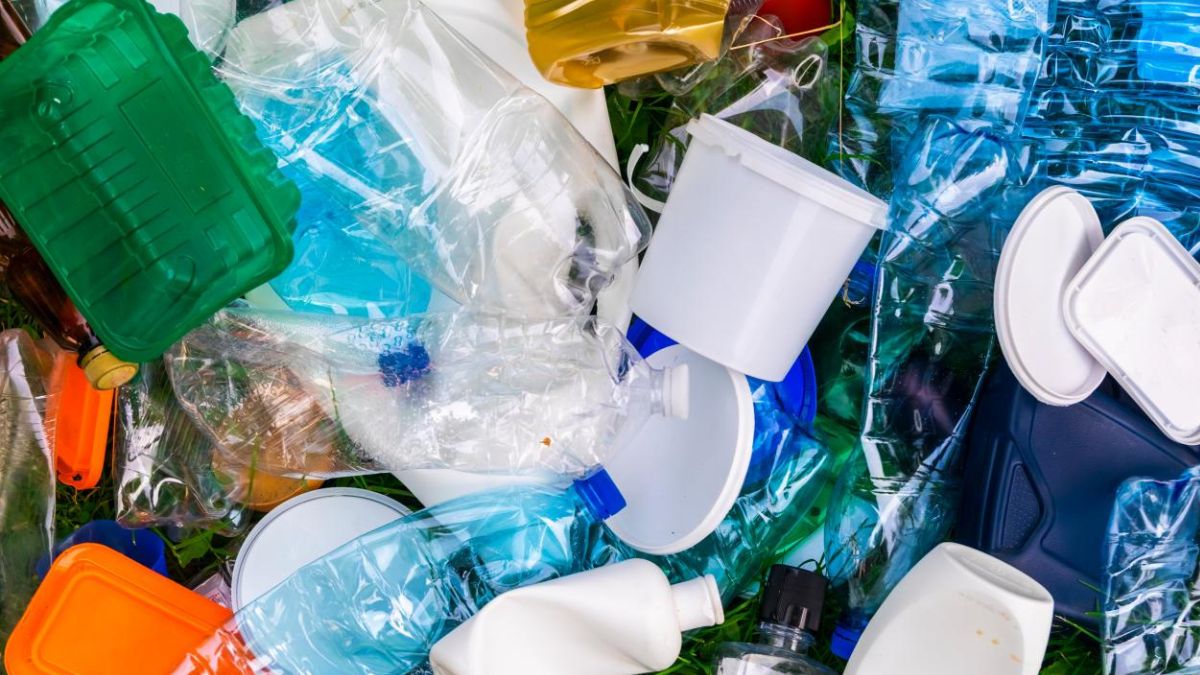
Think about the last time you threw away a plastic bottle. You probably hoped it would be recycled, didn’t you? The truth is that it probably wasn’t. All the bins, slogans, and good intentions aside, barely 9.5% of the plastic made in 2022 was actually recycled. The rest ended up in landfills, being used as fuel, or worse floating around our oceans. It’s a messy problem. But now, scientists are looking at a surprisingly natural solution: enzymes. These tiny, invisible helpers found in nature might just be the cleanup crew we’ve been waiting for.
Plastic: Useful, but a Growing Threat
Plastic is one of those products that changed everything. It’s cheap, long-lasting, and used in almost everything—from water bottles and food packaging to clothes and phone cases. And what makes it so useful also makes it almost impossible to get rid of. The world produces over 400 million tonnes of plastic every year. And if we continue on our current course, that number is expected to triple by the year 2060. Most of it won’t break down for centuries. It just waits around or ends up harming wildlife and seeping into our food supply.
A Natural Solution to a Man-Made Problem
This is where things start to get really exciting. In nature, some microbes have developed a way to “eat” plastic. They produce enzymes tiny proteins that break down certain types of plastic like PET (the kind used in packaging and bottles). What the scientists have done is to take such enzymes and work out how to make them more powerful and faster, so that they can degrade more plastic, more efficiently. Instead of incinerating plastic or burying it, we could break it slowly back into the raw materials it originally consisted of and recycle them. You literally unbake the cake and get flour and eggs again. Plastic doesn’t just magically disappear it transforms into a new form.
Why It Matters to Us All
Modern recycling methods have their limits. Certain plastics are too dirty, too contaminated, or simply too complex to handle. So, even when we recycle, they still end up in the landfill. Enzymes offer a better solution. They can work on low-quality plastic, even the type that’s left in the sun or dumped into a river. And because they break down plastic into its simplest form, we can use those building blocks to make new things without needing to extract more fossil fuels. That’s a big deal for the planet, and for the future.
Change Is Already in Motion
This is now no longer a laboratory test. Governments, industry, and researchers around the world are now turning to enzyme recycling. Over 170 countries united last year in South Korea to talk about how to finally crack plastic pollution. Solutions like these were high on the agenda. Some companies have already built small-scale recycling plants based on enzymes, and a few more are in the works. The vision? To create a circular economy with plastic recycled, not thrown away.
Still a Journey Ahead
Of course, there are still challenges. This new method demands the right infrastructure to work on a large scale. And it will take time, money, and cooperation to build the systems that can sift through all the plastic we waste. But progress so far gives us hope. And with each step, we’re closer to a future when that bottle you toss away on the sidewalk this morning could become a backpack, a container, or even yet another bottle without harming a single part of the environment.
A Reason to Be Hopeful
We have made the plastic crisis. But maybe, if we take our cue from the natural world and give it a little help, we can start mending it back together. These enzymes are small, but their impact can be gigantic. They are teaching us that, sometimes, the best solution is not some new device or gadget, but to look at the world more closely and work with it, rather than work against it.




