

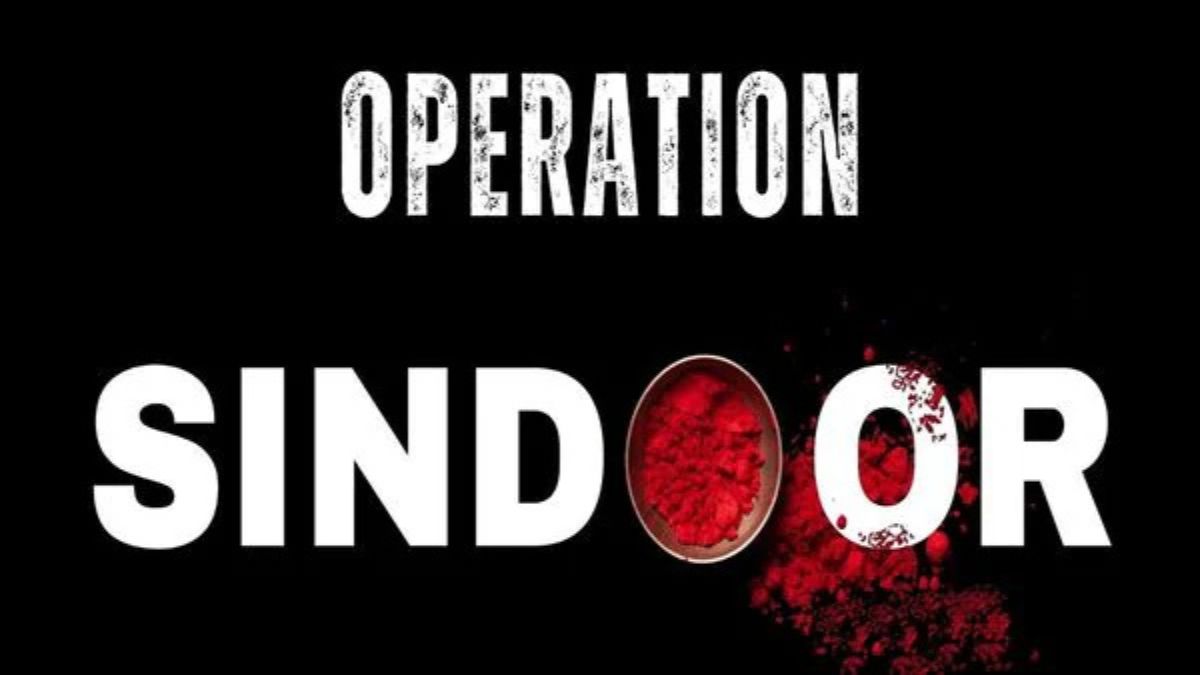
India launches Operation Sindoor, a targeted missile strike on alleged terror camps in Pakistan, sparking outrage in Islamabad and raising fears of renewed conflict between the nuclear-armed neighbors. Islamabad condemns the move as an “act of war,” while global powers urge restraint.
India-Pakistan Hostilities Flare After Pahalgam Attack
In a major escalation of longstanding tensions, India launched a series of precision-guided missile strikes early Wednesday into what it described as terrorist infrastructure located in Pakistan and Pakistan-occupied Jammu and Kashmir. The strikes, executed under the codename “Operation Sindoor”, came just two weeks after a devastating terror attack in the scenic tourist town of Pahalgam that left 26 civilians dead. That attack, which India has blamed on Pakistan-based militant groups, marked one of the deadliest assaults in the region in recent years and has reignited fears of a broader military conflict between the two nuclear-armed neighbors.
India’s Ministry of Defense stated that the operation was a “focused, measured, and non-escalatory” action designed to degrade cross-border terror infrastructure without triggering a full-scale confrontation. According to the ministry, nine high-value terrorist camps and logistics hubs were targeted with high-precision weaponry, and the strikes were carefully planned to avoid Pakistani military installations. Indian officials emphasized that the objective was to send a clear message to terror sponsors without provoking direct military retaliation from Pakistan.
However, Pakistan has vehemently rejected India’s characterization of the strike. Islamabad denounced the move as an “unprovoked and blatant act of war,” claiming it violated international law and Pakistan’s territorial sovereignty. The Pakistani government accused India of deliberately targeting civilian areas under the false pretense of destroying terror infrastructure. In a press conference, Lt. Gen. Ahmed Sharif Chaudhry stated that the Indian missiles struck densely populated neighborhoods in Bahawalpur, Kotli, and Muzaffarabad killing 26 civilians, including women and children, and injuring at least 46 others. Pakistani officials also alleged that the strike caused damage to critical civilian infrastructure, including mosques and residential homes, though no independent verification has yet been provided.
The Indian government has not officially responded to these civilian casualty claims, but Indian defense analysts argue that such narratives may be part of a disinformation campaign aimed at garnering international sympathy and portraying India as the aggressor. Nonetheless, the escalating rhetoric from both sides has raised alarm bells across the region and among global powers, with many warning that a miscalculation could trigger a catastrophic conflict.
Operation Sindoor: Strategic Calculus or Risky Provocation?
The Indian government asserts that its intelligence indicated imminent cross-border terror attacks were being planned, prompting the need for preemptive action. “India has exercised its right to respond, pre-empt, and deter future assaults,” said Foreign Secretary Vikram Misri in a press briefing.
Yet, Pakistani military officials contend the strikes were executed from within Indian airspace, claiming no Indian jets breached Pakistani airspace. Despite that, Pakistan’s military claims to have downed five Indian fighter jets though India has not commented, and reports from the Associated Press confirm that at least two aircraft crashed within Indian-controlled Kashmir.
Global Powers React: Calls for Restraint as War Clouds Loom
World leaders responded with urgent calls for calm. U.S. President Donald Trump commented that while the conflict is “a shame,” he hopes it “ends very quickly.” Secretary of State Marco Rubio echoed those sentiments, promising to work with both nations toward a peaceful solution. China expressed regret over India’s actions and urged both sides to act in the “larger interest of peace and stability.” Meanwhile, Israel backed India’s right to self-defense, stating that “terrorists should know there’s no place to hide.” United Nations Secretary-General Antonio Guterres issued a stark warning: “The world cannot afford a military confrontation between India and Pakistan.” His spokesperson emphasized the need for “maximum military restraint.”
Kashmir: The Epicenter of India-Pakistan Military Standoffs
The region of Kashmir has long been a source of hostility between India and Pakistan, leading to three full-scale wars since independence in 1947. The latest flare-up was triggered by a terrorist attack in the tourist hub of Pahalgam, which killed 26 almost all Indian nationals. India quickly blamed Pakistan-based militants, a claim Islamabad dismissed as “baseless and concocted.”
Following the attack, India vowed a military response. Pakistan warned of “assured and decisive” retaliation to any Indian aggression, setting the stage for Wednesday’s confrontation.
What’s Next: Retaliation or Resolution?
Pakistan’s National Security Committee, chaired by Prime Minister Shehbaz Sharif, met shortly after the strikes and reiterated its right to respond. A statement from the committee accused India of targeting civilian infrastructure and vowed to take “appropriate countermeasures.”
On the Indian side, Air Force Wing Commander Vyomika Singh stressed that while India exercised restraint, it remains fully prepared to counter any escalation from Pakistan.
The coming days are critical. The international community will be watching closely to see whether diplomacy can override decades-old animosity, or if this powerful episode tips the subcontinent toward a wider war.




