

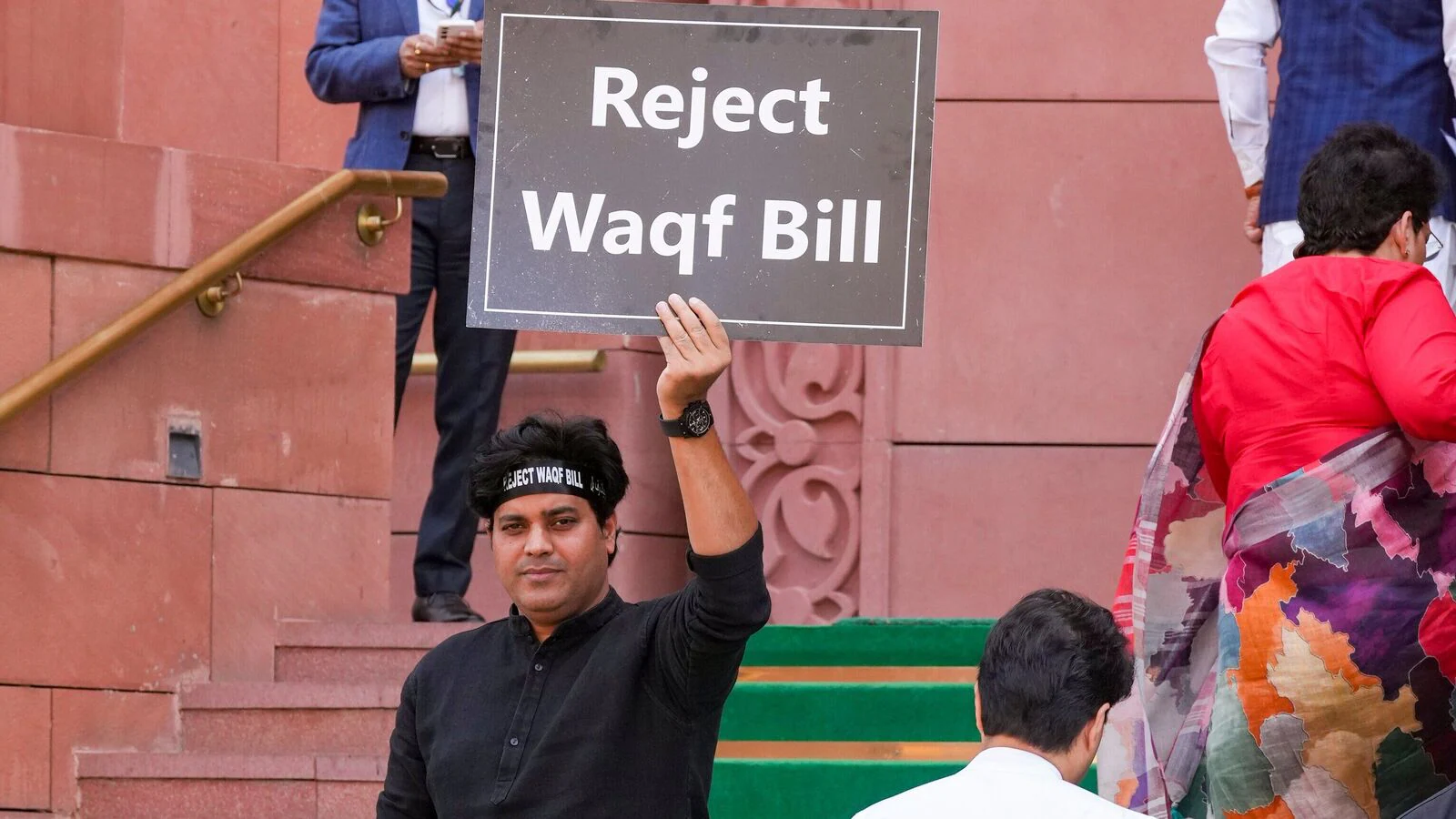
India’s on a tear, and not the good kind. The Waqf (Amendment) Bill, 2025, just bulldozed through the Lok Sabha, and it’s got the Muslim community reeling—Asaduddin Owaisi, their loudest voice, reportedly broke down in tears as it passed. This isn’t just a tweak to some dusty law; it’s a gut punch to 8.7 lakh properties—mosques, graveyards, schools—spanning 940,000 acres, worth a cool $14 billion. The government’s pitching it as reform—transparency, efficiency, blah blah—but dig into it, and it smells more like a power grab dressed up as progress. I’ve sifted through the mess—parliament debates, X chatter, the bill itself—and it’s a doozy. Here’s the unvarnished truth.
The Bill: What’s It Packing?
Let’s cut the fat. The Waqf Act, 1995, governs properties Muslims dedicate to the Allah—inalienable, eternal, for charity or worship. The new bill, passed April 2, 2025, after a 12-hour Lok Sabha slugfest (288-232), rewrites the playbook. Key hits: non-Muslims can now sit on Waqf Boards and the Central Waqf Council—unheard of for Hindu or Sikh trusts. The “waqf by user” clause—where long-term use proves a property’s status—got axed, leaving centuries-old sites vulnerable. District collectors, not survey commissioners, now call the shots on ownership, and their word’s near-final—appeal to high courts, sure, but good luck. Oh, and you’ve got to be a Muslim for five years to even create a waqf. Why? No one’s saying.
The pitch is all about digitization, audits, reclaiming encroached land, and that sounds noble too. But with 7% of waqf properties already encroached and 50% untracked, per the Ministry of Minority Affairs, this feels less like cleanup and more like control. Home Minister Amit Shah swears it’s not about religion—just property. Tell that to the mosques facing eviction notices.
The Tears: Owaisi’s Stand
Asaduddin Owaisi, AIMIM chief and Hyderabad MP, didn’t just cry—he tore the bill up in parliament, channeling Gandhi’s defiance. “This is war on my community,” he roared, citing Articles 14 (equality), 25 (religious freedom), and 26 (community rights). On X, he’s relentless: “Narendra Modi is firing bullets at our chest, snatching our masjids, dargahs—our soul.” He’s not wrong to worry—collectors can now sticker a mosque as “government property” if a dispute pops up, no time limit on resolution. Imagine that outside Parliament’s own mosque. Owaisi’s calling it “Waqf Barbaad”—Waqf Destroyed—and the Muslim street’s nodding along.
He’s got backup. The All India Muslim Personal Law Board (AIMPLB) and Jamiat Ulama-e-Hind smell a rat—autonomy’s toast, they say, and historical sites like Delhi’s dargahs could be next. X posts echo the dread: “First Babri, now this—Muslims are voiceless.”
The Muscle: Modi’s Play
The BJP’s flexing hard. Narendra Modi’s crew says this fixes a broken system—corruption’s rife, they claim, and the Sachar Committee (2006) pegged waqf revenue potential at $1.4 billion yearly if managed right. Fair point: boards have been accused of selling out to encroachers. But why non-Muslims on boards when Hindu endowments stay Hindu-only? Shah’s line—“no interference in faith”—rings hollow when collectors, government lackeys, can overrule waqf claims. X users aren’t buying it: “Digitize, sure, but why gut the law?”
The timing’s suspect. Post-2014, Modi’s NDA has leaned into Hindu-first vibes—Ayodhya, now this. Opposition MPs like Congress’s Gaurav Gogoi and SP’s Akhilesh Yadav call it a communal jab, not reform. The bill’s roots? A 2013 UPA law, tweaked for “appeasement,” Shah says, that handed waqf 123 Delhi properties pre-election. Now, NDA’s flipping the script—hard.
The Fallout: Who’s Hurting?
Muslims—200 million strong—feel this deep. Graveyards where ancestors rest, mosques where they pray, schools for their kids—all up for grabs if a collector squints. The poor get it worst—waqf feeds orphans, funds clinics. Strip that, and they’re naked. X posts from Kerala’s Munambam scream: “Waqf claims our homes, now government claims waqf—what’s left?” Flip side: encroachers—businesses, even government—might cheer. That 7% encroached land? Could be legalized if waqf can’t prove ownership fast.
Owaisi warns of “social instability”—think 1980s riots redux. He’s not alone; Tamilaga Vetri Kazhagam’s Vijay called it “anti-democratic.” The Rajya Sabha’s next—NDA’s edge is thin there. If it passes, President Murmu’s pen seals it.
The Bigger Game: Equity or Erasure?
Waqf’s medieval roots tied Muslims to India’s fabric; now, it’s fraying. The bill’s defenders—BJP’s Sudhanshu Trivedi, AJSU’s Sudesh Mahto—say it’s for “poor Muslims.” Bull. Giving collectors judge-like power smells like colonial overreach, not upliftment. Opposition’s split—BJD’s letting MPs vote their gut—but the math favors Modi. X buzz: “Muslims lose ego with Babri, now land with waqf—next, breath?”
I’ve seen this playbook—Syria, Myanmar—governments chipping at minorities till they’re ghosts. India’s not there, but it’s sliding. The oppressed? Every Muslim kid who’ll inherit less history, every elder praying on borrowed time. Shah says it’s “civilizational reclaiming.” Whose civilization?




