

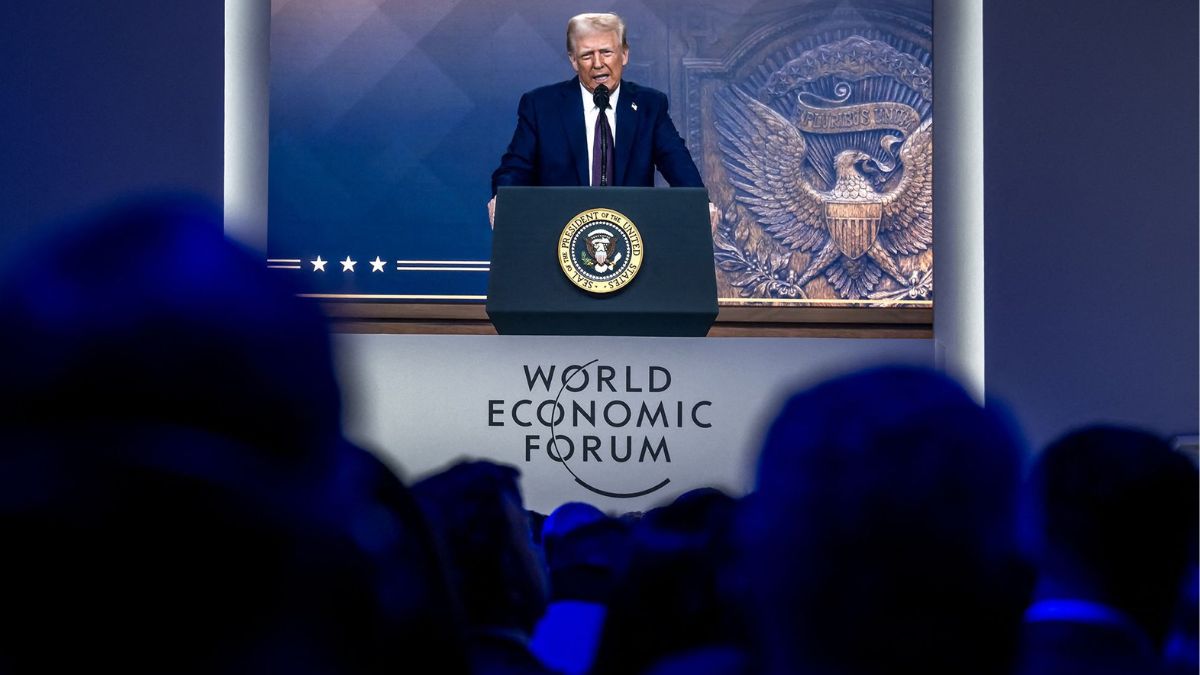
Donald Trump is back at it—this time taking shots at Ukraine, a country that has been fighting tooth and nail for its survival. His latest comments suggest that Ukraine is somehow at fault for its own destruction. “You should have never started it. You could have made a deal,” he declared from Mar-a-Lago, with all the confidence of a man who has never had to dodge a missile strike.
For those keeping score, the war began when Russian tanks rolled into Ukraine in a full-scale invasion nearly three years ago. But in Trump’s world, the victim should have just “made a deal” and handed over land to avoid war. A deal with whom? A dictator who doesn’t believe Ukraine has the right to exist?
This is classic Trump—blaming the oppressed while offering himself as the one man who could have solved it all. “I could have made a deal for Ukraine,” he said, as if war and peace were just another round of real estate negotiations.
Peace Talks Without the War’s Biggest Stakeholder
Meanwhile, real diplomacy was happening in Saudi Arabia. For the first time since the war began, Russian and American delegations sat down face to face. What was notably missing? Ukraine.
Volodymyr Zelensky, the man whose country has been battered by war, was left to watch from the sidelines. Understandably, he wasn’t thrilled. “You cannot make decisions without Ukraine on how to end the war in Ukraine,” he said, looking exhausted during a press conference in Turkey.
Yet, according to U.S. officials, Ukraine wasn’t being “sidelined”—just, well, not invited. Apparently, deciding the fate of a nation without its leader at the table is just standard protocol now.
Russia’s Conditions: No NATO, No Accountability
Russian Foreign Minister Sergei Lavrov, fresh from his talks with U.S. officials, made one thing crystal clear—Moscow will not tolerate any NATO peacekeeping forces in Ukraine. “Any appearance by armed forces under some other flag does not change anything. It is of course completely unacceptable,” he stated.
Translation? Russia wants Ukraine defenseless. Any security guarantees from the West would be seen as provocation. And yet, somehow, Ukraine is the one being told to compromise.
U.S. Secretary of State Marco Rubio echoed a different sentiment: “There has to be concessions made by all sides.” But what exactly does Ukraine have left to give? It has already given its cities, its people, and its future. What’s left? Surrender?
Europe Stands Divided
As Washington and Moscow move chess pieces in Saudi Arabia, European leaders scramble to figure out their next move. The hastily arranged meeting in Paris didn’t produce a united front. The UK’s Prime Minister Keir Starmer suggested a “US backstop” to deter future Russian aggression, even floating the idea of sending British troops to Ukraine.
Germany’s Olaf Scholz wasn’t having it. “Completely premature,” he called the idea. Italy’s Giorgia Meloni? Skeptical. Poland’s Donald Tusk? Not interested in sending troops either.
This leaves Ukraine in an increasingly lonely position. American support has always been the backbone of Ukraine’s resistance. But if Europe hesitates and Washington starts cozying up to Moscow, what options does Ukraine have left?
The Smiles in Riyadh, and the Frowns in Kyiv
As the U.S. and Russia inch closer to negotiations, the visuals from Riyadh paint a telling picture. Russian and American diplomats, all smiles, talking about “useful conversations” and “restoring cooperation.” Meanwhile, Zelensky, visibly drained, warns that decisions are being made over his head.
The truth is, Ukraine’s chances of resisting Russian aggression without American support are slim. And Trump’s comments suggest that if he gets back into office, his administration might not just pull the plug on aid—but might actively blame Ukraine for its own suffering.
This war has always been about survival for Ukraine. But for some leaders, it’s just another deal to be made. The question is: who will be left to pay the price?




