
• About
  • Contact
  • Methodology
  • Violation Policy
  • Editorial Policy
  • Correction Policy
  • Privacy Policy
  • Reader Submissions
  • Our Team
  • Funding & Donors
Wednesday, July 22, 2026
  • Home
  • Focus
    • Exclusive
    • Editor’s Pick
    • Behind the Curtain
  • Fact Check
  • Politics
  • Diplomacy
  • Economy
  • War & Conflict
  • South Asia
  • More
    • Games & Sports
    • Technology
    • Entertainment
    • History & Culture
    • Science & Technology
    • Nature & Environment
    • Health & Lifestyle
Bangla
Diplotic
No Result
View All Result
  • Home
  • Focus
    • Exclusive
    • Editor’s Pick
    • Behind the Curtain
  • Fact Check
  • Politics
  • Diplomacy
  • Economy
  • War & Conflict
  • South Asia
  • More
    • Games & Sports
    • Technology
    • Entertainment
    • History & Culture
    • Science & Technology
    • Nature & Environment
    • Health & Lifestyle
No Result
View All Result
Diplotic
Bangla
Home Diplomacy

Costa Rica to Take in Migrants from the US—But There’s a Catch

Staff Reporter by Staff Reporter
February 18, 2025
in Diplomacy
Reading Time: 3 mins read
A A
0
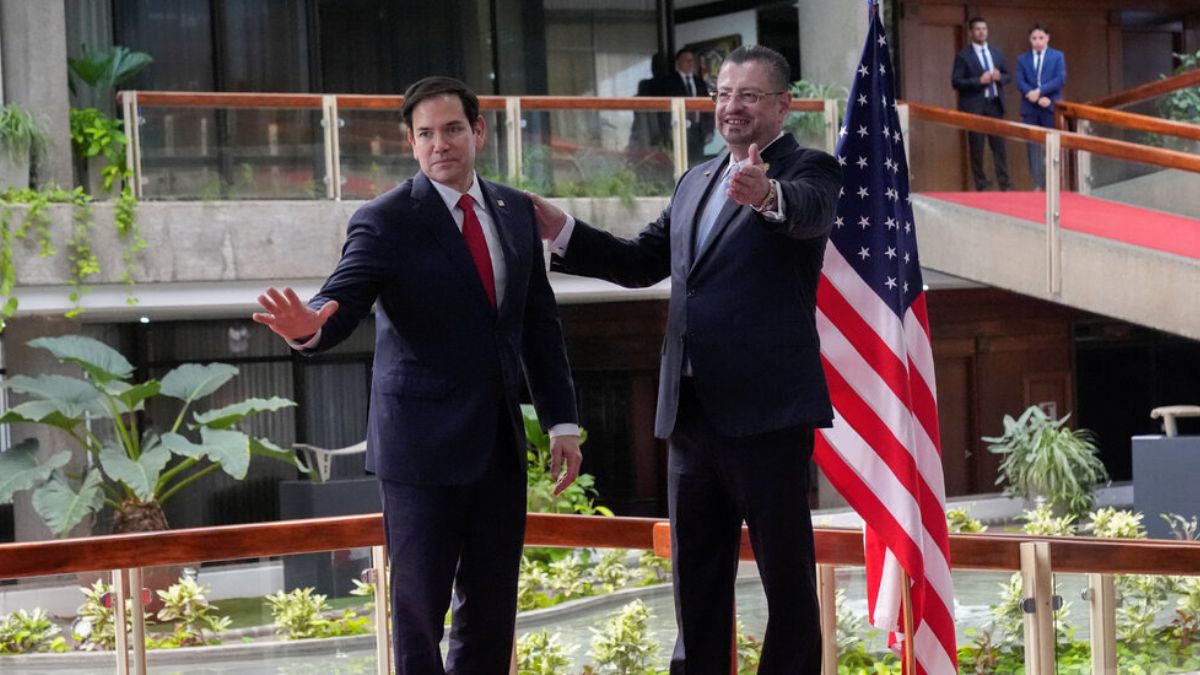
Costa Rica to Take in Migrants from the US

Costa Rica to Take in Migrants from the US

0
VIEWS
Share on FacebookShare on Twitter

A New Chapter in the US Migration Crackdown

Costa Rica has stepped forward to accept migrants from the United States, specifically those from Central Asia and India, as part of a larger deportation arrangement. This announcement follows similar agreements made by Panama and Guatemala, signaling a new strategy in handling undocumented immigration.

The Costa Rican presidential office confirmed that 200 migrants would arrive on a commercial flight from the US on Wednesday. However, let’s not mistake this for an act of open-armed generosity—these migrants are not being resettled in Costa Rica. Instead, they will be temporarily housed near the Panama border before being sent back to their home countries.

The Fine Print: Who Pays for It?

This operation is being funded by the US government under the watchful eyes of the International Organization for Migration (IOM). In other words, it’s Washington’s problem, Costa Rica’s temporary burden, and the migrants’ lasting nightmare.

As Costa Rica braces for the first batch of deportees, the question remains: Is this truly a sustainable model, or just another political maneuver?

The Bigger Picture: Trump’s Migration Crackdown

This policy aligns with US President Donald Trump’s long-standing hardline stance on migration. Since taking office, he has repeatedly promised to deport “millions and millions” of migrants. In the past, the US has already deported over 300 Indians on military planes, with images of detainees in handcuffs sparking outrage in India.

However, not everyone is up in arms about it. Indian Prime Minister Narendra Modi, who recently met with Trump, appears to be on board with the mass deportations, agreeing to take back thousands of undocumented Indian migrants living in the US. That’s right—while social media erupts in outrage, world leaders quietly shake hands behind closed doors.

Panama and Guatemala: The Precedents

Costa Rica isn’t alone in this arrangement. Both Panama and Guatemala have also agreed to facilitate the return of undocumented migrants. While no flights have yet landed in Guatemala, Panama received 119 deported migrants last week, including individuals from China, Pakistan, and Afghanistan.

The move is being framed as an efficient solution to illegal migration, but let’s call it what it is—a political tactic disguised as humanitarian cooperation.

What Happens Next?

As the first wave of deportees lands in Costa Rica, the world will be watching. Will this plan reduce undocumented migration, or will it simply shuffle the problem from one country to another? One thing is clear: migration policies are no longer just about borders; they are about diplomacy, money, and who gets stuck holding the problem when the cameras stop rolling.


Staff Reporter

Staff Reporter

Staff Reporter at Diplotic | Covering global affairs, diplomacy & policy with clarity and insight.

Baruipur: A Brutal Crime and the Politics of Silence

Baruipur: A Brutal Crime and the Politics of Silence

by Staff Reporter
July 11, 2026

Written by Tawsif Reza Chowdhury, a student of the Department of Economics, University of Chittagong On the recent 5th of...

Did Bangladesh Really Ban Hindus from Government Jobs?

Fact Check: Is Drinking Lemon Water Every Morning Actually Beneficial?

by Staff Reporter
June 18, 2026

For years, a simple morning habit has been wrapped in almost quiet promise: a glass of water mixed with lemon...

Global Economy Surges Amid Trade Turmoil, But for How Long?

Can the G7 Still Shape the Global Economy in a Multipolar World?

by Staff Reporter
June 18, 2026

For nearly five decades, the Group of Seven was widely viewed as the steering committee of the global economy. Decisions...

gold

Has the EU Outsourced Its Economic Sovereignty?

by Staff Reporter
June 18, 2026

Europe spent decades promoting open markets as a path to shared prosperity. Trade barriers fell, production networks stretched across continents,...

DIPLOTIC

© 2024 Diplotic - The Why Behind The What

Navigate Site

  • About
  • Contact
  • Methodology
  • Violation Policy
  • Editorial Policy
  • Correction Policy
  • Privacy Policy
  • Reader Submissions
  • Our Team
  • Funding & Donors

Follow Us

No Result
View All Result
  • Home
  • Focus
    • Exclusive
    • Editor’s Pick
    • Behind the Curtain
  • Fact Check
  • Politics
  • Diplomacy
  • Economy
  • War & Conflict
  • South Asia
  • More
    • Games & Sports
    • Technology
    • Entertainment
    • History & Culture
    • Science & Technology
    • Nature & Environment
    • Health & Lifestyle

© 2024 Diplotic - The Why Behind The What

