

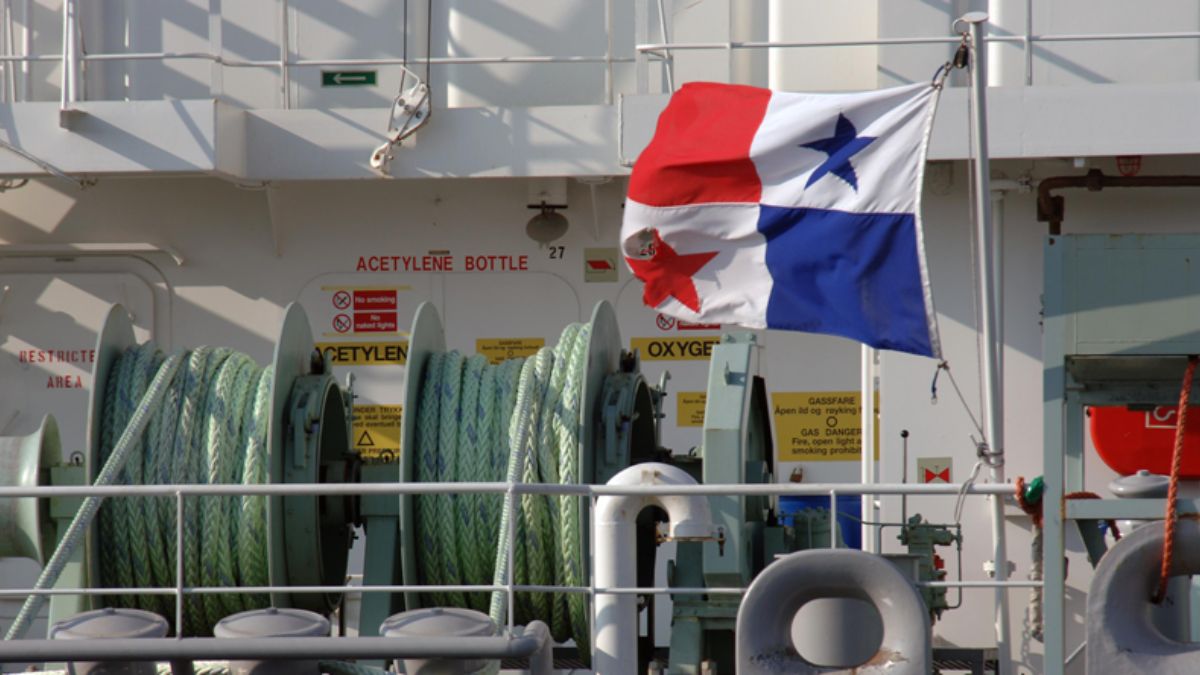
Recently, two tankers sailing under the Panamanian flag encountered issues near Germany, shedding light on why this flag remains a top choice for shipowners looking to bypass certain regulations. While the ‘Eventin’ oil tanker is stranded off Germany’s coast, the ‘Jazz,’ another Panamanian-flagged vessel, reported engine trouble in the Baltic Sea but resolved the issue and is now anchored off Skagen, Denmark. Unlike the ‘Eventin,’ the ‘Jazz’ is not listed on Greenpeace’s ‘shadow fleet’ document, which tracks older tankers involved in transporting Russian crude oil despite sanctions. However, both vessels highlight the enduring popularity of Panama’s flag among shipowners.
Open Registry and Ease of Registration
Any person or business, regardless of nationality, can register a vessel through Panama’s open ship registration. Panama is now the leader in marine registration because of this policy, which has no limits on the number of ships. According to UNCTAD, over sixteen percent of the global commerce fleet flew the Panamanian flag in 2023. According to The Maritime Executive, Panama continued to hold its position as the largest ship registry in the world by the end of the same year, having registered 8,540 vessels.
Cost-Cutting with a Flag of Convenience
According to University of Hamburg professor Alexander Proelss, who specializes in international maritime law, Panama is a prime example of a ‘flag-of-convenience’ state. Shipowners can bypass the stringent labor and safety regulations enforced by other nations by registering their vessels in Panama, which is also reasonably priced. This creates financial advantages for shipowners while generating significant revenue for Panama. Efforts to reform this system have struggled, as the principle of flag sovereignty in international maritime law protects Panama’s registry practices.
Historical Roots of the Panama Flag’s Popularity
Since the end of World War I and the American Prohibition era, foreign shipowners have flown the flag of Panama. During this time, alcohol was prohibited on U.S.-flagged vessels but permitted on those flying the Panamanian flag. Panama’s open registry was introduced to exploit such loopholes and to avoid U.S. labor laws requiring higher wages and better working conditions. This practice expanded in the 1980s as other nations, such as Liberia and Honduras, adopted similar systems. European countries later established offshore registries offering favorable conditions to counter Panama’s dominance, but the trend persisted.
International maritime law has done little to curb this practice. While the UN Convention on the Law of the Sea requires a “genuine link” between a ship and its flag state, the International Tribunal for the Law of the Sea clarified that this does not prevent states from awarding their flag to foreign vessels. Instead, states must ensure proper oversight of vessels flying their flag. According to Proelss, banning ships from using foreign flags or navigating certain waters is generally incompatible with international law, although restrictions could be applied to vessels flying the Russian flag.
Panama’s Efforts to Improve Safety
Despite criticisms, Panama has taken steps to address safety concerns. In 2022, authorities removed 160 vessels from their registry, most of them older ships suspected of illegal fishing. The average age of these vessels was 17 years, reflecting Panama’s attempts to improve the quality of its fleet.
Panama’s position as a flag-of-convenience state is deeply entrenched in global shipping. Its cost-effective, easily accessible registry continues to attract shipowners, even as the practice faces scrutiny for enabling regulatory evasion.
Challenges in Oversight and Enforcement of Maritime Regulations
Despite Panama’s dominance in ship registration, the oversight of vessels under its flag remains a contentious issue. The sheer volume of registered vessels makes it challenging to enforce strict compliance with international maritime standards. Critics point out that some vessels under Panama’s flag have been implicated in illegal activities, such as unauthorized fishing and environmental violations.
Panama has made strides in addressing these concerns. For example, in 2022, the country removed 160 vessels suspected of illegal fishing from its registry. However, ensuring the safety and environmental compliance of over 8,500 ships requires robust infrastructure and resources, which are often stretched thin.
International bodies like the IMO and the UN have called for greater accountability among FOC states. Proposals include enhancing transparency in registration processes and implementing stricter penalties for non-compliance. Yet, the principle of flag sovereignty under the UN Convention on the Law of the Sea limits the extent to which external bodies can intervene. This loophole allows FOC states to maintain their policies while leaving room for regulatory evasion.




