

On Christmas Eve, a self-operating spacecraft flew closer to the sun than any man-made object before. NASA’s Parker Solar Probe, gliding through the Sun’s atmosphere, aimed to uncover secrets about our star, including its influence on Earth’s space weather.
This was a groundbreaking moment for humanity, but no humans were directly involved. The probe carried out its pre-set tasks independently, with no communication from Earth. For six decades, robotic probes have reached corners of the solar system impossible for humans. During its 10-day journey, the Parker Solar Probe faced temperatures of 1000 °C.
The success of such autonomous missions combined with advancements in artificial intelligence (AI) raises a critical question: Will humans still be needed in space exploration? Some scientists think robots might make human astronauts unnecessary. “Robots are advancing quickly, and the argument for sending humans is getting weaker,” says Lord Martin Rees, the UK’s Astronomer Royal. He also highlights the dangers of human space travel, suggesting it should be reserved for private ventures rather than funded by taxpayers.
Andrew Coates, who is a physicist at University College London, shares this view. “Robotics is better for serious exploration,” he says. “They can go farther, achieve more, and are cheaper than humans.” With AI growing smarter, robots are expected to handle even more complex tasks. Yet, can robots truly replace humans in every aspect of space exploration?
Robots versus Humans in Space
Robotic spacecraft have visited every planet in our solar system, as well as asteroids and comets. In contrast, humans have only ventured into Earth’s orbit and to the Moon.
Since Yuri Gagarin’s historic flight in 1961, about 700 people have traveled to space, most staying in orbit or making brief suborbital flights like those aboard Blue Origin’s New Shepard rocket.
“Prestige plays a big role in sending humans to space,” says Dr. Kelly Weinersmith, a biologist at Rice University and co-author of A City on Mars. “It’s seen as a way to showcase a nation’s capabilities and brilliance.”
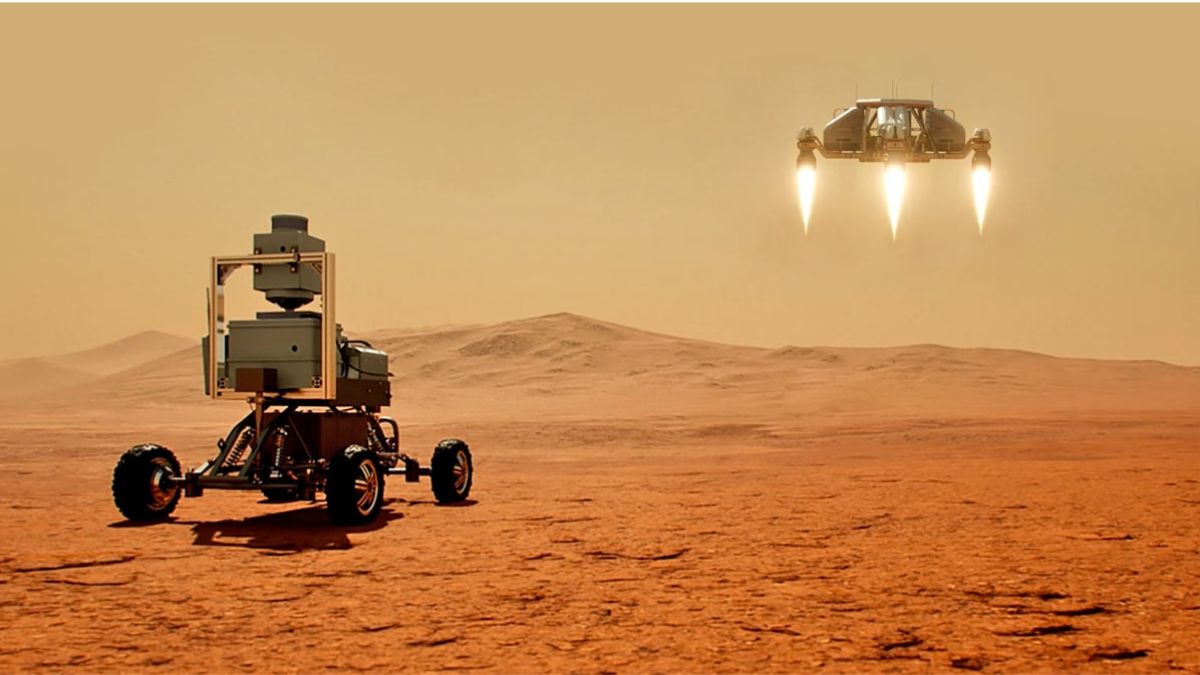
Beyond prestige, humans contribute to research aboard the International Space Station (ISS)—in short, conducting experiments that push scientific boundaries. While robots can explore hostile environments and collect data, they lack the versatility and speed of humans. However, humans are costly and challenging to sustain in space. “A robot doesn’t need food, water, or rest,” notes Weinersmith. Yet, robots have their limitations, such as their slow pace, exemplified by Mars rovers that crawl at 0.1 mph.
AI and Humanoid Robots
AI can enhance space exploration by assisting humans and taking over repetitive tasks, freeing astronauts to focus on more critical work. “Machines don’t tire or lose focus like humans,” explains Dr. Kiri Wagstaff, a computer and planetary scientist.However, current AI systems, like large language models (LLMs), demand immense computing power, which Mars rovers lack.
Humanoid robots like NASA’s Valkyrie can perform tasks resembling human efforts. The Robonaut, for instance, was designed to assist astronauts with maintenance aboard the ISS, using human-like hands to manipulate tools and switches. Such robots can maintain space habitats when humans aren’t present, says Dr. Shaun Azimi, head of NASA’s robotics team.
Autonomous robots like NASA’s Curiosity rover already make independent decisions on Mars, such as analyzing rocks and sending data back to Earth. However, their slow movement and lack of human-like inspiration are drawbacks. “Humans spark excitement in a way robots can’t,” argues Prof. Coates. Retired astronaut Leroy Chiao agrees, saying a human landing on Mars would surpass even the Moon landing in significance.
Human Settlements on Mars?
No human has ventured beyond Earth’s orbit since the last Apollo mission in 1972.NASA’s Artemis program aims to change that with plans to return astronauts to the Moon by the late 2020s. Meanwhile, SpaceX CEO Elon Musk envisions a human colony on Mars using his Starship spacecraft to transport large groups to the planet. He argues that Mars could serve as a backup for humanity in case of earthly catastrophes.
Still, the challenges of living on Mars remain vast. Dr. Weinersmith cautions that technical and ethical questions, such as whether humans can raise children on Mars, need answers before rushing into colonization.
Lord Rees envisions a future where humans merge with technology using genetic modifications and robotic enhancements to survive harsh environments. Until then, human exploration will likely continue at a slow pace, following in the robotic footprints laid across the cosmos.




