

As President-elect Donald Trump is set to take office on January 20, the future of the CHIPS Act now looks uncertain, leaving Biden’s administration racing to wrap up complex negotiations with chipmakers and distribute funds.
Signed into law by Biden in 2022, the CHIPS and Science Act set aside $280bn in funding to boost domestic semiconductor research and manufacturing in the US, including $39bn in subsidies, loans, and tax credits for both US and foreign companies. Most of the 24 recipients of funds under the CHIPS Act are US companies, chief among them Intel, which last month secured nearly $7.9bn in direct funding from the US Department of Commerce.
The CHIPS Act: A Critical Initiative at Risk
The law received bipartisan support in Congress and was broadly welcomed in both Democratic and Republican-leaning states eager to lure cutting-edge manufacturing facilities and create jobs. But with President-elect Donald Trump set to take office on January 20, the future of the CHIPS Act now looks uncertain, leaving Biden’s administration racing to wrap up complex negotiations with chipmakers and distribute funds.
Trump cannot unilaterally repeal the CHIPS Act because the US Congress passed it, but analysts say he could make it difficult for the law to function as intended.
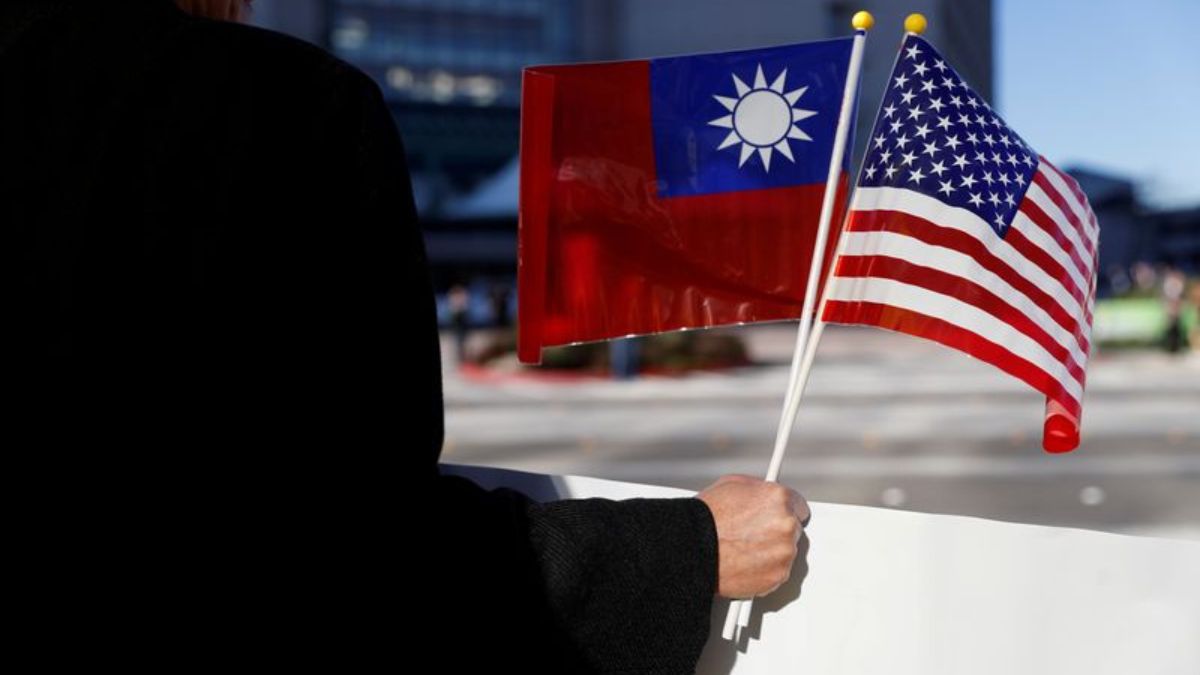
During an appearance on the Joe Rogan Experience podcast shortly before the election, Trump blasted the legislation as being “so bad.” Dan Hutcheson, vice chair of California-based Tech Insights, said Trump could also simply try to renegotiate some of the terms of the CHIPS Act or repackage elements of it under new legislation.Trump has also accused places such as Taiwan, home to the world’s top producer of advanced semiconductors, Taiwan Semiconductor Manufacturing Company (TSMC), of “stealing” the chip industry from the US.
TSMC locked in $6.6bn in grants and $5bn in loans to build four facilities in Arizona, while GlobalWafers finalized a deal to receive $406m to build facilities in Missouri and Texas.
As president, he could block or delay the Commerce Department in distributing funds, possibly as part of cost-cutting efforts spearheaded by the new so-called Department of Government Efficiency, to be led by tech mogul Elon Musk and entrepreneur Vivek Ramaswamy. With the change of administration, companies may be less eager to extend negotiations further, said the EIU’s Lee.
Impact on Taiwan’s TSMC and East Asian players
In April, Samsung signed a nonbinding deal to spend $45 billion expanding its production facilities in Texas in exchange for $6.4 billion in grants. There have also been no further updates on the status of nonbinding agreements, announced in April and July, respectively, for SK Hynix to build a $3.87bn facility in Indiana and GlobalWafers to invest $4bn in the production of silicon wafers in Texas and Missouri.
Yachi Chiang, a professor in tech law at National Taiwan Ocean University, said many people in Taiwan think that the Trump administration will ask TSMC to invest more than the $65 billion it has pledged to build three Arizona plants in exchange for US subsidies. At the same time, there is political gridlock across East Asia, creating further uncertainty about how governments will respond to the Trump administration and its economic demands.
Geopolitical Tensions and Regional Dynamics
Asia’s tech companies have other incentives to keep production closer to home. South Korea and Taiwan last year enacted their own equivalents of the CHIPS Act to boost subsidies and tax breaks for firms that invest locally. In South Korea, Han Duck-soo is serving as a caretaker leader as the country’s Constitutional Court considers whether to remove Yoon Suk-yeol from office following his impeachment over a short-lived declaration of martial law.
While Taiwanese President William Lai Ching-te can engage with Trump as the head of state, he is constrained at home policy-wise by an opposition that holds a majority in the legislature.
Meanwhile, China recently pledged $45 billion to shore up its chip industry in the face of US export controls and other attempts to curb its acquisition of advanced technology.
In Japan, Prime Minister Shigeru Ishiba is leading a minority government after his Liberal Democratic Party lost its majority in parliament following a snap election in October. Earlier this year, it approved $3.9bn in subsidies to domestic chipmaker Rapidus, and Tokyo aims to spend as much as $65bn through public and private sector funding to catch up with its chip-making neighbors.
A second election is scheduled for next year for Japan’s upper house of parliament, portending further uncertainty ahead.




