
• About
  • Contact
  • Methodology
  • Violation Policy
  • Editorial Policy
  • Correction Policy
  • Privacy Policy
  • Reader Submissions
  • Our Team
  • Funding & Donors
Thursday, June 4, 2026
  • Home
  • Focus
    • Exclusive
    • Editor’s Pick
    • Behind the Curtain
  • Fact Check
  • Politics
  • Diplomacy
  • Economy
  • War & Conflict
  • South Asia
  • More
    • Games & Sports
    • Technology
    • Entertainment
    • History & Culture
    • Science & Technology
    • Nature & Environment
    • Health & Lifestyle
Bangla
Diplotic
No Result
View All Result
  • Home
  • Focus
    • Exclusive
    • Editor’s Pick
    • Behind the Curtain
  • Fact Check
  • Politics
  • Diplomacy
  • Economy
  • War & Conflict
  • South Asia
  • More
    • Games & Sports
    • Technology
    • Entertainment
    • History & Culture
    • Science & Technology
    • Nature & Environment
    • Health & Lifestyle
No Result
View All Result
Diplotic
Bangla
Home Science & Technology

How Meta’s Rules Changed the Narrative of Palestinian Voices

Staff Reporter by Staff Reporter
December 18, 2024
in Science & Technology
Reading Time: 3 mins read
A A
0
How Meta’s Rules Changed the Narrative of Palestinian Voices

How Meta’s Rules Changed the Narrative of Palestinian Voices

0
VIEWS
Share on FacebookShare on Twitter

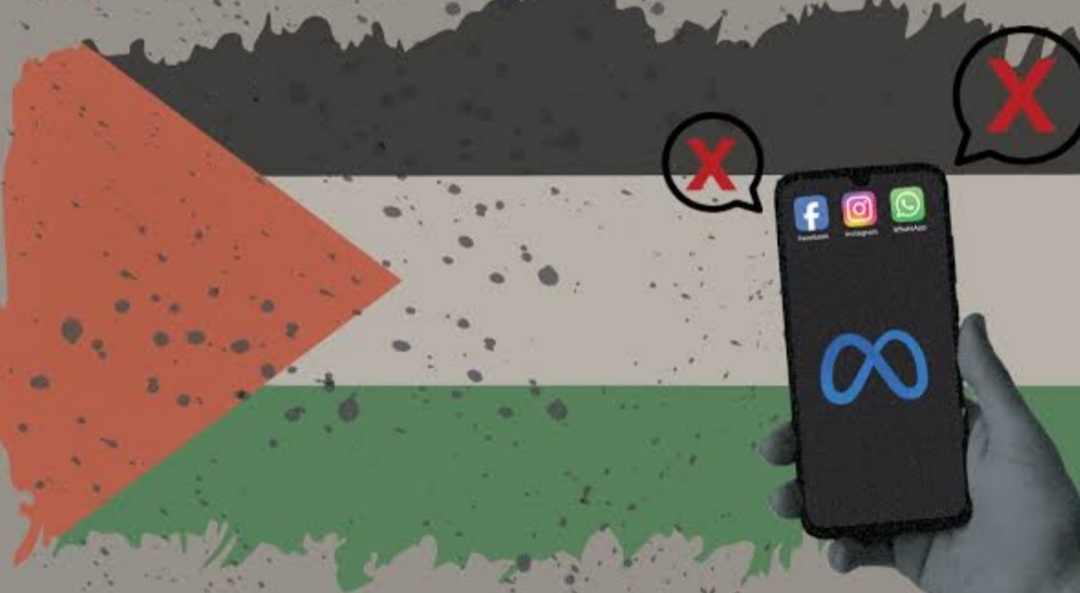
When the world closed its doors to Gaza, digital platforms became the lens through which millions viewed the war. But what happens when the lens distorts the picture? According to an investigation, Palestinian news outlets saw a dramatic drop—77%—in Facebook engagement following the start of the Israel-Gaza war in October 2023.

Meta, the tech giant behind Facebook and Instagram, insists this isn’t deliberate, but leaked documents and engagement metrics tell another story.

Numbers That Speak Louder

Let’s crunch the data: Facebook pages for 20 Palestinian news outlets—names like Palestine TV and Wafa News Agency—reported average engagement plummeting from 0.07 pre-war to a mere 0.01. Compare that with a 37% increase for Israeli outlets like Yediot Ahronot. And, in case you were wondering, non-Palestinian Arabic news outlets like Al-Jazeera enjoyed a staggering 100% boost in audience engagement during the same period.

Meta argues these shifts are due to “temporary measures” balancing free speech with content moderation. But try telling that to a journalist like Tariq Ziad, who watched his posts fade into obscurity. “Interaction was completely restricted,” he says. “Our posts stopped reaching people.”

Meta’s Moderation Woes

This isn’t Meta’s first rodeo with accusations of bias. A 2021 independent audit pointed fingers at its Arabic-language moderation—or lack thereof. Innocuous phrases like Alhamdulillah (“Praise be to God”) were wrongly flagged as violent content. Fast forward to 2023, and the problem isn’t just clumsy algorithms. Leaked internal documents reveal Instagram implemented stricter moderation for Palestinian users post-October 7, raising concerns about systemic bias.

One former Meta employee put it bluntly: “Within a week of the Hamas attack, the code was changed to target Palestinian users more aggressively.”

A Closer Look at the Shadow Ban Phenomenon

Shadow banning—where content is made less visible without users being notified—has become a significant issue in the digital space, especially in politically sensitive contexts. Palestinian journalists have long raised concerns that their posts are being suppressed, limiting their ability to reach global audiences.

The impact is compounded when compared with Israeli outlets whose content continues to thrive. This discrepancy raises questions about whether algorithms inadvertently perpetuate systemic inequalities in online spaces.

 “Balancing” Speech?

Meta defends its actions, citing a spike in “hateful content” from the Palestinian territories. But critics argue this broad brush strokes over legitimate journalism. Omar el Qataa, a Gaza-based photojournalist, says, “Even if we capture the truth—a massacre, a destroyed home—it won’t spread. But we keep going because someone has to tell the story.”

Meta claims these controversial policies have since been reversed. Yet, it’s unclear when or how effectively.

A Larger Struggle for Palestinian Journalists

For Palestinian journalists, the digital chokehold is just one part of the battle. At least 137 have been killed since October 2023, but those who remain refuse to back down. As el Qataa puts it, “Despite the risks, we must keep sharing Palestinian content.”


 

Tags: MetaMeta Rules ChangedPalestine
Staff Reporter

Staff Reporter

Staff Reporter at Diplotic | Covering global affairs, diplomacy & policy with clarity and insight.

Blue Moon: The Rare Lunar Wonder

Blue Moon: The Rare Lunar Wonder

by Arjuman Arju
May 31, 2026

The night sky has always fascinated people with its countless stars, planets, and celestial events. Among these wonders, the Blue...

Fact Check: Does Consciousness Create Reality?

Fact Check: Does Consciousness Create Reality?

by Morium Jahan Setu
May 11, 2026

For more than a century, quantum mechanics has challenged humanity’s understanding of reality. Unlike classical physics, which describes a predictable...

How China, Russia, Turkey and Europe Are Responding to Iran War

The Impact of the US-Iran Conflict on Global Oil Prices and Economic Performance

by Sajjad Hossain Adib
May 11, 2026

Introduction The conflict between the United States and Iran is a central topic in global geopolitics. This enduring friction has...

Fact Check: AI-generated misinformation is destabilizing South Asian elections

Fact Check: Are “Clear Cache” Apps Actually Improving Phone Speed?

by Samshul Arefin
May 1, 2026

Every day, millions of smartphone users tap buttons labeled "Clean," "Boost," or "Speed Up" in third-party cleaning apps, hoping to...

DIPLOTIC

© 2024 Diplotic - The Why Behind The What

Navigate Site

  • About
  • Contact
  • Methodology
  • Violation Policy
  • Editorial Policy
  • Correction Policy
  • Privacy Policy
  • Reader Submissions
  • Our Team
  • Funding & Donors

Follow Us

No Result
View All Result
  • Home
  • Focus
    • Exclusive
    • Editor’s Pick
    • Behind the Curtain
  • Fact Check
  • Politics
  • Diplomacy
  • Economy
  • War & Conflict
  • South Asia
  • More
    • Games & Sports
    • Technology
    • Entertainment
    • History & Culture
    • Science & Technology
    • Nature & Environment
    • Health & Lifestyle

© 2024 Diplotic - The Why Behind The What

