

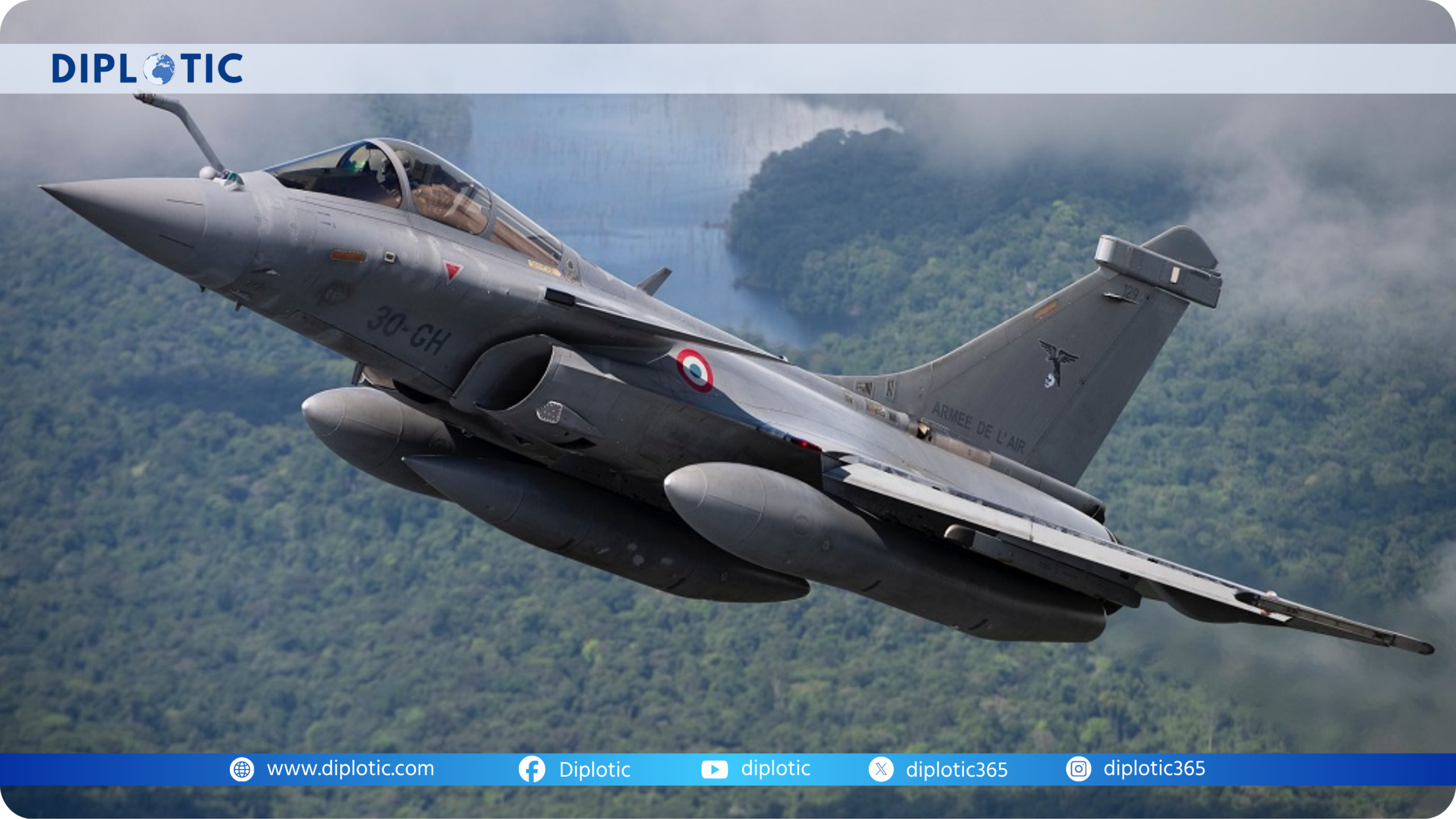
India’s acquisition of the Rafale fighter jet from France has been a cornerstone of the country’s air force modernization for nearly a decade. But a new dispute threatens to undermine the value of that investment. The French government has reportedly refused to provide India with the source code for the Rafale’s Thales RBE2 AESA radar, the Modular Data Processing Unit, and the SPECTRA electronic warfare suite . This is not a minor technicality. Without access to this software, India may have paid for 100 percent of the aircraft but received only 60 percent of its capability . This investigation examines what software does in a modern fighter, why access to source code matters, and what the dispute means for India’s defense preparedness.
Why Does Software Matter So Much in a Modern Fighter?
Approximately 30 to 40 percent of the total cost of a modern fighter like the Rafale is typically attributed to software development and integration . This means that if the manufacturer does not supply the source code along with the fighter, the buyer gets only 60 percent of the aircraft’s value despite paying for 100 percent. As technology advances, the percentage of cost represented by software will likely increase past 50 percent . A nation that buys a fighter without source code access is being shortchanged, and the shortchanging will only grow worse in future acquisitions.
The reason software is so valuable is that it determines what the fighter can actually do. The hardware provides the physical capabilities: engines, radar, weapons, airframe. But the software determines how those components work together. It controls the radar’s scanning patterns, the electronic warfare suite’s responses to threats, the weapons release sequencing, and the flight control laws that keep the aircraft stable during extreme maneuvers . Without the ability to modify software, a nation is stuck with the capabilities the manufacturer decided to provide at the time of delivery.
More importantly, when nations buy modern fighters, they have to keep reverting to the manufacturer to address software changes required by evolving tactics and weapon systems . The money paid for software changes is effectively money burned, because software alterations have zero tangible value. You pay for the tweak, but in physical terms, you return to what you had earlier. This continued dependency may prove crippling, for example, if the manufacturer does not allow software changes required to integrate third-party weapon systems .
How Is Fighter Aircraft Software Structured?
Software in fighter aircraft is built in layers of abstraction. This hierarchical design separates concerns, improves reliability, and allows independent certification and upgrades . Understanding these layers is essential to understanding what India is asking for.
The lowest-level software layers provide hardware access abstraction and include device-driver layers. They directly interface with sensors such as radar, inertial navigation systems, and electro-optical sensors. They also interface with actuators for flight controls and weapons release, data buses, storage devices, and processors . These layers translate raw sensor signals into usable data. Without access to these layers, a nation cannot fit new sensors or modify how existing sensors are used.
The medium layers include operating system services and common libraries that provide universal, reusable functionality not tied to any single mission. Examples include data read and write services, mathematical function libraries for calculations like Kalman filters and coordinate transformations, and other common services such as timing, memory management, and communication protocols . In fighters, this layer often includes certified middleware that abstracts the underlying real-time operating system, so higher layers do not need to know hardware details.
The highest layers are the application or mission-specific layers. They implement operational logic unique to a task, such as sensor fusion, target tracking, weapons release sequencing, flight-control laws, electronic warfare response, or cockpit display management . The highest layers can be thought of as the aircraft’s personality or potential. They define the aircraft’s maneuvering and combat capabilities. They serve as the interface between the pilot and the aircraft as a whole, including the weapons it is armed with.
The entire source code of the Rafale comprises millions of lines. Indian Air Force programmers would take years, perhaps decades, to become fully acquainted with the entire codebase . More importantly, it would serve little purpose, as the low- and medium-level layers are well-proven and extensively tested. Most likely, what the Indian Air Force seeks from Dassault is access to the sensor and hardware-specific lowest layer to fit new sensors and weapon systems, and possibly the highest layers to tweak combat load and maneuvering parameters .
What Is the Difference Between Source Code and Interface Access?
It is important to understand that providing access to a software layer is not the same as transferring the full source code . Access to the underlying code can be provided through an abstraction layer without transferring the code. Coding new functionality through an abstraction layer entails using a programming interface. When working through such an interface, the user cannot know how the source code actually functions. The interface provides safe, abstract access to specific segments of the internal source code .
It is likely that Dassault is ready to provide an interface to integrate indigenously developed weapons that are currently operational or under development . However, over the years, the interface may not prove adequate for integrating the Indian Air Force’s future weapons and other operational requirements because weapon systems are fast evolving, both in terms of technology and concepts. For example, in the future, the Indian Air Force may want to launch drones from the Rafale or launch weapons from an unmanned collaborative combat aircraft operating with the Rafale . For such requirements, the Indian Air Force would need a more extensive programming interface to the underlying source code.
There is another problem with interface-only access to source code. The underlying code may have inadvertently or deliberately introduced limitations that the operating country is unaware of . These limitations, which could have been coded or escaped detection during testing, may not show up when the aircraft is operating in the manufacturer’s country. The Indian Air Force discovered this the hard way decades ago.
In the early 1980s, the Indian Air Force acquired Durandal runway-penetration bombs for the Jaguar aircraft. The acquisition was based on the bombs’ successful integration with French and Royal Air Force Jaguars. Several years after acquiring the bomb, the Indian Air Force realized that its Jaguars could not release the bombs, which had been lying unused as strategic reserves for years, due to a software bug . A software tweak fixed the issue, but it was fortunate that the issue was discovered during a planned demonstration, not during an operation. This history suggests that interface-only access may not be sufficient to detect or fix such hidden problems.
What Should India Do Now?
The debate over the Rafale deal has become emotionally charged on social media, but the underlying issue is straightforward. Without access to the source code, India will remain dependent on France for any significant software modification to the Rafale fleet. This dependency will persist for the entire service life of the aircraft, which could be three decades or more . During that time, weapon systems will evolve, tactics will change, and new threats will emerge. India may find itself unable to adapt its Rafale fleet without returning to France for expensive and time-consuming software changes.
The Indian Air Force should not buy the Rafale unless France commits to providing access to any part of the source code the Indian Air Force needs . The additional access should be provided at a very nominal, pre-negotiated cost. If the manufacturer declines to provide additional access, it must surrender the source code . This is not an unreasonable demand. India is paying billions of dollars for these aircraft. It deserves to receive full value, not 60 percent.
The French government’s reported refusal to provide source code access should prove sobering to New Delhi . It suggests that even close defense partners are reluctant to share the intellectual property that underpins their most advanced systems. India cannot rely on others to provide the capabilities it needs. It must develop its own software expertise and, over time, its own indigenous fighter programs. The Rafale deal, for all its benefits, is a reminder that true strategic independence requires self-reliance in software as much as in hardware.
Conclusion
The dispute over Rafale source code access is not a technical quibble. It is a fundamental question about what India is buying and what it is receiving. Software constitutes 30 to 40 percent of the value of a modern fighter. Without access to that software, India is paying for 100 percent but getting only 60 percent. The remaining 40 percent remains locked in France, accessible only at the manufacturer’s discretion and at additional cost.
The Indian Air Force has learned this lesson before. The Durandal bombs sat useless for years due to an undiscovered software bug. That discovery came during a demonstration, not a war. India was lucky. Next time, it may not be. The Rafale is an exceptional aircraft. But even the best aircraft is only as good as the software that runs it. And software that cannot be modified is software that will eventually become obsolete. India should not accept that fate. It should demand full access to the source code, or it should reconsider the deal .




