

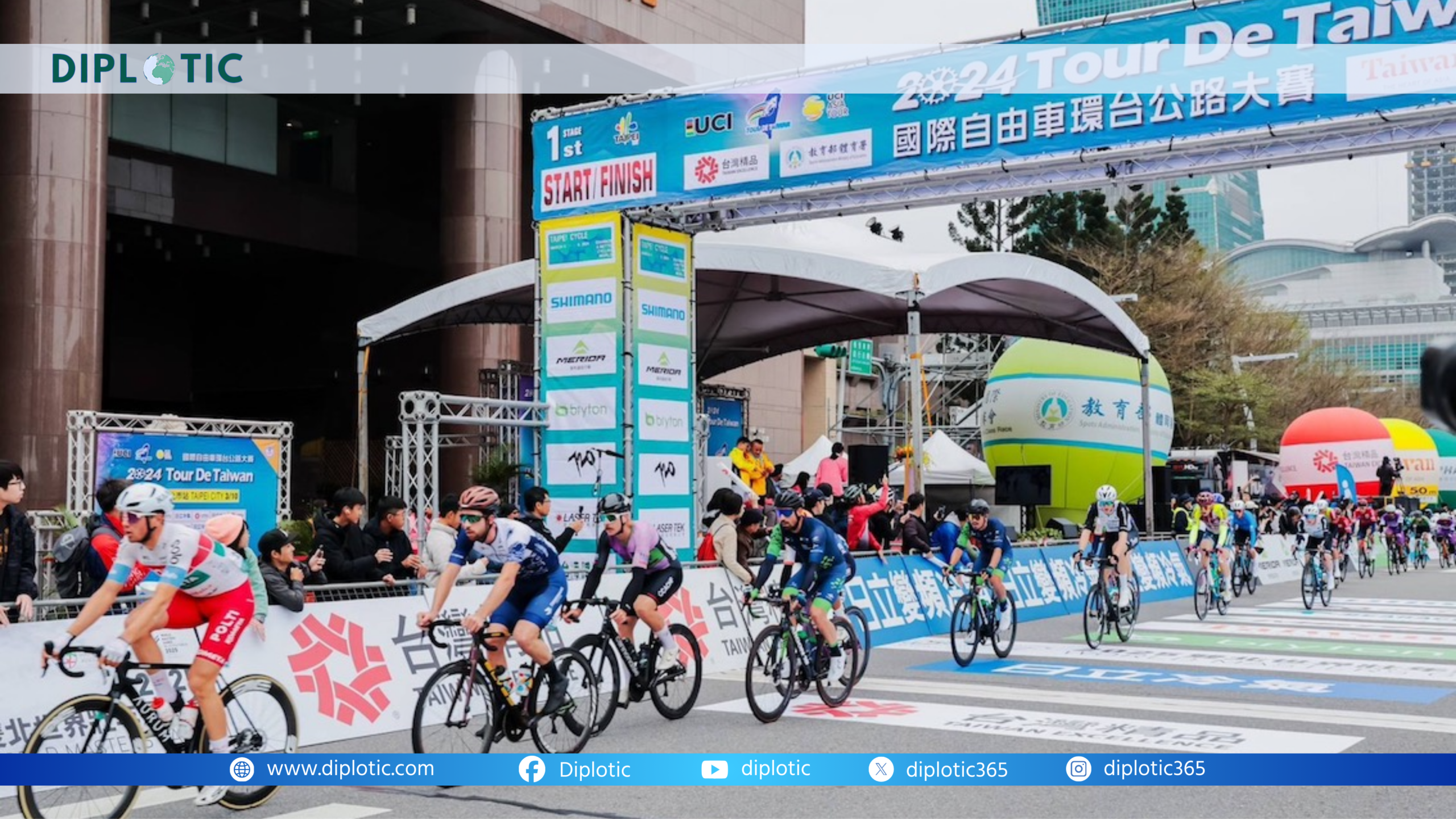
The 2026 edition of the Tour de Taiwan has begun with a strong international presence, drawing attention not only to Taiwan but to the wider rise of professional cycling in Asia. The race opened in Taipei with a ceremonial start in front of the Presidential Office, marking the beginning of a five-stage event that stretches across the island. With more than 100 riders from 24 professional teams representing around 40 countries, the event signals a clear shift: Asia is no longer just a host for cycling events—it is becoming an active player in shaping the sport’s global future.
The opening stage itself reflects this ambition. Riders completed a city circuit through central Taipei, passing landmarks such as the Presidential Office and Jingfu Gate, before finishing on Ketagalan Boulevard. The race is classified as a 2.1 event by the Union Cycliste Internationale, placing it within the international professional calendar. This classification allows global teams to participate and earn ranking points, making it more than a regional competition.
The 2026 route spans approximately 635 kilometers, covering Taipei, Taoyuan, Kaohsiung, and Pingtung, with a return to eastern Taiwan after 15 years. This geographic spread highlights Taiwan’s effort to combine sport with tourism, showcasing landscapes and urban infrastructure to a global audience. However, the deeper story lies beyond the race itself. Events like the Tour de Taiwan are part of a broader pattern in which Asian countries are investing in sports infrastructure, international partnerships, and media exposure to elevate their presence in global competitions.
This raises an important question: is Asia simply hosting more races, or is it actively reshaping the professional cycling landscape? The answer depends on how these events connect with long-term development, local talent, and international recognition. The 2026 Tour de Taiwan provides a useful case to examine this transformation in detail.
Why Is Asia Investing More in Professional Cycling Now?
The growing importance of cycling events in Asia is closely linked to broader economic and cultural changes. Over the past decade, countries across the region have increased investment in sports as part of their global positioning strategies. Cycling, in particular, offers unique advantages. It combines international visibility, relatively lower infrastructure costs compared to stadium sports, and strong links to tourism and environmental awareness.
Taiwan’s approach reflects these priorities. By hosting the Tour de Taiwan, authorities aim to promote the country as a destination for both sports and travel. The race route is designed to highlight urban landmarks as well as scenic landscapes, creating a visual narrative that can be broadcast worldwide. This strategy mirrors similar efforts in other parts of Asia, where sporting events are used to enhance national branding.
Another factor driving investment is the changing profile of cycling itself. Once seen mainly as a European sport, professional cycling has expanded into new regions. The international calendar now includes races in the Middle East, Southeast Asia, and East Asia. This expansion is supported by the Union Cycliste Internationale, which has encouraged global participation to increase the sport’s reach.
Economic considerations also play a role. Hosting international races can attract sponsorship, media rights deals, and tourism revenue. For cities like Taipei, the benefits go beyond immediate financial returns. The event helps build long-term recognition and positions the city within the global sports network.
At the same time, local cycling culture is evolving. Urban areas across Asia are seeing increased interest in cycling for fitness, commuting, and recreation. This growing base creates a supportive environment for professional events. When local audiences engage with international races, it strengthens the overall ecosystem of the sport.
However, investment alone is not enough to sustain growth. The success of these initiatives depends on consistent organization, quality competition, and the ability to attract top-tier teams. The presence of a UCI WorldTeam in the 2026 race suggests progress in this direction, but maintaining this level of participation will require ongoing effort.
How Competitive Is the Tour de Taiwan on the Global Stage?
The classification of the race as a 2.1 event by the Union Cycliste Internationale places it within a specific tier of professional cycling. While it does not carry the same prestige as major European races like the Tour de France, it still offers valuable ranking points and competitive opportunities. For many teams, especially those outside the top tier, such races are essential for gaining exposure and experience.
The 2026 edition has attracted a diverse field of participants, including teams from Europe, Asia, and other regions. This diversity is important for raising the competitive standard. When riders from different backgrounds compete together, it creates a more dynamic race environment and helps local athletes measure themselves against international peers.
The structure of the race also adds to its appeal. With five stages covering different terrains and regions, it tests a range of skills, from sprinting in urban circuits to endurance in longer routes. The inclusion of eastern Taiwan after a long gap introduces new challenges and scenic value, enhancing both competition and viewer engagement.
However, the race still faces limitations. Compared to top-tier events, it has lower media coverage and fewer elite teams. This affects its global visibility and influence. To move to a higher level, the event would need to attract more WorldTour teams and secure broader broadcasting partnerships.
Despite these challenges, the Tour de Taiwan plays a strategic role in the global cycling calendar. It provides a platform for emerging teams and riders, while also expanding the sport’s geographic reach. Over time, consistent improvement in organization and participation could elevate its status.
The key question is whether the race can maintain momentum. If it continues to grow in scale and quality, it could become a regular stop for top teams. If not, it may remain a secondary event with limited impact. The direction it takes will depend on both local commitment and international support.
What Does This Mean for Local Talent and Regional Growth?
One of the most important aspects of hosting international races is their impact on local athletes. For riders in Taiwan and the wider Asian region, events like the Tour de Taiwan offer rare opportunities to compete at a high level without traveling abroad. This exposure can accelerate development and open pathways to professional careers.
Local participation also helps build a stronger cycling culture. When young athletes see international races taking place in their own country, it creates motivation and interest. Over time, this can lead to increased investment in training facilities, coaching, and youth programs.
The presence of international teams further enhances this effect. Competing against experienced riders allows local cyclists to learn new strategies and techniques. It also provides a benchmark for performance, helping them understand the level required to succeed globally.
Beyond individual athletes, the race contributes to regional development. By including multiple cities and regions, it spreads economic and social benefits. Local businesses, tourism operators, and service providers all gain from increased activity during the event. This creates a positive cycle where successful races encourage further investment.
However, challenges remain. Developing local talent requires long-term commitment, not just occasional events. Training systems, funding, and support structures must be consistent and well-organized. Without these elements, the impact of international races may be limited.
There is also the question of balance. While attracting global attention is important, it should not come at the expense of local priorities. Ensuring that events benefit local communities and athletes is essential for sustainable growth.
If managed effectively, the Tour de Taiwan can serve as a model for other countries in the region. It demonstrates how international events can support both global engagement and local development. The challenge is to maintain this balance over time.
Can Asia Truly Become a Global Cycling Power?
The rise of events like the Tour de Taiwan suggests that Asia is becoming more active in the global cycling scene. However, becoming a true cycling power requires more than hosting races. It involves building a complete ecosystem that includes infrastructure, talent development, sponsorship, and international recognition.
Asia has several advantages in this regard. Large populations, growing economies, and increasing interest in sports provide a strong foundation. Governments and private organizations are willing to invest in infrastructure and events, creating opportunities for growth.
At the same time, competition remains strong. Europe continues to dominate professional cycling, with established races, teams, and traditions. Breaking into this system will take time and sustained effort. Asian races must continue to improve their quality and visibility to attract top talent and audiences.
Technology and media also play a role. Live broadcasts and digital platforms can help expand the reach of events beyond regional boundaries. By improving coverage and storytelling, races in Asia can engage global audiences and build a stronger identity.
Looking ahead, the future of cycling may become more balanced across regions. As new markets develop and existing ones evolve, the sport could see a more diverse set of leading events and teams. The Tour de Taiwan is part of this shift, offering a glimpse of what a more global cycling landscape might look like.
In the end, the question is not whether Asia can host successful races—it already does. The real question is whether it can sustain growth and build a lasting presence in the sport. The 2026 Tour de Taiwan shows clear progress, but it is only one step in a longer journey. How Asia builds on this momentum will determine its place in the global cycling world in the years ahead.




