

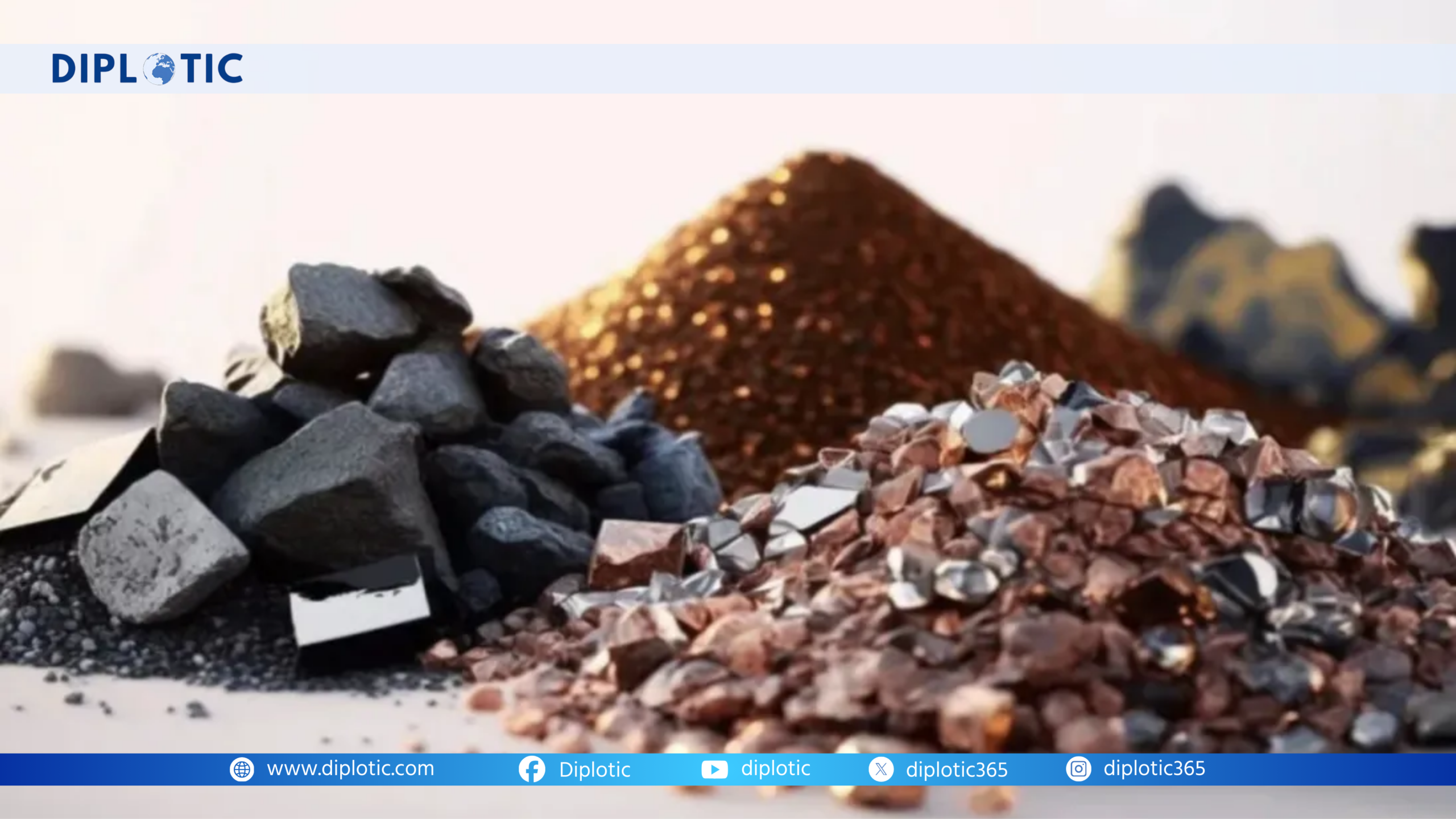
As the world accelerates its transition to clean energy, a new geopolitical battleground is quietly emerging — the global race for critical minerals. These resources, once considered niche commodities, are now central to modern technology and energy systems. From electric vehicles and renewable power grids to semiconductors and battery storage, the future of the global economy increasingly depends on a small group of minerals such as lithium, cobalt, nickel, and rare earth elements.
This growing demand has triggered concerns among policymakers that competition over these resources could become a new source of international tension. At a recent briefing at the United Nations Security Council, Pakistan warned that without stronger global cooperation and fair resource governance, the scramble for critical minerals could deepen global inequalities and fuel new conflicts.
The challenge facing the international community is clear: how to ensure that the clean energy transition does not repeat the same geopolitical struggles that once surrounded oil and gas.
Why Critical Minerals Are Suddenly So Important
For decades, global energy politics revolved around fossil fuels. Control over oil and natural gas reserves shaped alliances, conflicts, and economic strategies across the world. Today, however, the strategic landscape is shifting.
The rapid growth of renewable energy technologies and digital infrastructure has dramatically increased demand for minerals essential to modern electronics and energy storage. Lithium is vital for electric vehicle batteries, cobalt stabilizes battery performance, nickel improves energy density, and rare earth elements are critical for wind turbines and advanced electronics.
According to diplomats and industry analysts, the scale of demand is unprecedented. Governments and multinational corporations are racing to secure supply chains, invest in mining projects abroad, and sign long-term contracts with mineral-producing countries.
During the Security Council briefing, Pakistan’s permanent representative to the United Nations, Asim Iftikhar Ahmad, warned that the rapid growth of this mineral race could introduce new geopolitical risks if international cooperation fails to keep pace.
He argued that affordable and reliable energy is essential for economic stability and development. Yet the competition to control the materials required for clean energy technologies could also create new forms of political rivalry and economic inequality.
How Resource Wealth Can Become a Source of Conflict
History shows that natural resource abundance does not always bring prosperity. In many cases, it can lead to political instability, corruption, and violent conflict — a phenomenon often referred to as the “resource curse.”
When valuable minerals are discovered in countries with weak governance systems, competition for control over those resources can attract armed groups, foreign interests, and corrupt political networks. Instead of benefiting local communities, extraction often generates environmental damage and social disruption.
Ambassador Ahmad warned that without strong international oversight and transparent governance systems, the rising demand for critical minerals could intensify these risks. Instead of supporting sustainable development, the global clean energy transition could inadvertently deepen economic disparities between mineral-rich developing nations and industrialized economies that process and use those resources.
The Democratic Republic of Congo: A Warning From the Past
One of the clearest examples of the dangers associated with resource competition is the case of the Democratic Republic of the Congo.
The country holds one of the world’s largest reserves of cobalt, a key component used in lithium-ion batteries for electric vehicles and energy storage systems. In fact, roughly 70 percent of global cobalt production comes from the Congo, making it a critical hub in the global clean energy supply chain.
Despite this immense wealth, the country has endured decades of conflict. Armed groups, militias, and foreign actors have repeatedly fought for control over mineral-rich regions, particularly in the eastern provinces such as North Kivu and Katanga.
Mineral extraction has also been linked to the financing of rebel movements. Groups such as the M23 militia have reportedly generated significant income by controlling mines and selling minerals like coltan and cobalt through illicit networks.
The consequences have been devastating. Since the late 1990s, conflicts tied to resource competition and regional tensions have contributed to the deaths of more than six million people, while millions more have been displaced from their homes.
The Congo’s experience highlights a stark lesson: without effective governance and international oversight, resource wealth can become a driver of instability rather than prosperity.
A New Era of Global Resource Geopolitics
Beyond local conflicts, competition for critical minerals is also intensifying among major global powers.
Several countries are investing heavily in foreign mining projects to secure stable supplies of these resources. Governments are signing exclusive extraction agreements and forming strategic partnerships with mineral-rich nations.
Among the most influential players in this space is China, which currently dominates key stages of the global critical minerals supply chain, particularly in the processing and refining of cobalt and rare earth elements.
Meanwhile, the United States and the European Union are attempting to diversify their supply sources. Both are investing in new mining projects and forming partnerships with resource-rich countries in Africa, Latin America, and Asia to reduce dependence on a single supplier.
While this competition may accelerate technological innovation, it also carries significant risks. Export restrictions, strategic stockpiling, and resource nationalism could fragment global supply chains and turn minerals into tools of political leverage.
In such a scenario, the minerals powering clean technologies could also become instruments of geopolitical rivalry.
Why the Global South Is Raising Alarm
Many developing countries are increasingly concerned that they may once again bear the costs of resource extraction without receiving its full economic benefits.
The Global South is home to many of the world’s most significant mineral deposits. Yet in many cases, these countries remain primarily exporters of raw materials while the most profitable stages of the supply chain — refining, manufacturing, and technology development — take place elsewhere.
This imbalance has sparked calls for a more equitable global system. During the UN briefing, Ambassador Ahmad stressed that mineral-rich nations should not be treated merely as suppliers of raw resources. Instead, they should receive support in building local industries, strengthening governance institutions, and ensuring that mining revenues contribute to long-term development.
Without such reforms, the global energy transition could replicate the inequalities seen in earlier eras of resource extraction.
Can Global Cooperation Prevent Future Conflicts?
As the demand for critical minerals continues to grow, international institutions may play a key role in preventing competition from escalating into conflict.
Experts argue that transparent supply chains, responsible mining standards, and fair trade agreements could help reduce the risk of exploitation and instability. Global frameworks led by organizations such as the United Nations could also encourage responsible sourcing and ensure that mining operations benefit local communities.
The broader challenge is to balance the urgency of the energy transition with the need for sustainable and equitable resource governance.
The world’s shift toward renewable energy is essential for addressing climate change. But without careful management, the minerals powering that transition could create new geopolitical tensions.
The warning delivered at the United Nations reflects a growing awareness that the race for critical minerals is about more than technology and economics. It is also about fairness, stability, and the future shape of global cooperation.
Handled wisely, these resources could support sustainable development and global progress. Managed poorly, they may become the next frontier of international conflict.




