

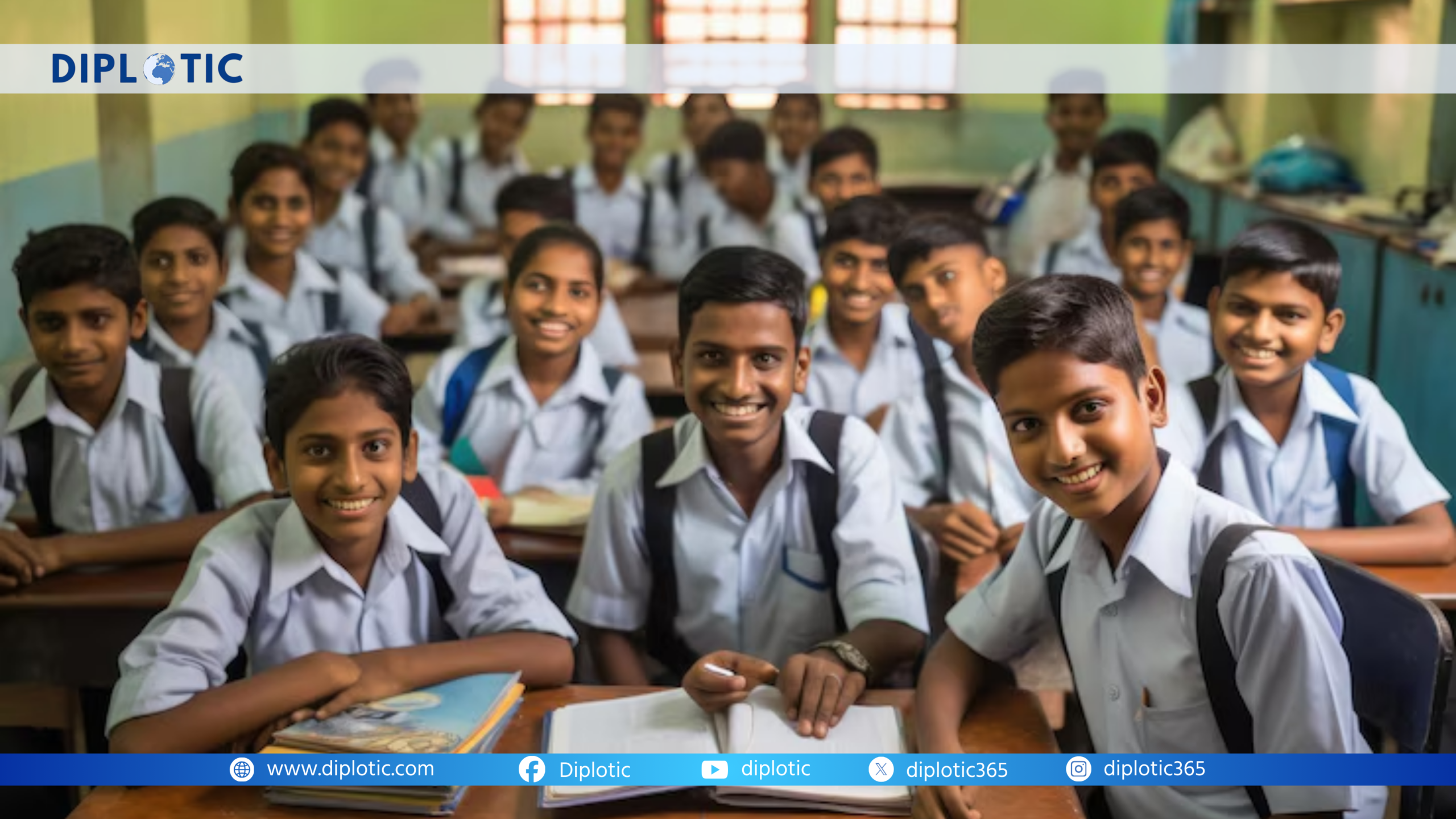
Good morning, students and teachers. Every school day begins with a moment to pause, to look at the world beyond our classroom windows, and to understand how events far and near shape our lives. Today, March 3, 2026, brings stories of extraordinary investment in India’s technological future, vibrant celebrations of tribal culture, an election in neighboring Nepal where young voices are demanding change, and news of Indian students overseas facing uncertainty due to global conflict. These headlines matter because they touch our present and will shape our future. Let us explore them together.
India’s AI Revolution: Major Companies Pledge Historic Investment
In one of the biggest economic announcements in recent memory, India has secured a massive $240 billion investment commitment in artificial intelligence and related infrastructure . This historic wave of funding was announced at the India AI Impact Summit 2026, held in New Delhi from February 16 to 21, which became the largest AI event ever organized, attracting approximately 600,000 in-person attendees and delegations from more than 100 countries .
The investments come from some of India’s most prominent business groups and global technology leaders. Reliance Industries has pledged $110 billion over seven years toward AI-focused infrastructure. Adani Enterprises announced plans to invest $100 billion by 2035. Global venture capital firm Lightspeed committed $10 billion, while General Catalyst pledged $5 billion over five years . Google CEO Sundar Pichai announced a $15 billion AI hub in Visakhapatnam along with new India-US subsea cable routes. The Tata Group also announced a partnership with OpenAI to scale AI-ready data centers .
For students, this news matters because it signals that India is positioning itself as a global leader in the technologies that will define the 21st century. The investments will create jobs, spur innovation, and likely transform how future generations learn, work, and solve problems. The summit also saw 92 countries endorse the India AI Impact Summit Declaration, and 13 leading AI developers announced the New Delhi Frontier AI Impact Commitments to promote “trustworthy and inclusive AI deployment” . Additionally, India’s sovereign compute capacity is expanding, with over 38,000 GPUs already provisioned under the IndiaAI Mission and another 20,000 GPUs to be added in coming weeks . For students interested in science, technology, and engineering, these developments open exciting possibilities.
Celebrating India’s Tribal Heritage: Three Major Festivals Begin
This month, Delhi becomes a vibrant showcase of India’s rich tribal heritage with three major festivals organized by the Ministry of Tribal Affairs . Union Minister Jual Oram inaugurated these events, emphasizing that tribal art reflects “centuries-old civilisational wisdom and must be preserved, promoted and mainstreamed as part of the vision of Viksit Bharat” .
The Tribes Art Fest runs from March 2 to 13 at Travancore Palace in Delhi, bringing together over 70 eminent tribal artists and showcasing nearly 1,000 artworks spanning 30 distinct tribal art forms from across the country . Special highlights include collaborations with contemporary artists, women-led live painting demonstrations, and structured dialogues on pathways from heritage to market . The festival provides a meaningful national platform for tribal painters, sculptors, and performers to exchange ideas and strengthen their livelihoods .
Following this, the Living Roots Festival – Soundscapes of Tribal India will be held from March 13 to 15 at Bikaner House and India Gate, featuring 15 curated performances representing diverse regions and traditions . Minister of State for Tribal Affairs Durgadas Uikey noted that the festival is “not merely a cultural event but a celebration of India’s spiritual and civilisational ethos” . Finally, the Bharat Tribes Fest from March 18 to 30 at Sunder Nursery will serve as a comprehensive national marketplace and cultural platform, with participation from more than 1,000 tribal artisans, Van Dhan Vikas Kendras, tribal chefs, and cultural troupes .
For students, these festivals offer an opportunity to appreciate the incredible diversity and richness of India’s tribal communities. The Ministry’s efforts aim to strengthen the identity, dignity, and livelihoods of tribal communities while ensuring that younger generations understand and value these traditions. A special “RISA” brand is being launched to position tribal fashion and crafts in premium and global markets, and an International Pavilion will host indigenous artisans from Australia, Fiji, and Vietnam, fostering global tribal synergy .
Nepal Votes: Can Anti-Corruption Promises Win Young Hearts?
Across the border, our neighbor Nepal is holding general elections tomorrow, March 5, in a vote that has captured the imagination of young Nepalis . These elections come just six months after massive youth-led “Gen Z” protests toppled the government led by four-time Prime Minister KP Sharma Oli, forcing an early election nearly two years ahead of schedule . The protests were sparked by fury over entrenched corruption and left 77 people dead and more than 2,000 injured .
Now, approximately 915,000 young Nepalis among the 8.9 million eligible voters will cast ballots for the first time . Every major political party is campaigning on anti-corruption promises, with proposals ranging from sweeping asset investigations of senior officials to using artificial intelligence to detect corruption . But many who participated in the protests remain skeptical. Rakesh Kumar Mahato, 25, who was shot in the spine during the protests and remains paralyzed, told reporters: “They say they will investigate corruption, but we aren’t sure if they will totally implement this” .
The most watched contest is in Jhapa-5 constituency, where Oli is fighting for political survival against Balendra Shah, a rapper and former Mayor of Kathmandu who recently joined the Rastriya Swatantra Party . Shah has positioned himself as an anti-establishment challenger, pledging to “raise strong voices against irregularities and corruption” . Another new party, the Ujyalo Nepal Party, led by technocrat Kulman Ghising, has adopted a light bulb as its election symbol, symbolizing the promise of bringing “brightness” to Nepal’s political culture .
The Election Commission has introduced stricter transparency rules, requiring all campaign expenses to flow through dedicated bank accounts and donors of large sums to provide tax identification numbers . However, human rights defenders question whether major parties are truly committed to change. National Human Rights Commission Secretary Murari Prasad Kharel asked pointedly: “Will these leaders disclose their own assets? How will they manage internal party governance?” .
For students watching this election unfold, Nepal offers a powerful lesson about democracy in action. Young people there have demonstrated that their voices matter, that they can challenge established power, and that demanding accountability from leaders is both a right and a responsibility. Whether the election delivers real change remains to be seen, but the energy and engagement of Nepal’s youth are undeniable.
Indian Students in West Asia Face Exam Uncertainty
Closer to home, more than 500,000 Indian students in seven West Asian nations have been caught in the shadow of regional conflict, with their board examinations postponed due to security concerns . The CBSE and CISCE announced that exams scheduled for March 2 in Iran, UAE, Bahrain, Kuwait, Oman, Qatar, and Saudi Arabia have been postponed, with new dates to be announced after a review of the situation . The decision came as the US and Israel targeted Iran, which retaliated, leading to airspace closures and disruptions across the region .
According to government data, approximately 493,000 Indian children are enrolled in schools and another 12,000 in higher-education institutions in these countries . Most attend schools affiliated with Indian boards. A CBSE circular assured that the board will “review the situation on Tuesday, 03 March 2026, and take appropriate decisions with regard to examinations scheduled from 05 March onwards,” advising students to “stay in touch with their schools for updates and follow official announcements carefully” .
CBSE also had to issue a clarification dismissing a fake circular circulating on social media that falsely claimed all remaining exams in the Middle East had been permanently cancelled and that students would be evaluated through alternative methods . The Board emphasized that the viral notice was fabricated and urged students to rely only on official channels.
Educationists have expressed concern about the psychological impact on students. Furqan Qamar, former vice-chancellor of Himachal Pradesh Central University, noted that while expat children studying in Indian board-affiliated schools can resume their education if they return home, “the anxiety and uncertainty of war and the trauma of any possible relocation are bound to leave a scar” .
For students in India, this news serves as a reminder that not all children enjoy the same stability and security. While we prepare for our exams in safe classrooms, thousands of Indian students overseas face uncertainty, disruption, and fear. It is a moment to appreciate what we have and to extend our thoughts to those navigating difficult circumstances.
Closing Thought
As we begin our school day, let us carry these stories with us. India’s AI investments remind us that the future is being built now, and we can be part of it. The tribal festivals celebrate the wisdom and creativity of communities whose traditions enrich our national identity. Nepal’s election shows that young voices can shake established systems and demand accountability. And the Indian students in West Asia remind us of the fragility of normalcy and the importance of safety and stability.
Each headline connects to our lives in ways both obvious and subtle. The world is large and complex, but understanding it is the first step toward shaping it. That is what education is for. That is what brings us here each morning. Have a thoughtful day, everyone.




