

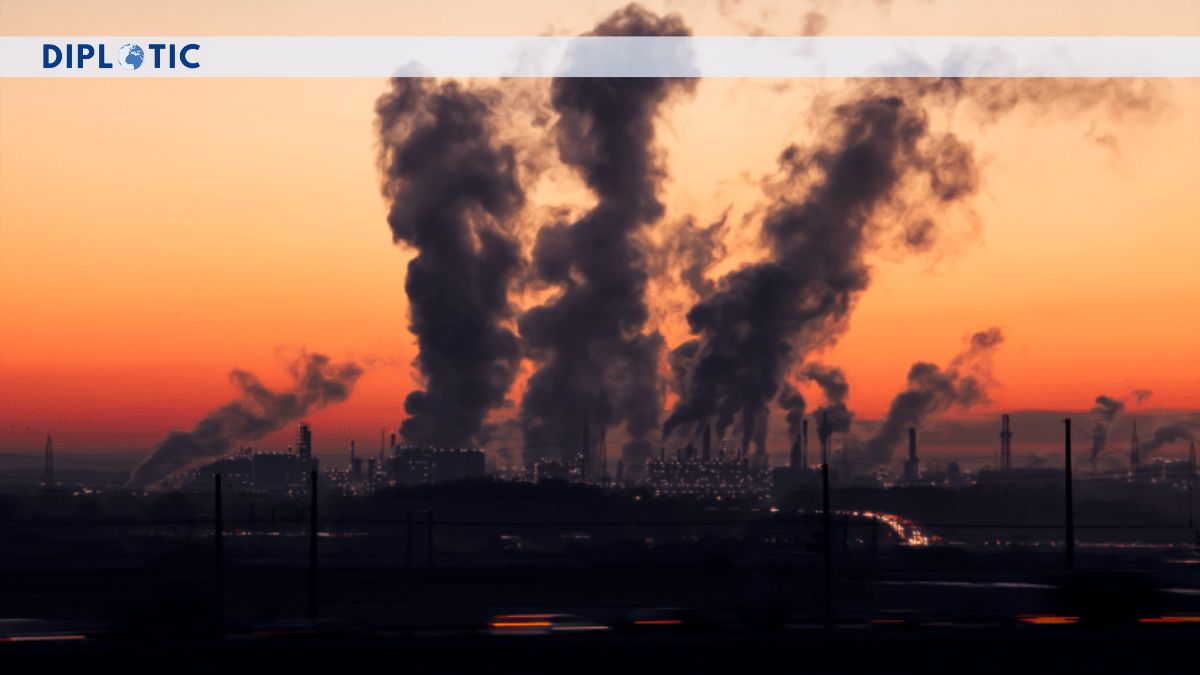
South Asia faces a worsening air pollution crisis driven by toxic smog, rising PM2.5 levels, climate pressures, and weak enforcement. Discover the alarming trends, severe health impacts, economic costs, and urgent policy gaps demanding bold action now fight for clean air.
A Region Under a Toxic Cloud
Air pollution in South Asia has evolved into one of the most urgent public health and environmental emergencies of the 21st century. Home to nearly two billion people, the region consistently records some of the world’s most hazardous air quality levels. From choking winter smog in northern India to brick kiln emissions in Bangladesh and industrial corridors in Pakistan, toxic air has become a daily reality.
According to global monitoring agencies, cities across India, Pakistan, Bangladesh, and Nepal frequently exceed safe air quality thresholds recommended by the World Health Organization. Fine particulate matter, particularly PM2.5, penetrates deep into the lungs and bloodstream, triggering devastating health consequences.
The crisis is no longer seasonal or localized. It is systemic, persistent, and accelerating.
Disturbing Pollution Trends Across the Region
South Asia has witnessed a dramatic surge in urbanization, industrial growth, construction activity, and motorization over the past two decades. While economic expansion has lifted millions out of poverty, it has also intensified pollution sources.
Rapidly expanding megacities such as Delhi, Lahore, and Dhaka routinely rank among the world’s most polluted urban centers. Winter temperature inversions trap pollutants close to the ground, creating dense smog episodes that reduce visibility and spike hospital admissions.
Vehicular emissions remain a dominant contributor, particularly from diesel engines and aging transport fleets. Coal-fired power plants, brick kilns, open waste burning, construction dust, and agricultural stubble burning further compound the problem.
Cross-border pollution adds another layer of complexity. Air masses move freely across national boundaries, meaning emissions from one country often affect neighboring populations. This interconnected pollution dynamic underscores the urgent need for regional cooperation.
The Silent Health Emergency
The health impacts of air pollution in South Asia are staggering and deeply alarming. Prolonged exposure to high PM2.5 levels is linked to respiratory diseases, cardiovascular disorders, stroke, lung cancer, and premature death.
Children are especially vulnerable. Exposure to polluted air can impair lung development, increase asthma risk, and negatively affect cognitive performance. Pregnant women exposed to severe pollution face higher risks of low birth weight and preterm birth.
Recent medical research indicates that chronic exposure to polluted air reduces life expectancy across large parts of South Asia. Millions of premature deaths annually are attributed to air pollution-related illnesses, making it one of the region’s leading risk factors for mortality.
The economic burden is equally severe. Lost productivity, rising healthcare costs, and reduced workforce participation collectively drain billions from regional economies each year. Air pollution is not just a public health crisis; it is a profound development challenge.
Climate Change and Air Pollution: A Dangerous Feedback Loop
Air pollution and climate change are closely intertwined. Many pollutants, such as black carbon and methane, contribute to both local air quality deterioration and global warming.
Coal dependence in parts of South Asia exacerbates greenhouse gas emissions while worsening particulate pollution. At the same time, rising temperatures intensify chemical reactions in the atmosphere, increasing ground-level ozone formation.
The Himalayan region faces additional risks. Black carbon deposits on glaciers accelerate melting, threatening long-term water security for millions downstream.
This dangerous feedback loop demands integrated policy responses that address both clean air and climate mitigation simultaneously.
Policy Responses: Progress and Limitations
Governments across South Asia have introduced various air quality control measures, but implementation gaps persist.
India launched the National Clean Air Programme (NCAP), aiming to reduce particulate pollution in major cities. Bangladesh has attempted to regulate brick kiln emissions, while Pakistan has announced smog action plans in Punjab province.
However, enforcement remains inconsistent. Regulatory agencies often lack funding, staffing, and technical capacity. Monitoring networks are expanding but still insufficient in many rural and peri-urban areas.
Policy fragmentation is another challenge. Urban planning, transport regulation, industrial standards, and agricultural practices often fall under separate authorities, limiting coordinated action.
Moreover, economic growth priorities sometimes overshadow environmental regulation. Balancing industrial development with clean air standards remains a politically sensitive issue.
The Role of Urban Planning and Transport Reform
Transforming South Asia’s air quality requires structural urban reform. Public transportation systems must be modernized and expanded to reduce reliance on private vehicles. Electrification of buses and two-wheelers presents a promising pathway.
Cities need stronger building codes to minimize dust from construction sites. Waste management reforms can eliminate open burning practices that contribute heavily to toxic emissions.
Green spaces and urban forestry initiatives can also mitigate pollution concentrations, though they cannot substitute for emission reduction at the source.
Investment in clean energy infrastructure, including solar and wind power, offers dual benefits for climate mitigation and air quality improvement.
Regional Cooperation: A Missing Piece
Because pollution crosses borders, isolated national strategies cannot fully resolve the crisis. A coordinated South Asian framework for emissions data sharing, early warning systems, and policy alignment could significantly enhance impact.
Joint research initiatives and technology sharing would accelerate innovation in pollution control technologies. Standardized vehicle emission norms and synchronized agricultural policies could reduce transboundary smog episodes.
Regional institutions have the potential to facilitate dialogue and build trust around shared environmental challenges. Clean air could serve as a powerful diplomatic bridge in a region often divided by political tensions.
Public Awareness and Citizen Action
Grassroots awareness about air quality has grown dramatically in recent years. Real-time air quality monitoring apps and social media campaigns have amplified public concern.
Civil society organizations are pressuring governments to strengthen regulation and transparency. Citizen litigation in courts has occasionally forced authorities to adopt emergency pollution control measures.
However, sustained behavioral change remains essential. Reducing household biomass burning, encouraging public transport use, and supporting clean energy transitions require widespread community engagement.
Empowering citizens with reliable data and actionable guidance can transform public demand into policy momentum.
The Path Forward: Urgency and Accountability
Air pollution in South Asia is not an abstract environmental issue; it is a life-and-death crisis unfolding daily. The science is clear, the economic costs are undeniable, and the human toll is immense.
What remains uncertain is whether political urgency will match the scale of the threat.
Comprehensive reform must include stronger emission standards, rapid energy transition, improved public transport, cross-border coordination, and transparent monitoring systems. Equally important is sustained investment in health infrastructure to manage pollution-related diseases.
Clean air is not a luxury. It is a fundamental right and a cornerstone of sustainable development.
South Asia stands at a decisive moment. The choices made today will determine whether future generations inherit clearer skies or continue living under a toxic cloud that compromises health, productivity, and prosperity.
The crisis is severe, but solutions are within reach. What is required now is bold leadership, regional solidarity, and unwavering commitment to breathable air for all.




