

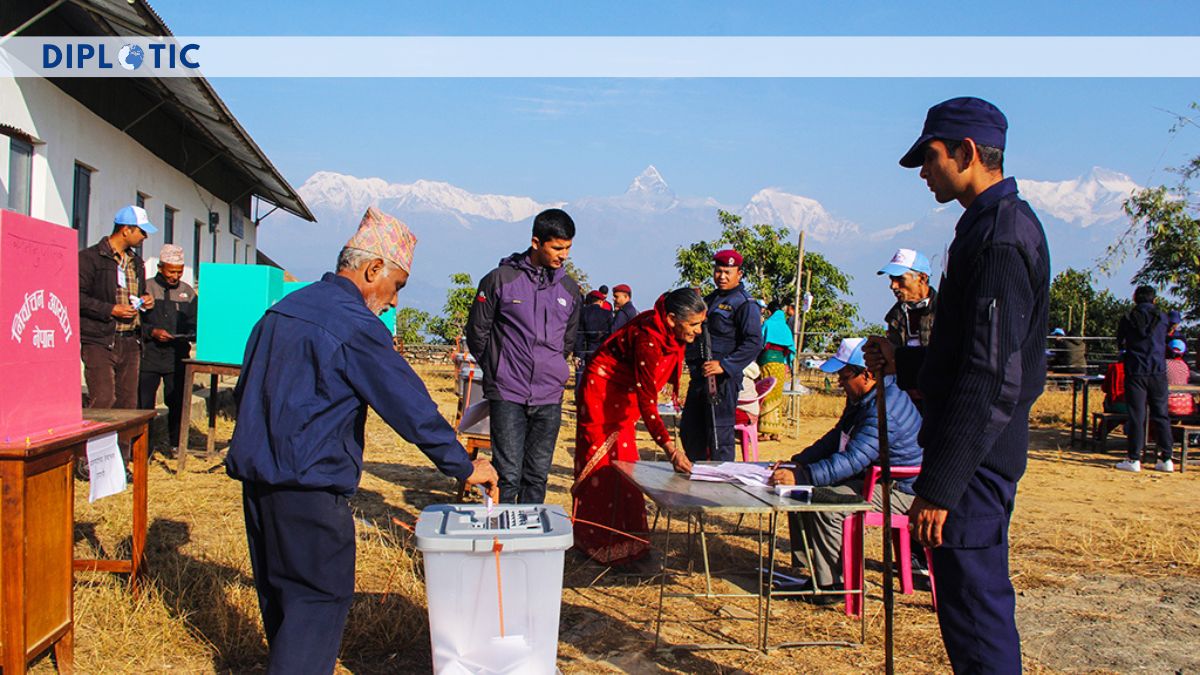
Nepal’s 2026 election will shape South Asia’s power balance. Meet the key players, alliances, and the high–stakes India–China showdown at play.
The Stakes: Why Nepal’s 2026 Election Matters
Nepal’s March 5, 2026, general election is far more than a routine democratic ritual; it is a pivotal geopolitical flashpoint in the heart of South Asia. After the youth-led anti-corruption uprising in September 2025 toppled the KP Sharma Oli-led coalition government, the country now stands at a crossroads between democratic renewal, regional alignment, and internal fragmentation. As the world’s 16th‑largest democracy, Nepal’s outcome will send shockwaves through India–China relations, security dynamics, and the broader narrative of people-powered movements reshaping Asian politics.
When and How the Vote Works
Nepal will elect all 275 members of the House of Representatives on March 5, 2026, under a hybrid system combining first‑past‑the‑post (FPTP) and proportional representation (PR).
- 165 seats are chosen from single-member constituencies via FPTP.
- 110 seats are allocated from a single nationwide list, based on party vote share.
This structure ensures that even if one party wins a slim majority in FPTP, the final balance of power depends heavily on PR outcomes and post-poll coalition bargaining. With more than a dozen parties in the fray, the 2026 election is almost certain to produce a hung parliament, making coalition math and leadership personalities the decisive factors.
Who’s Running: The Power Players
Balendra “Balen” Shah – Rastriya Swatantra Party (RSP)
Former Kathmandu mayor Balendra “Balen” Shah, now the RSP’s prime‑ministerial candidate, embodies the explosive fusion of youth energy, anti-corruption fervor, and social‑media-driven politics. Chosen by RSP as its standard‑bearer after the collapse of pre-election mergers, Shah represents a break from traditional party‑warlord politics and is widely seen as a frontrunner in the upcoming vote. His campaign is built on transparency, service-oriented governance, and demands for accountability, themes that resonate deeply with Nepal’s frustrated Gen Z and urban middle class.
KP Sharma Oli – CPN‑UML
At the other end of the spectrum stands KP Sharma Oli, the septuagenarian leader of the Communist Party of Nepal‑Unified Marxist–Leninist (CPN‑UML) and a former prime minister grappling with a massive comeback bid. Oli’s last coalition government was forced out after the 2025 anti-corruption protests, but his party still commands a strong rural base, disciplined cadre, and deep institutional networks. His appeal lies in stability rhetoric, nationalist posturing, and a familiar brand of left-leaning populism, even as younger voters question his legacy.
Gagan Thapa – Nepali Congress (NC)
The Nepali Congress (NC), now led by Gagan Thapa, is positioning itself as the centrist, pro‑democracy alternative. Thapa, a 49-year-old reform-oriented leader, has taken over after Sher Bahadur Deuba and is pushing an agenda of institutional integrity, economic modernization, and cautious foreign‑policy rebalancing. The party’s historical weight and broad geographic spread make it a likely kingmaker or coalition partner, even if it may not win a clear majority.
Prachanda and the Maoist‑Center Left
Former Maoist guerrilla leader Pushpa Kamal Dahal “Prachanda” and his Nepal Communist Party (Maoist Centre) continue to occupy a critical, albeit volatile, middle ground. Prachanda’s trajectory from revolutionary to coalition‑builder to occasional protest‑triggerer has made him a symbol of Nepal’s recurring political oscillations. In 2026, his party is likely to play a pivotal swing‑voter role, deciding whether post‑election alliances tilt toward hard‑line nationalism or a more moderate consensus.
The Regional Chessboard: India vs. China
South Asia’s geopolitical future is being quietly rewritten in Kathmandu’s tea‑house debates and election‑rally speeches. Both India and China are watching Nepal’s 2026 election with intense, but distinct, strategic interest.
New Delhi’s Calculations
India sees a stable, democratic Nepal as essential for its national security and regional influence. A smooth democratic transition would validate India’s preference for soft‑power dominance and reinforce its image as the subcontinent’s natural leader. However, New Delhi remains wary of any government that openly leans toward China, especially on issues such as border disputes, infrastructure projects, and the status of Tibetan refugees. The 2025 protests, which highlighted youth discontent and governance failures, also exposed India’s vulnerability to unrest spilling across open borders.
Beijing’s Strategic Hedging
For China, Nepal is a high-altitude buffer state crucial for its Himalayan security and Belt and Road Initiative (BRI) ambitions. Beijing has long sought to balance Nepal’s tilt toward India by investing in roads, hydropower, and connectivity projects tied to the BRI. Chinese diplomacy emphasizes stability, non-interference, and adherence to the “One China Principle,” particularly regarding Tibetan activities within Nepal. The 2025 youth protests surprised Beijing, which has since adjusted its approach, publicly supporting the March 2026 elections and signaling that it will work with any stable government that upholds Chinese interests.
What the Election Means for South Asia’s Future
Democratic Reboot or Democratic Backlash
Nepal’s 2026 election is a stress test for South Asian democracy. If the vote is peaceful, credible, and leads to a functioning coalition government, it will reinforce the narrative that popular uprisings can drive institutional reform without toppling democracy itself. Conversely, if post-poll negotiations collapse into a deadlock or fresh street violence, it could fuel a broader regional trend of democratic erosion and populist dictatorial drift.
Power Shifts and Security Implications
The composition of Nepal’s next government will determine whether Kathmandu remains a neutral buffer or becomes a proxy battleground for India-China rivalry. A government that drifts too close to one power on issues like military cooperation, infrastructure, or border talks could trigger responses from the other, destabilizing already fragile regional security dynamics.
Moreover, Nepal’s internal stability affects border security, migration, and counter‑terrorism cooperation across the Himalayan belt, directly impacting India’s northern security calculus.
Lessons for Other South Asian Democracies
Nepal’s 2026 election offers critical lessons for Pakistan, Bangladesh, Sri Lanka, and even India. The success or failure of youth-driven, anti-corruption movements in steering political change will inform how Gen Z and urban middle-class voters reshape governance across the region. If Shah’s RSP-style politics can translate protest energy into sustained reform, it may inspire similar movements from Dhaka to Islamabad.
Conclusion: A Himalayan Inflection Point
Nepal’s 2026 election is not just about who will occupy the prime‑minister’s office; it is about who will shape the future of South Asia’s geopolitical balance. The contest between Balen Shah’s youth-centric reformism, Oli’s resilient nationalism, and Thapa’s centrist pragmatism will define whether Nepal evolves into a stable, democratic, and neutral pivot or a fragile, contested arena of great‑power rivalry. As the world watches, the Himalayan republic stands at a historic inflection point, and the outcome will echo far beyond its mountain borders.




