

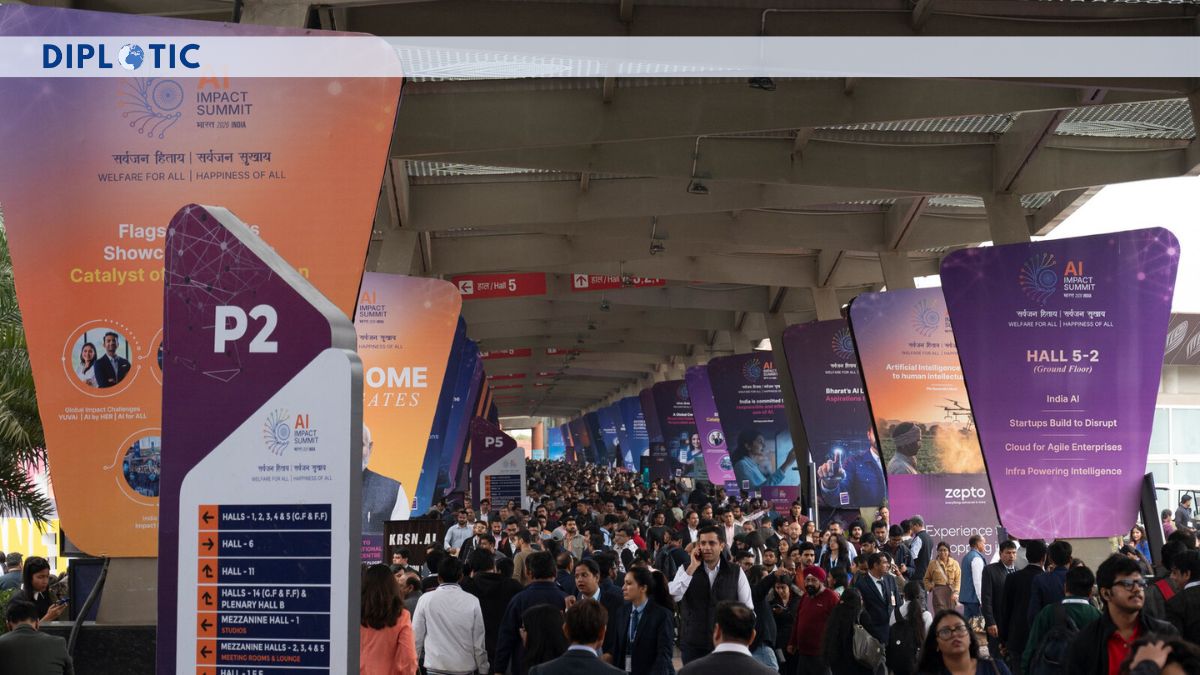
Following the India AI Impact Summit 2026, South Asia is accelerating its rise as a global AI hub, fueled by breakthrough innovation, bold policy reforms, surging startup investment, and a powerful young tech workforce.
A Defining Question After the India AI Impact Summit 2026
The India AI Impact Summit 2026 has ignited a bold and urgent question: Is South Asia on the brink of becoming a global artificial intelligence hub?
Hosted in New Delhi, the summit gathered policymakers, AI researchers, startup founders, venture capitalists, and global technology executives to assess the region’s accelerating role in the AI revolution. What emerged was not hype but a compelling case for structural transformation.
South Asia, long recognized for its IT outsourcing strength, is now positioning itself as a creator of AI innovation rather than merely a service provider. The summit showcased breakthrough applications, billion-dollar investment pipelines, and ambitious policy frameworks that signal a new technological era.
India’s Strategic AI Push: Policy Meets Ambition
At the center of the conversation is India’s coordinated push to integrate AI into national development strategies. Institutions like NITI Aayog have framed artificial intelligence as a core driver of economic growth, public service efficiency, and global competitiveness.
Government-backed programs aligned with Digital India have created foundational digital infrastructure identity systems, payment networks, and cloud platforms that provide fertile ground for AI deployment at scale.
The India AI Impact Summit emphasized regulatory clarity, ethical governance, and responsible innovation. Policymakers stressed that South Asia’s AI growth must balance speed with accountability, ensuring algorithmic transparency and data protection.
This strategic alignment between government and industry could become the region’s decisive competitive advantage.
Startup Ecosystems: From Service Hubs to Innovation Engines
A major highlight of the summit was the explosive growth of AI startups across South Asia. Indian deep-tech ventures are developing advanced machine learning models for healthcare diagnostics, supply chain optimization, generative AI applications, and climate forecasting.
AI-driven health-tech platforms are using computer vision and predictive analytics to expand diagnostic access in rural areas. Fintech innovators are deploying AI-powered fraud detection systems built on digital infrastructure supported by National Payments Corporation of India.
Venture capital interest is intensifying. Investors see a powerful combination of engineering talent, large domestic markets, and cost efficiency. Unlike previous tech cycles, startups are increasingly building intellectual property rather than focusing solely on service delivery.
The summit’s startup showcase made one point unmistakable: South Asia is evolving from back-office outsourcing to frontier AI innovation.
Talent Advantage: The Demographic Dividend
South Asia’s greatest asset may be its human capital. With one of the world’s youngest populations, the region possesses a vast and growing talent pool entering STEM fields.
Indian IT giants such as Infosys and Tata Consultancy Services are investing heavily in AI reskilling programs, retraining employees in machine learning, data science, and cloud architecture.
Universities are expanding AI research labs and collaborating with global institutions. Coding boot camps and online certification platforms are accelerating workforce readiness.
The summit underscored that while capital and policy matter, sustainable AI leadership depends on talent density. South Asia’s demographic advantage could position it as a long-term innovation powerhouse.
Regional Collaboration Beyond India
While India leads the AI conversation, the summit also spotlighted broader South Asian participation. Delegates from Bangladesh, Sri Lanka, and Nepal discussed collaborative research frameworks and digital capacity building.
Bangladesh’s expanding ICT ecosystem, supported by institutions like Bangladesh Computer Council, is nurturing AI startups in language processing and agricultural analytics.
Cross-border partnerships were a recurring theme. Shared linguistic diversity, common economic challenges, and similar digital adoption curves create opportunities for scalable regional AI solutions.
If coordinated effectively, South Asia could emerge as a unified innovation corridor rather than fragmented national ecosystems.
Infrastructure: Cloud, Data, and Compute Power
Becoming a global AI hub requires more than talent and startups it demands robust computational infrastructure. Cloud adoption rates in South Asia are rising rapidly, supported by global hyperscalers expanding local data centers.
High-performance computing resources, once scarce, are becoming more accessible. AI research labs are gaining access to advanced GPUs and distributed cloud environments, enabling the development of large-scale models.
The India AI Impact Summit emphasized sovereign data strategies. As nations consider data localization requirements, balancing innovation with data sovereignty remains a strategic priority.
Without scalable compute infrastructure, AI ambitions stall. The summit highlighted measurable progress, though infrastructure investment must continue to accelerate.
Ethical AI and Global Trust
For South Asia to become a credible global AI hub, trust will be paramount. Panels at the summit addressed algorithmic bias, data privacy, and misinformation risks associated with generative AI.
Global organizations like World Economic Forum have advocated inclusive AI frameworks that prioritize transparency and fairness. South Asian policymakers appear increasingly aligned with these principles.
Establishing ethical guardrails early could differentiate the region from less regulated AI markets. Trust, once earned, becomes a powerful export advantage in global AI services and products.
Economic Impact: Beyond Technology
AI’s ripple effects extend far beyond the tech sector. Manufacturing automation, predictive agriculture, smart logistics, and telemedicine are transforming traditional industries.
Agricultural AI models help farmers forecast yields and optimize irrigation. Smart logistics platforms enhance supply chain resilience. AI-driven public service dashboards improve governance transparency.
The economic multiplier effect could be transformative. According to summit discussions, AI integration across sectors may significantly boost GDP growth and productivity in the coming decade.
This is not just a tech story it is a development narrative.
Challenges on the Road to Global Leadership
Despite the optimism, significant hurdles remain. Infrastructure disparities between urban and rural regions risk widening digital divides. Regulatory uncertainty could slow foreign investment if policies shift unpredictably.
Brain drain remains a concern, as top AI talent continues to migrate to Silicon Valley and Europe. Retaining high-skilled professionals will require competitive incentives and world-class research environments.
Additionally, geopolitical tensions may shape access to advanced semiconductor technologies, influencing AI hardware supply chains.
The summit acknowledged these realities, emphasizing resilience and strategic planning as essential safeguards.
So, Is South Asia Becoming a Global AI Hub?
The reflections after the India AI Impact Summit 2026 suggest that South Asia stands at a pivotal inflection point. The ingredients for AI leadership talent, market scale, policy alignment, startup energy, and capital inflows are increasingly visible.
However, becoming a true global AI hub requires sustained execution. Infrastructure must scale. Regulatory frameworks must remain stable. Ethical governance must build international confidence.
Momentum is undeniable, but permanence will depend on consistency.
A Region at the Edge of Transformation
South Asia’s AI ambitions are no longer speculative; they are strategic. The India AI Impact Summit 2026 crystallized a vision of a region transitioning from a digital services powerhouse to AI innovation leader.
If investments continue, collaboration deepens, and policy frameworks mature, South Asia could redefine the global AI map in the coming decade.
The question is no longer whether the region has potential. The question is whether it can sustain its powerful momentum and convert ambition into enduring technological leadership.
The world is watching and South Asia is rising.




