

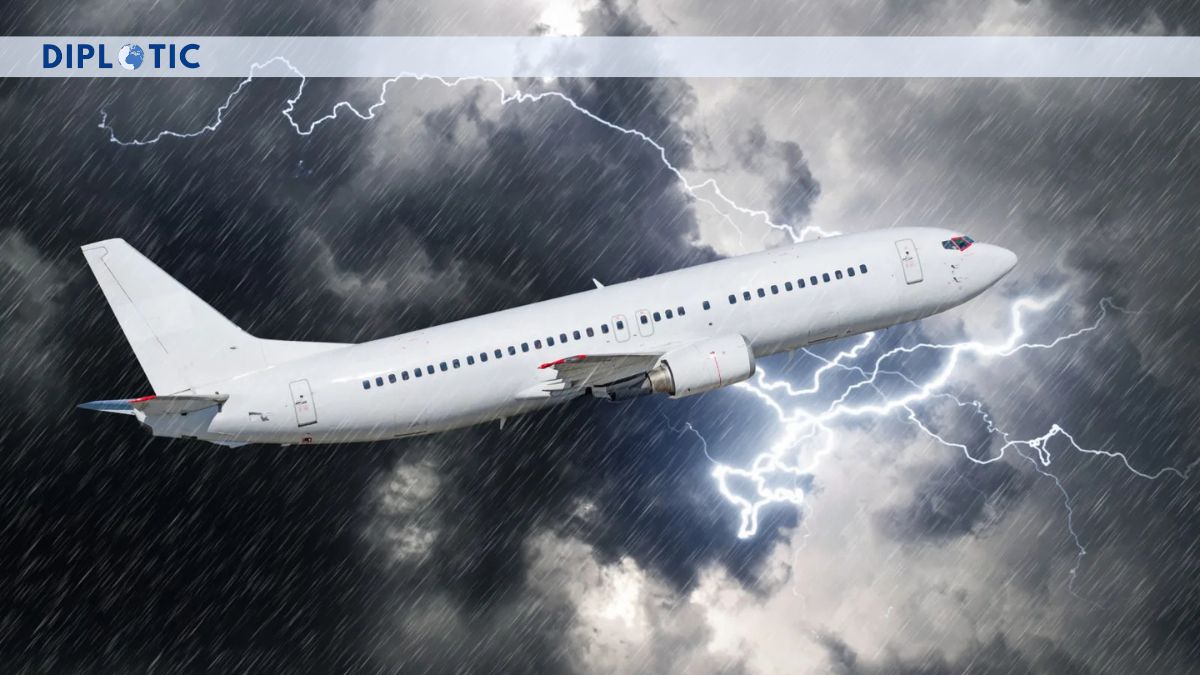
Extreme weather fueled by climate change is disrupting global air travel with rising turbulence, heatwave delays, storm-driven diversions, and airport shutdowns reshaping the future of aviation safety and reliability.
A Sky Under Stress
Air travel has long symbolized speed, connectivity, and modern convenience. Yet behind the seamless boarding gates and precise schedules, a powerful disruption is unfolding. Climate change is intensifying extreme weather patterns, and the aviation industry is feeling the impact with growing urgency.
From sudden thunderstorms and deadly heatwaves to violent turbulence and record-breaking hurricanes, extreme weather events are forcing flight diversions, grounding aircraft, and straining airport infrastructure. What was once considered occasional disruption is becoming a recurring operational crisis. The skies are no longer as predictable as they once were.
Rising Temperatures and the Physics of Flight
One of the most underestimated consequences of climate change is rising global temperatures. Warmer air is less dense, and lower air density reduces lift the fundamental force that allows airplanes to take off.
During extreme heatwaves, aircraft require longer runways and may face weight restrictions to ensure safe takeoff. In some cases, flights are delayed or canceled altogether. Airports located at higher elevations are particularly vulnerable because thinner air compounds the challenge.
Scientific agencies such as NASA and World Meteorological Organization have documented a steady rise in global surface temperatures. These escalating heat extremes are no longer rare anomalies; they are becoming seasonal realities.
For airlines, this translates into higher operational costs, payload limitations, and scheduling complications that ripple across global networks.
Turbulence Intensifies in a Warming Atmosphere
Passengers increasingly report rougher flights, and science supports this observation. Clear-air turbulence sudden, invisible air disturbances that occur without storm clouds is becoming more frequent and severe.
Research linked to climate modeling suggests that stronger jet streams, driven by temperature differences in the upper atmosphere, are amplifying turbulence events. These invisible atmospheric shifts pose serious safety and comfort concerns.
The International Civil Aviation Organization has acknowledged the growing challenge of climate-induced turbulence. While aircraft are engineered to withstand significant stress, intensified turbulence increases maintenance demands and injury risks for passengers and crew.
What was once an occasional mid-flight inconvenience is evolving into a measurable climate consequence.
Storm Surges, Hurricanes, and Airport Shutdowns
Coastal airports are on the frontline of climate disruption. Rising sea levels combined with stronger tropical cyclones create a dangerous combination for aviation hubs.
Powerful storms linked to warming oceans have triggered widespread flight diversions and prolonged shutdowns. Airports in vulnerable regions frequently suspend operations as heavy rainfall floods runways and terminals.
For example, hurricanes monitored by agencies like the National Oceanic and Atmospheric Administration have shown increasing intensity over recent decades. Stronger wind speeds and heavier precipitation patterns directly translate into grounded fleets and logistical chaos.
When a major hub shuts down, the disruption cascades globally. Delayed aircraft, displaced crews, and stranded passengers create a chain reaction across continents.
Flash Floods and Infrastructure Vulnerability
Extreme rainfall events are becoming more intense due to a warmer atmosphere’s ability to hold more moisture. Airports built decades ago were not designed to handle today’s record-breaking precipitation levels.
Flooded taxiways, submerged baggage systems, and damaged electrical networks can halt operations for hours or even days. Runway integrity becomes compromised when drainage systems are overwhelmed.
Airports are now investing billions in climate-resilient infrastructure upgrades. Elevated runways, advanced drainage systems, and reinforced flood barriers are becoming essential rather than optional.
Climate resilience is no longer a theoretical strategy it is an urgent operational necessity.
Wildfires and Hazardous Airspace
Climate change is also fueling more frequent and severe wildfires. Smoke plumes from large-scale fires reduce visibility and compromise air quality, forcing rerouted flights and canceled departures.
Aircraft engines are highly sensitive to particulate matter. Flying through dense smoke can pose mechanical risks and affect onboard systems. As wildfire seasons lengthen, airlines must navigate unpredictable airspace closures.
Satellite monitoring agencies and meteorological organizations are increasingly coordinating with aviation authorities to reroute aircraft safely. However, these diversions add fuel consumption, operational costs, and passenger delays.
Economic Shockwaves Across the Aviation Industry
The financial implications of climate-driven disruptions are staggering. Airlines operate on tightly optimized schedules where minutes matter. When extreme weather forces diversions, additional fuel burn, crew overtime, and passenger compensation costs accumulate rapidly.
Insurance premiums are also rising as climate risks intensify. Airports and airlines must account for physical damage, operational downtime, and long-term infrastructure adaptation expenses.
The International Air Transport Association has highlighted climate resilience as a critical priority for the industry’s future stability. Sustainable aviation fuel development and carbon reduction strategies are part of mitigation efforts, but adaptation remains equally urgent.
Air travel is both a contributor to climate change and a victim of its accelerating consequences.
Climate Models and Predictive Aviation Technology
Advanced forecasting technologies are emerging as powerful tools to combat disruption. Artificial intelligence and predictive analytics are being integrated into airline operations to anticipate weather-related challenges.
Enhanced climate models allow meteorologists to forecast turbulence zones, storm intensification, and heatwave peaks with greater accuracy. Airlines can then adjust flight paths proactively, minimizing risk and maximizing safety.
Real-time satellite data and machine learning algorithms are revolutionizing weather prediction. Yet even the most sophisticated systems cannot eliminate the underlying volatility caused by global warming.
Adaptation can reduce risk, but it cannot fully shield aviation from escalating climate instability.
Passenger Experience in a Changing Climate
For travelers, the consequences are increasingly visible. More frequent delays, longer flight times due to rerouting, and unexpected cancellations are becoming part of modern air travel.
Extreme heat can also affect cabin comfort during boarding and taxiing. Stronger storms may lead to extended holding patterns before landing. The once predictable rhythm of air travel is growing more uncertain.
Travel insurance policies are evolving to account for climate-related disruptions. Airlines are revising contingency planning to manage passenger expectations more effectively.
Transparency and communication are becoming essential pillars of customer trust in an era of climate uncertainty.
The Urgent Path Forward
Climate scientists warn that extreme weather events will intensify if greenhouse gas emissions continue at current rates. Aviation must therefore confront a dual challenge: reducing its carbon footprint while adapting to unavoidable impacts.
Sustainable aviation fuels, electric aircraft research, and improved fuel efficiency represent mitigation strategies. Meanwhile, resilient airport design, enhanced forecasting systems, and climate-conscious scheduling represent adaptation measures.
The aviation industry stands at a critical crossroads. Strategic investment today will determine how effectively it navigates tomorrow’s turbulent skies.
Conclusion: Navigating a Volatile Future
Flight diversions and extreme weather are no longer isolated disruptions; they are powerful signals of a changing climate reshaping global air travel. Rising temperatures, intensified storms, stronger turbulence, and infrastructure vulnerabilities are converging to challenge one of the world’s most interconnected industries.
As climate change accelerates, the skies demand resilience, innovation, and bold environmental action. The future of aviation will depend not only on technological advancement but on global commitment to climate stability.
The era of predictable flight paths is fading. In its place emerges a high-stakes reality where climate adaptation and sustainability determine whether air travel remains reliable in an increasingly volatile world.




