

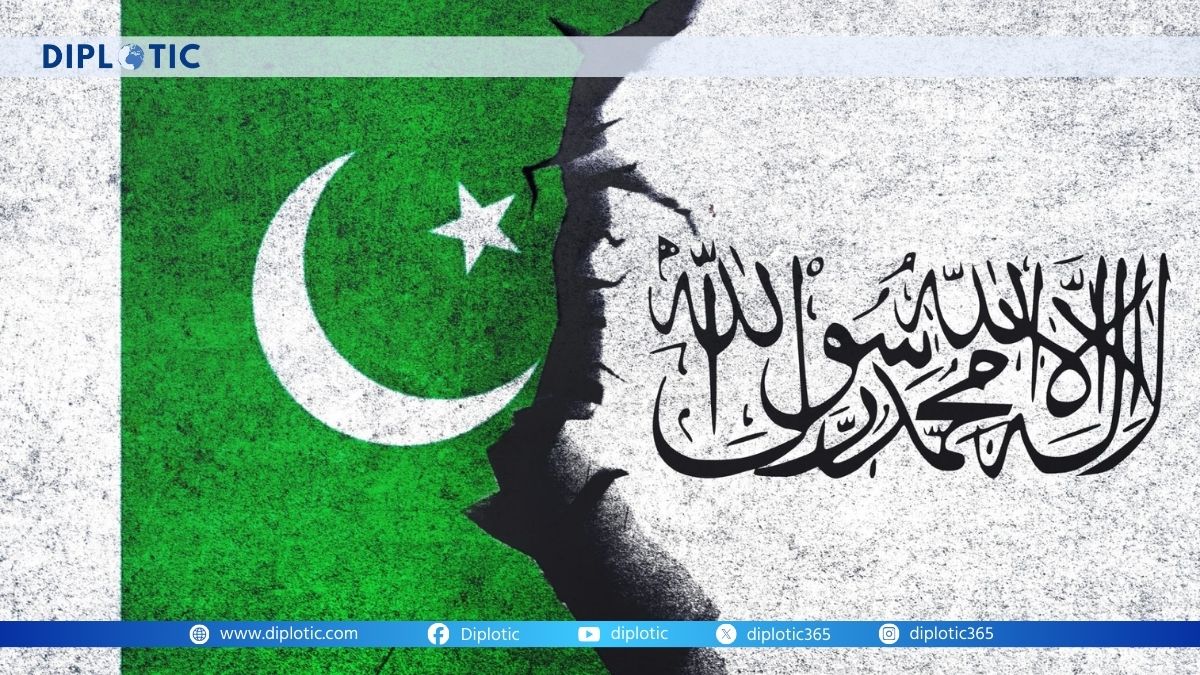
In the early hours of February 22, 2026, Pakistani warplanes crossed into Afghan airspace and struck seven locations in the eastern provinces of Nangarhar and Paktika . By dawn, a familiar and dangerous cycle had renewed: Islamabad announced it had destroyed militant hideouts targeting Pakistan; Kabul reported that dozens of civilians, including women and children, lay dead beneath the rubble of a madrasa and residential homes . The strikes, the most extensive since border clashes in October 2025 killed over 70 people, have pushed two uneasy neighbors to the brink of a wider confrontation . For a region already grappling with militant violence, economic disruption, and geopolitical rivalries, this escalation represents more than another border skirmish. It signals the complete breakdown of a relationship that has festered since the Taliban’s return to power in 2021, and it raises urgent questions about whether dialogue can ever replace drones as the tool of choice between Islamabad and Kabul .
Why Did Pakistan Launch These Strikes Now?
Pakistan’s military described the operation as an “intelligence-based, selective” response to a wave of recent terrorist attacks on its soil . The most devastating among them was a February 6 suicide bombing at a Shia mosque in Islamabad during Friday prayers, which killed at least 31 people and wounded more than 160 others in the deadliest attack on the Pakistani capital since 2008 . The Islamic State Khorasan Province (ISIS-K) claimed responsibility for that massacre . Additional attacks in the northwestern Khyber Pakhtunkhva province, including a suicide bombing that killed two soldiers and a vehicle-ramming that killed 11 soldiers and a child, compounded the pressure on Islamabad to act .
According to Pakistan’s Ministry of Information and Broadcasting, the strikes targeted camps and hideouts belonging to the Tehreek-e-Taliban Pakistan (TTP), which Islamabad refers to as “Fitna al Khwarij,” as well as affiliates of ISIS-K . The government stated it possessed “conclusive evidence” that recent attacks were orchestrated by networks operating from Afghan territory under the direction of “their Afghanistan-based leadership and handlers” . For Pakistan, the TTP represents an existential threat. Since its emergence in 2007, the group has killed over 14,000 Pakistanis in a campaign to overthrow the government and establish an Islamist emirate . The TTP’s safe haven across the border, where it operates with apparent impunity since the Afghan Taliban’s takeover, has become the central irritant in bilateral relations . Pakistan’s military, which has suffered the brunt of these attacks, feels deeply betrayed by a Taliban regime it once sponsored, and it has run out of patience with diplomatic appeals .
What Do We Know About the Casualties and Targets?
The two capitals offer starkly different accounts of what was hit. Pakistan insists its forces conducted “precision, intelligence-driven operations” against seven terrorist camps, achieving their objectives with accuracy . The Ministry of Information and Broadcasting emphasized that the action was retributive, targeting only militant infrastructure .
Afghanistan’s Defense Ministry, however, paints a tragically different picture. Officials stated that air raids struck a madrasa, or religious school, and residential buildings in Nangarhar and Paktika, causing numerous civilian deaths and injuries . Local police in Nangarhar reported that the bombardment began around midnight and affected several districts, with members of a single extended family among the dead . Residents joined rescue efforts, using heavy equipment and basic tools to search for victims beneath the rubble . Afghan government spokesperson Zabihullah Mujahid condemned the strikes, accusing Pakistan of targeting civilians and attempting to offset its own security weaknesses through military action . The Afghan Defense Ministry vowed to deliver an “appropriate and measured response” at a “suitable time,” warning that such violations of sovereignty would not go unanswered . The competing narratives, impossible to independently verify amid the chaos, have inflamed public opinion on both sides and narrowed the space for compromise .
How Did Relations Between Kabul and Islamabad Deteriorate So Severely?
The current crisis did not emerge from a vacuum. It is the culmination of a steady deterioration that began when the Taliban seized Kabul in August 2021. Since then, Pakistan has watched with growing alarm as the TTP, a separate entity but ideological ally of the Afghan Taliban, found sanctuary across the border . According to the Pakistan Institute for Conflict and Security Studies, 2025 was Pakistan’s deadliest year in a decade, with most violence caused by terrorist groups including the TTP . The Pakistan Institute of Peace Studies tallied 699 terrorist attacks in 2025, a 34 percent increase from 2024, killing 1,034 people .
Multiple rounds of international mediation have failed to resolve the impasse. Talks facilitated by Qatar and Turkey secured a temporary ceasefire in late 2025 but could not extract a formal Taliban commitment to curb the TTP . Saudi Arabia brokered subsequent negotiations in November, which made little progress, and even secured the release of three Pakistani soldiers in early February, but that gesture did not ease underlying tensions . Pakistan’s army chief, Asim Munir, delivered an ominous warning in December: the Taliban must choose between ties with Pakistan and ties with the TTP . The Taliban, however, face their own constraints. Expelling or confronting the TTP risks sparking internal rebellions within their ranks and exposing gaps between pragmatic political leaders and hard-line mullahs . They also fear that abandoning the TTP could drive the group into closer alliance with ISIS-K, their avowed adversary . Consequently, the Taliban have maintained a united front in defense of the TTP, framing Pakistani demands as violations of Afghan sovereignty .
Adding fuel to the fire is the Taliban’s warming relationship with India. In October 2025, Taliban Foreign Minister Amir Khan Muttaqi spent a week in New Delhi, meeting his Indian counterpart and declaring that “the future of India-Afghanistan relations seems very bright” . India fully reopened its embassy in Kabul, and subsequent visits by the Taliban’s commerce and health ministers signaled a deepening engagement . For Pakistan, which has long viewed Afghanistan as its strategic backyard, this Indian foray represents an unacceptable provocation, reinforcing suspicions that Kabul is aligning with Islamabad’s primary rival .
What Are the Broader Regional Implications of This Conflict?
The Afghanistan-Pakistan confrontation now ranks among the most consequential geopolitical shocks affecting South and Central Asia . Analysts warn that the conflict has evolved from episodic clashes into a persistent security crisis involving airstrikes, drone attacks, border closures, and political escalation . The 2,640-kilometer border, much of it governed by the disputed Durand Line drawn in 1893 and never recognized by Afghanistan, remains a flashpoint . Since November, key crossings have remained largely closed, disrupting trade and daily life for communities dependent on cross-border movement .
For Central Asian states, the conflict has eroded confidence in Afghan-Pakistani transit as a predictable conduit to South Asian markets . Strategic planning is shifting toward resilience and redundancy, with countries like Kazakhstan and Uzbekistan developing parallel transport corridors to hedge against instability . Two major rail projects are emerging: the Kazakhstan-Turkmenistan-Afghanistan (KTA) route and the Uzbekistan-Afghanistan-Pakistan (UAP) corridor . While officials describe them as complementary, they represent competing geopolitical alignments, with China favoring the eastern route linked to the China-Pakistan Economic Corridor (CPEC), and India supporting the western alignment connected to Iranian ports .
The conflict also threatens major infrastructure investments. The Turkmenistan-Afghanistan-Pakistan-India (TAPI) gas pipeline and the Central Asia-South Asia power project (CASA-1000) face heightened vulnerabilities as they traverse some of Afghanistan’s least stable provinces . Pakistan’s internal instability further undermines confidence in both projects, forcing investors to reassess risk . Meanwhile, the United Nations mission in Afghanistan reported that Pakistani military action killed 70 Afghan civilians between October and December 2025, figures that deepen animosity and complicate any future reconciliation .
What Comes Next for Pakistan and Afghanistan?
The coming days will test whether diplomacy can reassert itself over retaliation. Afghanistan’s Defense Ministry has promised a “calculated response,” language that leaves room for measured action rather than immediate escalation . Key international players, including Qatar, Turkey, and Saudi Arabia, which have previously mediated, will likely intensify efforts to pull both sides back from the brink . However, with public opinion inflamed on both sides and Kabul’s credibility now publicly on the line, the path toward negotiation has become significantly more difficult .
Pakistan faces a strategic paradox. Its military has long relied on kinetic operations and security pressure to shape Kabul’s behavior, but experience suggests this approach has not delivered durable gains . Instead, it has fueled hostility while eroding Islamabad’s influence . The Taliban authorities now act as an autonomous political actor and interpret external coercion as a challenge to their legitimacy . If Pakistan escalates further, it could provoke Taliban-sponsored militant attacks across its territory, drawing on a wide variety of radical recruits and potentially replicating the devastating violence of 2007-2014, when over 5,000 security forces and 16,000 civilians lost their lives .
For Afghanistan, the strikes expose the limits of its sovereignty and the fragility of its security. The Taliban government, unrecognized by most of the world and accused of extensive human rights abuses, must balance domestic outrage against the practical need to manage relations with a powerful neighbor . Its response will signal whether it prioritizes confrontation or coexistence. Analysts suggest that sustainable border security will ultimately depend on dialogue, structured cooperation, and reciprocal restraint, not airstrikes and coercive signaling . Failure to recalibrate risks prolonged attrition that will be borne most heavily by civilians in border regions who have already endured decades of conflict . As the region holds its breath, one thing is certain: the cycle of violence along the Durand Line has become a permanent feature of the South Asian landscape, and breaking it will require more than precision strikes or measured responses. It will require a fundamental reimagining of what two wounded nations owe each other.




