

A Strategic Shift in the Indo-Pacific
The United States is deepening its military engagement with the Philippines, marking a significant shift in Indo-Pacific security strategy. As tensions rise in the South China Sea and concerns grow over regional stability, the U.S. Army has expanded its rotational deployments and joint training initiatives with Filipino forces.
This move signals a transition from occasional engagement to a more sustained and structured military partnership, reinforcing Washington’s commitment to its long-standing treaty ally.
From Maritime Focus to Land Force Integration
Historically, U.S.–Philippines defense cooperation centered largely on naval and air operations. However, recent developments indicate a broader approach that integrates land forces more deeply into bilateral defense planning.
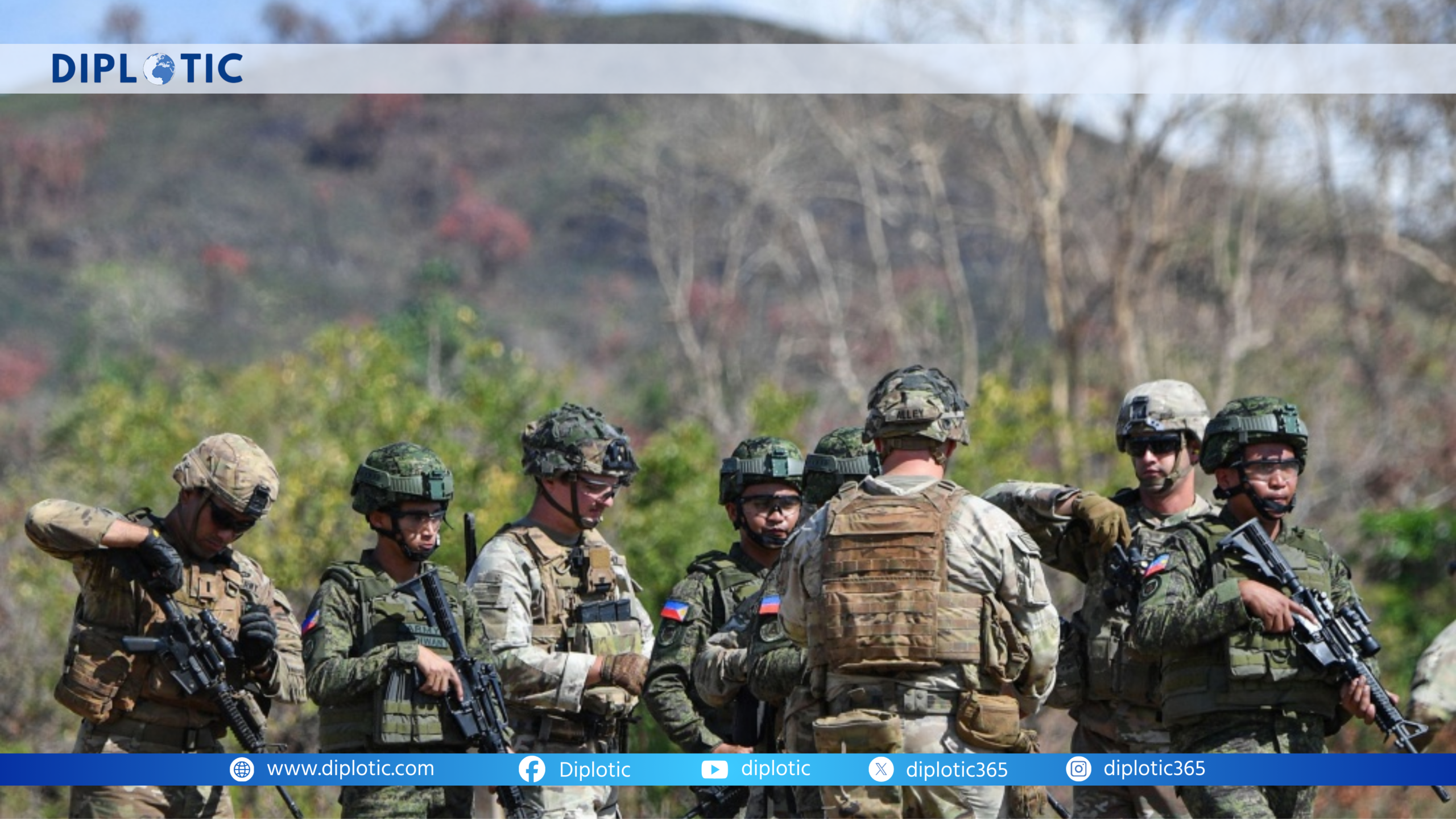
The establishment of rotational Army units under U.S. Army Pacific allows American troops to train continuously with the Armed Forces of the Philippines. While these forces are not permanently stationed, their consistent presence ensures improved interoperability, rapid response capability, and strategic coordination.
This development reflects Washington’s evolving doctrine of “integrated deterrence,” where land, sea, air, cyber, and space capabilities operate cohesively in potential high-intensity conflict scenarios.
EDCA and Legal Foundations
The expansion operates under existing defense frameworks, particularly the Enhanced Defense Cooperation Agreement (EDCA). Signed in 2014, EDCA allows U.S. forces access to designated Philippine military bases for rotational deployment, infrastructure development, and equipment pre-positioning.
The agreement builds upon the Mutual Defense Treaty, which commits both nations to mutual defense in case of armed attack.
Recent additions of EDCA sites — particularly in northern Luzon — carry strategic weight due to their proximity to Taiwan and key maritime corridors. Infrastructure upgrades at these sites enhance logistics, disaster response, and joint training capabilities.
Expanding Military Exercises
Joint military exercises have grown both in scale and complexity. The annual Balikatan exercise — meaning “shoulder-to-shoulder” — now involves thousands of troops and advanced systems.
Complementing Balikatan is Exercise Salaknib, which focuses specifically on Army-to-Army cooperation. These drills emphasize territorial defense, combined arms operations, cyber coordination, and live-fire exercises.
The deployment of advanced systems such as the High Mobility Artillery Rocket System (HIMARS) during exercises underscores a shift toward higher-level deterrence capabilities.
China Factor and Regional Tensions
The expansion cannot be separated from rising tensions with China. Beijing’s assertive maritime claims in the South China Sea overlap with Philippine exclusive economic zones, leading to repeated confrontations between coast guard vessels.
By strengthening Army presence and defense coordination, Washington aims to deter coercion and reinforce a “free and open Indo-Pacific.” Philippine officials, meanwhile, stress that the cooperation remains defensive and consistent with national sovereignty.




