

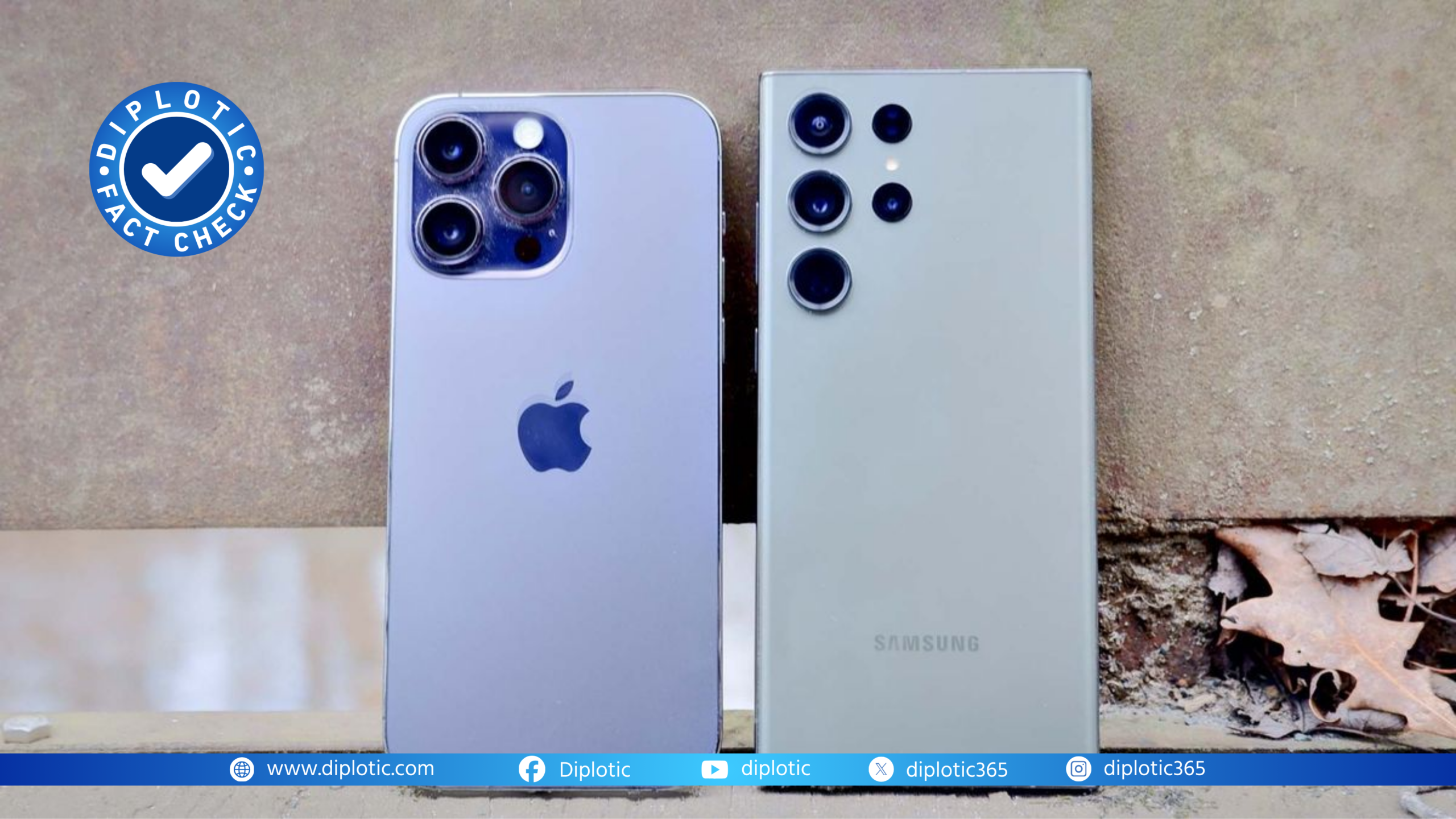
As Samsung prepares for its Galaxy Unpacked 2026 event on February 25, a wave of speculation has positioned the upcoming Galaxy S26 series as a potential leader in artificial intelligence, challenging Apple’s iPhone offerings. The narrative spreading across social media and tech forums suggests Samsung’s AI capabilities will be “far superior” to what Apple currently provides. This investigation examines the verifiagalaxy
ble information available before these devices officially launch, separating credible leaks and announcements from marketing hype and speculative commentary.
Claim 1: Samsung’s Galaxy S26 will feature on-device AI capabilities that Apple cannot match.
Evaluation: This claim has a foundation in announced features but requires careful qualification. Samsung has confirmed through its Unpacked invitations that the event theme is “Your Next-Generation AI Phone That Makes Life Easier” . Industry reporting indicates the Galaxy S26 series will introduce “EdgeFusion,” an on-device image generation AI that operates without network connectivity, capable of creating images in one second based on text commands. This feature is expected to run on Samsung’s Exynos 2600 application processor in some models, using the chip’s neural processing capabilities .
Apple’s current AI offerings, particularly the “visual intelligence” feature that Tim Cook recently highlighted as popular among users, also processes visual information on-device. This feature allows users to translate signs, add calendar events from flyers, and extract information from screenshots . However, Apple’s more advanced AI capabilities, including the significantly upgraded Siri with conversational abilities comparable to ChatGPT, will arrive with iOS 27 in June and be fully available on the iPhone 18 Pro series in September 2026 .
The comparison is complicated by timing. Samsung’s on-device features will launch in February, giving it a several-month head start before Apple’s next-generation AI software arrives. However, claiming Samsung’s approach is “unmatched” ignores that Apple is simultaneously developing similar on-device capabilities with its own neural engines and privacy-focused architecture .
Verdict: Partially True but Temporally Limited. Samsung is introducing specific on-device AI features like EdgeFusion that are novel at launch. However, Apple’s AI roadmap shows comparable capabilities arriving later in 2026, making the “unmatched” assertion dependent entirely on the comparison window.
Claim 2: Samsung’s partnership with Perplexity AI gives it a significant search advantage over Apple’s Google integration.
Evaluation: Reports indicate Samsung plans to introduce Perplexity’s AI model to the Galaxy S26 alongside Google’s Gemini AI. Perplexity specializes in conversational search with cited sources, and industry analysis suggests combining this with Bixby could enhance voice assistant performance . This dual-provider strategy gives Samsung flexibility in how users access AI-powered search.
Apple’s approach differs markedly. The company has announced integration of Google’s Gemini AI into iOS 27 as part of Apple Intelligence, bringing Gemini’s capabilities to iPhone users . However, Apple’s strategy centers on keeping users within its ecosystem—the company’s goal is to provide AI that works seamlessly with Mac, iPad, and Watch, not necessarily the “best” independent AI .
The practical difference may be less about raw capability and more about integration philosophy. Samsung offers choice between AI providers; Apple offers deep ecosystem integration with selected partners. Neither approach is objectively “better”—they represent different strategic priorities that will appeal to different user preferences.
Verdict: Misleading as a Superiority Claim. Samsung’s multi-provider approach differs from Apple’s curated integration, but search quality will depend on implementation, not just partnerships. Performance comparisons require real-world testing unavailable before launch.
Claim 3: Apple’s AI development is significantly behind, with iOS 27 representing a “catch-up” release rather than innovation.
Evaluation: This claim requires understanding Apple’s development timeline and philosophy. iOS 27, scheduled for June announcement and September release with iPhone 18 Pro, introduces substantial AI advancements including a completely redesigned Siri with full chatbot capabilities, deep contextual understanding, and complex cross-app task execution . The system also integrates Google Gemini AI into Apple Intelligence and brings AI features to native apps like Calendar and Health+ .
However, describing this as merely “catching up” ignores that Apple has been gradually building its AI foundation across multiple releases. The company’s approach has been deliberately measured, prioritizing privacy, on-device processing, and ecosystem cohesion . Industry analysis suggests the current smartphone market has reached a “silicon stalemate” where genuine innovation has slowed across all manufacturers, with most “revolutionary” claims being marketing language for incremental improvements .
The reality is that both companies face the same physical and technical constraints. Neither has achieved a breakthrough that fundamentally separates them from the other. Apple’s 2026 AI package appears substantial, but whether it represents innovation or catch-up depends on one’s perspective on the company’s previous pace of AI deployment.
Verdict: Overstated. iOS 27 represents a significant AI advancement for Apple, but framing it solely as catch-up ignores the company’s deliberate, privacy-focused development approach and the industry-wide plateau in mobile AI innovation.
Claim 4: The Galaxy S26’s “Privacy Display” feature represents a meaningful hardware-AI integration that iPhone lacks.
Evaluation: This claim addresses a specific, verifiable feature expected on the Galaxy S26 Ultra. “Privacy Display” uses AI and specialized screen hardware to detect sensitive information and locally obscure it from side angles. When viewing banking apps, password screens, or private notifications, the display limits visibility to direct angles only . This builds on Samsung Display’s Flex Magic Pixel technology demonstrated in 2024, combining hardware-level pixel control with AI-driven context awareness.
Apple has implemented software-based privacy features like notification hiding on lock screens, but nothing equivalent to hardware-mediated angle-based content protection. The feature represents genuine integration of AI with display hardware to solve a practical privacy concern . However, reports indicate this may be exclusive to the Ultra model and require specific hardware not present in other S26 variants or any current iPhone .
The significance lies not in declaring one ecosystem “better,” but in demonstrating different innovation priorities. Samsung is pursuing tangible hardware-software integration for specific use cases; Apple’s privacy approach emphasizes on-device processing and data minimization. Both serve user privacy but through different mechanisms.
Verdict: True for this Specific Feature. Privacy Display represents a novel hardware-AI integration not currently available on iPhones. However, it is a single feature, not a comprehensive platform advantage.
Claim 5: Rumors and leaks about both devices are deliberately exaggerated by manufacturers and media to drive pre-order interest.
Evaluation: This claim examines the information ecosystem itself. Samsung’s February 25 Unpacked event will officially reveal the S26 specifications, but the preceding weeks have seen controlled leaks, official teasers, and extensive media speculation . Apple’s iPhone 18 and iOS 27 information comes from developer leaks, supply chain reports, and analyst predictions, with official announcements months away .
The pattern is consistent with industry practice. Manufacturers benefit from extended discussion periods that build anticipation. Media outlets benefit from engagement-driven speculation. The result is a months-long information campaign where concrete details mix with conjecture, and where “superiority” claims serve marketing and engagement goals more than consumer information .
Critical analysis suggests the actual gap between these devices, when both are available later in 2026, will be narrower than current hype suggests. Both companies face similar constraints in chip design, battery technology, and AI model capabilities. The competition is increasingly about ecosystem lock-in and incremental refinements rather than genuine revolutionary advantages .
Verdict: True. The pre-launch information environment is deliberately cultivated to maximize interest and pre-orders. Comparative superiority claims during this period should be treated as marketing narratives rather than objective assessments.
Conclusion: A Race Without a Finish Line
The question of whether the Galaxy S26’s AI features are “better” than Apple’s iPhone AI cannot be answered with the information available before both devices launch and undergo real-world testing. Samsung will introduce specific innovations like EdgeFusion and Privacy Display that give it temporary advantages in particular areas. Apple’s iOS 27 and iPhone 18 Pro will bring substantial AI upgrades later in 2026 that address previous capability gaps.
The deeper pattern revealed by this investigation is that both companies are pursuing AI integration strategies that reflect their fundamental business models. Samsung offers flexibility, multiple AI provider choices, and hardware-integrated features. Apple offers deep ecosystem cohesion, privacy-focused design, and carefully curated experiences. Neither approach is objectively superior—they serve different user priorities.
The real value for consumers lies not in declaring a winner months before products ship, but in understanding how each ecosystem’s AI capabilities align with their actual needs. For users deeply invested in Apple’s ecosystem, Samsung’s advantages may be irrelevant. For those seeking specific features like on-device image generation or privacy display technology, the S26 may offer genuine value.
The hype surrounding these launches serves the manufacturers’ goal of driving upgrade cycles, not the consumer’s goal of making informed choices. As one industry analysis noted, we are living in the age of “Good Enough,” where the gap between new models and two-year-old devices is a crack barely visible without magnification . The true measure of AI capability will be revealed not in launch event comparisons, but in months of actual use after the marketing dust settles.




